
Livraison le jour même ou le lendemain

Qualité garantie

Débloquez vos offres de bienvenue: Livraison GRATUITE | Jusqu'à -80 % | 30 jours d'essai gratuits à JoyPlus
Téléchargez l'application
Protecting what matters most is a natural instinct. Irreplaceable documents, family heirlooms, vital digital media... When faced with the risk of fire, flood, or theft, the question of how to protect them arises for everyone. But with a bewildering array of options, choosing the right fireproof and waterproof safe can quickly become a headache.
As the Head of Product Recommendations at Joybuy, my role is to help you decipher technical specifications and avoid marketing traps. Here are the key points to be aware of before you make a purchase.
The market is flooded with products making tempting promises. The problem? Some claims are misleading and can give you a false sense of security.
To ensure you buy a safe that's right for protecting your documents and valuables, focus on these three purely technical criteria.
These are the only irrefutable proof of a safe's performance.
Here, everything depends on the safe's mechanical design.
Before buying, consider measuring the largest items you plan to store (laptop, A4 binders, etc.). A large home safe may seem excessive, but it's always better to go bigger to anticipate future needs. Also, think about practicality: removable trays, drawers, or interior lighting can make a real difference in daily use.
Every situation requires a tailored solution. Here are our recommended options, each suited to a distinct user profile.
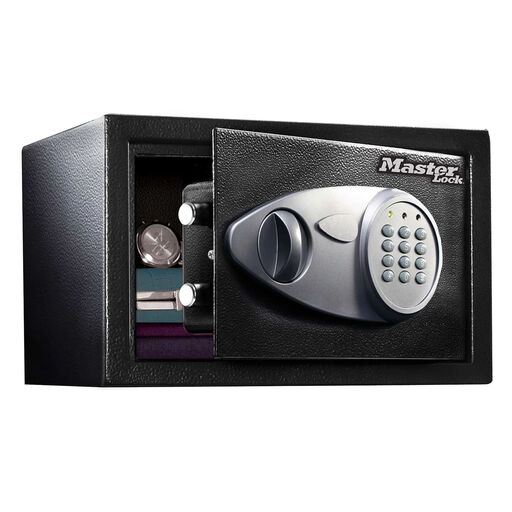
Our take? Perfect for basic theft protection. Ideal for keeping identity documents, some cash, or small electronics out of sight in a closet or office.
This model is all about transparency. It provides good anti-theft protection (steel construction, 2 bolts) but doesn't claim to be fire or water-resistant. It thus avoids the trap of false promises by focusing on what it does best: protecting against theft.
Its programmable digital lock for keyless access. Its compact size (16L) is easy to conceal and secure with the included mounting kit.
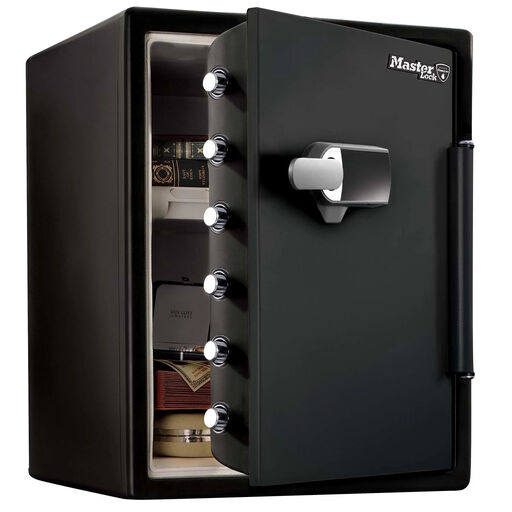
Our take? The solution for those who want maximum protection for their most precious assets (deeds, passports, jewellery, digital backups) against the three main threats: fire, water, and theft.
This safe doesn't just make claims; it provides proof. Certified by independent labs (UL and ETL) for its fire and water resistance (including for digital media), it is completely transparent about its waterproofing conditions.
Its triple protection (fire, water, theft) is reinforced by 6 locking bolts and a built-in alarm. Its large 56.5L capacity features a well-designed, LED-lit interior.
Our take? This is the ideal solution for small businesses, independent professionals, retailers, or collectors who need to store a large volume of confidential documents, contracts, cash, or valuables at their workplace.
Its very large capacity and internal organisation (tray, drawer) help avoid the pitfall of accumulating multiple smaller, less effective safes. It provides a centralised, ultra-secure solution perfectly tailored for professional use.
A large-volume professional safe with an alarm and UL/ETL certifications. Its 56.5L capacity and interior layout are designed for both intensive and organised storage.
We have curated a full range of products that meet these demanding selection criteria and current security standards.
1. Is it mandatory to bolt a safe to the floor? For optimal theft protection, the answer is yes. A safe that isn't anchored can simply be carried away by burglars to be opened later at their leisure. However, as we've discussed, bolting it down can compromise the waterproof seal on some models. If flooding is your primary concern, it might be wiser not to bolt it down but to conceal it in a hard-to-reach place. The ideal solution is to choose a heavy and large model, which is inherently more difficult to steal.
2. What is the lifespan of a fireproof safe? A safe's steel structure is built to last for decades. However, the materials that provide insulation and waterproofing can degrade over time. The waterproof and fireproof seals have a limited lifespan, and it is advisable to inspect them regularly. For a digital safe, you also need to consider the lifespan of the electronic components and batteries (typically 2 to 5 years).
3. Is a digital safe more secure than a key-operated one? Each system has its pros and cons. A digital safe offers quick access and the ability to change the code at will. The main risk is forgetting the code or a simple battery failure (hence the utility of a backup key). A key-operated safe, on the other hand, offers great mechanical reliability, but it shifts the problem to key management: if you lose the key or it's stolen, the safe's security is compromised. The choice therefore depends on your preferences for ease of use and access management.