
Livraison le jour même ou le lendemain

Qualité garantie

Débloquez vos offres de bienvenue: Livraison GRATUITE | Jusqu'à -80 % | 30 jours d'essai gratuits à JoyPlus
Téléchargez l'application
Safeguarding your important documents, digital media, and valuables is a priority, whether for personal use or for a small business. The fireproof and waterproof safe stands out as the logical solution. But be warned: with an overwhelming number of options on the market, it's easy to fall for marketing traps that ultimately compromise the very security you're trying to buy.
As a Product Specialist at Joybuy, my mission is to help you navigate these pitfalls. Here are the key points to check before you choose, ensuring your investment truly brings you peace of mind.
To make the right choice, you need to read between the lines of the technical specifications. Here are the three non-negotiable criteria to scrutinise.
Don't settle for marketing claims. Demand independent labels that certify the product's performance in black and white.
The choice of mechanism depends on your habits and the level of security you require.
Home security starts with the safe's sturdiness. Here are the points to inspect:
To guide you, we have selected models that meet specific needs, all validated against our security and compliance criteria.
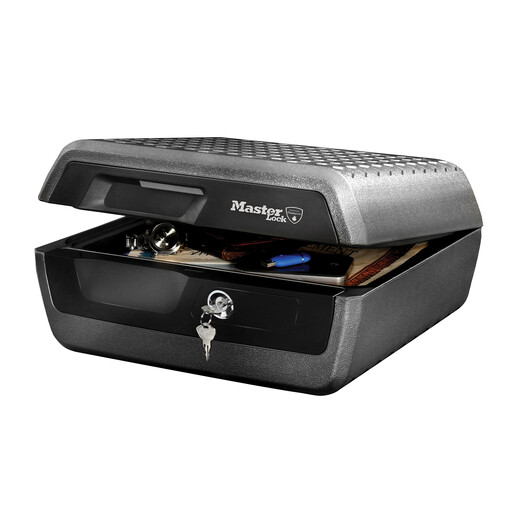
Who is it for? For individuals who want a hassle-free way to protect their A4 documents (deeds, passports, contracts). Portable and equipped with a key lock, it's the ultimate simple and effective solution for important papers.
This model displays clear, verifiable certifications: UL for fire resistance (1hr at 927°C) and ETL for water immersion. These are real guarantees, not just marketing promises.
Its capacity is sized to hold A4 documents flat. Its tubular key lock, which is more secure than a standard key, is designed to remain closed under the heat of a fire.
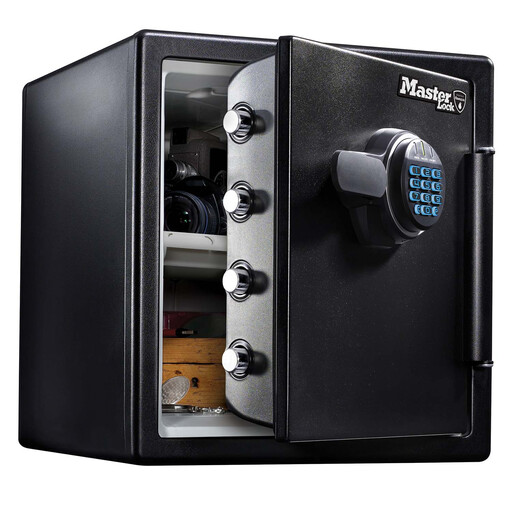
Who is it for? For individuals or small businesses needing to protect a significant volume of items, files, or digital media. Its robust construction and security features make it a first-rate choice for long-term protection.
This safe doesn't rely solely on its lock. Its strength lies in its robust steel structure, four large active locking bolts, and a pry-resistant hinge. It's the perfect answer to the "false electronic security" trap.
Dual UL (1hr at 927°C) and ETL (4.5m drop, 24hr immersion in 12cm of water) certification. The interior is well-designed with a shelf, LED lighting, and door storage.
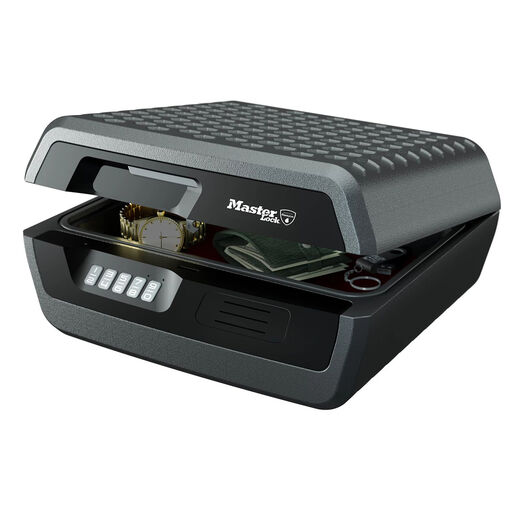
Who is it for? For anyone who wants the convenience of keyless access. This model combines certified fire and water protection with the comfort of an electronic combination safe, all in a compact, easy-to-hide format.
Unlike many competitors, it doesn't just protect paper (UL certified). It also has a specific ETL certification for digital media (USB drives, hard drives)—a detail that entry-level models often overlook.
Its digital lock is programmable with a user code (in addition to the master code). The keypad features a silent mode for discreet access. Its format is ideal for storing A4 documents flat.
We have curated a complete selection of products that meet all our security and certification criteria.
Bolting it down is highly recommended to prevent a burglar from simply walking away with the safe. However, be aware: for many models, drilling into the safe voids its waterproof certification. If flood protection is your top priority, it's better not to bolt it down, or choose a model specifically designed to be sealed after installation.
The ideal spot is discreet, not easily accessible, and on a solid foundation. The ground floor or basement are often good choices, as they are less exposed to the heat of a fire (which rises). Avoid damp areas (like an untreated cellar or bathroom) that could damage the mechanisms over time.
On average, expect 1 to 2 years, depending on your frequency of use. Most good models have a low-battery indicator to alert you. Our advice: change the batteries annually as a precaution, using brand-name alkaline batteries. And most importantly, keep the backup key (or master code) in a safe place—but never inside the safe itself