
Livraison le jour même ou le lendemain

Qualité garantie

Débloquez vos offres de bienvenue: Livraison GRATUITE | Jusqu'à -80 % | 30 jours d'essai gratuits à JoyPlus
Téléchargez l'application
Protecting your important documents, family heirlooms, or business assets is a natural concern. In the face of a fire or flood, a fireproof and waterproof safe becomes an indispensable line of defence. However, the market is flooded with models, each with claims that can be confusing. To help you see clearly, we've broken down the common pitfalls and crucial criteria for making an informed choice.
Investing in security shouldn't be a blind decision. Be wary of marketing claims that can hide deal-breaking flaws.
To make an informed choice, focus on objective and verifiable features.
Labels from independent laboratories are the only way to verify the performance of a fireproof and flood-proof safe. The two most common certifications are:
The choice of locking mechanism depends on your usage and security requirements.
Don't rely solely on external dimensions. The thickness of the insulating walls eats up a significant portion of the usable space. Assess your needs in litres and check the internal dimensions to ensure your binders, laptops, or other valuables will fit. A good document safe should allow you to store A4-sized papers flat. Adjustable shelves, door compartments, or interior lighting are significant advantages.
To help you sort through the options, here are a few models that caught our eye, all selected based on strict performance and reliability criteria.
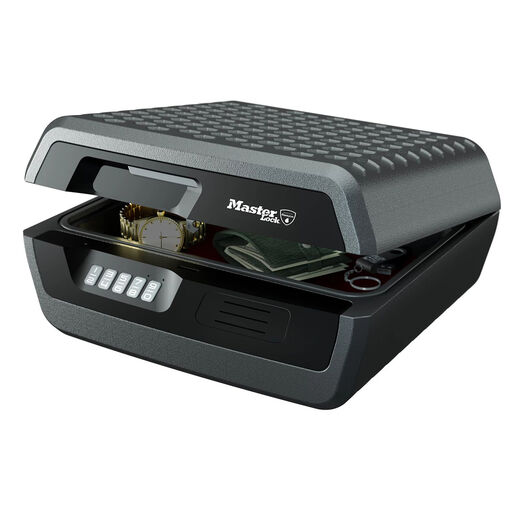
WHY IT'S A WINNER: Perfect for those looking to protect the essentials (A4 documents, passports, digital media) without the bulk of a massive safe. Its fireproof security chest format is particularly well-suited for apartments or home offices.
No empty promises here. This model has an ETL certification for water submersion, which attests in black and white to its level of flood protection, in addition to its UL fireproof certification.
Certified protection for not only paper documents but also digital media (USB drives, DVDs). The digital combination lock combines ease of use with security.
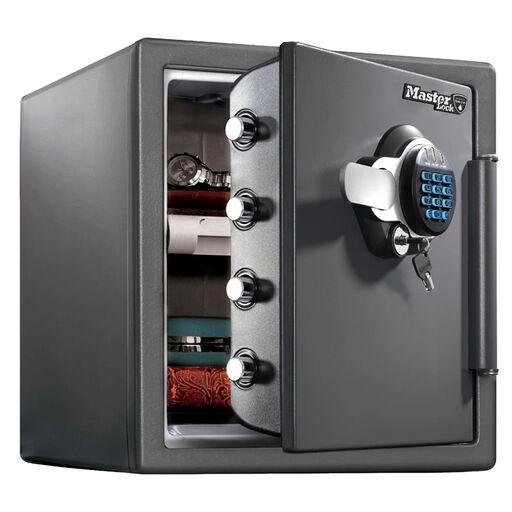
WHY IT'S A WINNER: The perfect balance for a home safe or a small office. Its 33L capacity allows you to store binders, small electronics, and valuables, all with a top-tier level of protection.
This safe goes well beyond the standard with UL-certified fire protection for 2 hours at 927°C, a safety margin far superior to the market average. Its water protection is also validated by an ETL certification.
Its dual lock (digital combination + physical key, both required) provides an extra barrier against unauthorised access. The customisable interior with its shelves is a real bonus.
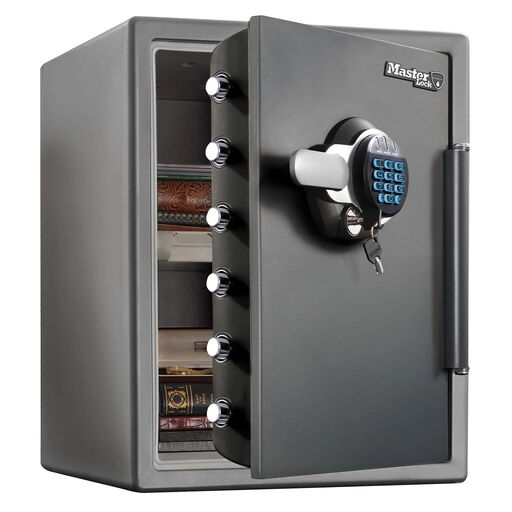
WHY IT'S A WINNER: Designed for professionals or families with large volumes of archives, equipment, or precious items to secure. Its large 56-litre capacity and ultra-robust construction make it a personal fortress.
This model meets the demand for maximum physical security. Its steel construction, six live-locking bolts, and pry-resistant hinge bar offer concrete guarantees against break-ins, in addition to its fire and water certifications.
Exceptional fire resistance of 2 hours at 927°C (UL certified). The dual lock (digital + key) and the comprehensive interior layout (shelf, door storage, lighting) are perfect for heavy use.
Discover our full selection of products that meet our strictest security criteria.
For optimal protection against theft, it is highly recommended to bolt your safe to the floor using the provided hardware kit. However, pay close attention to the manufacturer's instructions: on many models, this action voids the waterproof warranty, as drilling compromises the integrity of the shell. Fire protection is generally not affected if the safe is bolted to the floor, but never mount a safe to a wall, as this could impair its fire resistance.
The life of the batteries (usually AA) varies with use, but on average, it is 1 to 2 years. Most Master Lock safe models are equipped with a low-battery indicator to warn you in advance. We recommend changing the batteries once a year as a precaution. In case of a complete power failure, a physical override key is almost always provided to guarantee access.
Not always. Digital storage media are much more fragile than paper and can be damaged at much lower temperatures (around 50-60°C or 120-140°F). A UL-certified safe for paper does not guarantee their protection. For this, it is essential to choose a model with a specific ETL certification for digital media, which ensures the internal temperature will remain low enough to preserve them.