
Livraison le jour même ou le lendemain

Qualité garantie

Débloquez vos offres de bienvenue: Livraison GRATUITE | Jusqu'à -80 % | 30 jours d'essai gratuits à JoyPlus
Téléchargez l'application
Protecting your most valuable possessions isn't a luxury—it's a necessity. When faced with the risk of fire or flood, a simple drawer or metal box is no longer enough. The safe market, however, is saturated with marketing jargon and confusing promises. Before you invest in protecting your identity documents, deeds, or digital media, it's crucial to know how to avoid the pitfalls that could render your purchase useless in a disaster.
To cut through the noise of technical specs, focus on these two non-negotiable criteria. They are the true hallmark of your future safe's quality and effectiveness.
These aren't just logos; they are proof of rigorous testing conducted by independent laboratories.
The best fire protection is useless if the safe is easy for a thief to open or carry away.
Instead of an endless catalogue, here are models that meet specific needs, all selected according to the objective security criteria we've just detailed.
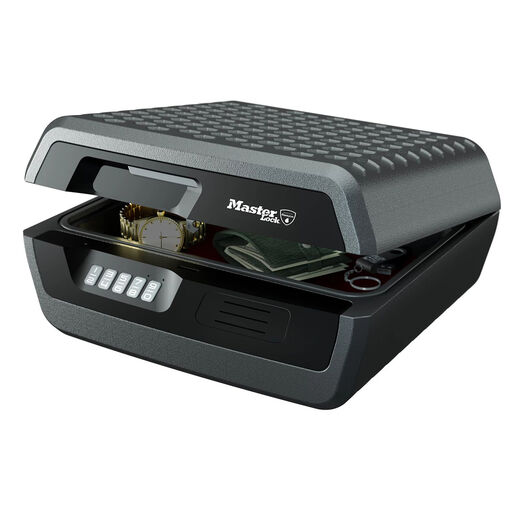
Why we chose it: Ideal for individuals or couples in an apartment. Its compact size secures essential documents (passports, property deeds, contracts) and some digital media (USB drive, external hard drive) without taking up too much space.
It displays clear UL and ETL certifications for fire and water, including for digital media. No more vague promises—just verifiable protection.
Dual fire and water certification for both paper and digital media. Its fireproof security case design makes it easy to store.
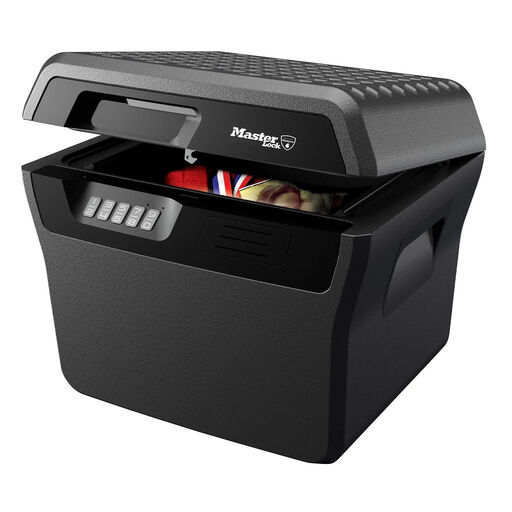
Why we chose it: With its 18.5-litre capacity, this model meets the needs of families or small businesses. It can store documents for multiple people, A4 binders laid flat, or important professional archives.
It solves the problem of needing more space without sacrificing security. It maintains the same UL and ETL certifications as smaller models, ensuring complete protection for a larger volume.
Large 18.5-litre capacity and internal dimensions designed for A4 documents. The digital combination lock with a master code is a real plus for shared use.
We have selected a full range of products that meet these strict security criteria.
1. What is the lifespan of a fireproof safe? The metal structure of a safe is built to last for decades. However, the seals that provide fire and water protection can degrade, typically after 5 to 10 years. It's advisable to inspect them visually each year. For models with electronic locks, it is recommended to replace the batteries annually.
2. Should a portable safe be bolted down? That depends on your priority. A portable safe is primarily designed for protection against disasters (fire, water). If the risk of theft is also high, securely bolting it to the floor or a wall is an essential precaution. Most Master Lock safe models come with pre-drilled holes for this purpose.
3. Does a fireproof safe really protect USB drives and hard drives? Yes, but only if it is specifically certified for this purpose. Remember, digital media are far more fragile than paper when exposed to heat. To ensure their survival, it is imperative to choose a safe with an ETL certification for digital media protection. This standard guarantees that the internal temperature will remain low enough to not damage your data.