
Livraison le jour même ou le lendemain

Qualité garantie

Débloquez vos offres de bienvenue: Livraison GRATUITE | Jusqu'à -80 % | 30 jours d'essai gratuits à JoyPlus
Téléchargez l'application
As a product expert at Joybuy, my role is to provide clarity and help you make the right choices. Today, we're tackling a crucial topic: protecting your most precious belongings from unexpected disasters. A fire or flood can strike without warning, and the loss of important documents or digital memories is unfortunately irreversible. Investing in a fireproof and waterproof safe is a wise precaution, provided you don't fall for the sometimes misleading promises of the market.
Before you pull out your credit card, it's essential to be aware of the common pitfalls that can render a safe completely useless on the day you need it most.
To make the right choice, focus on objective features that guarantee genuine protection for your important documents.
This is the non-negotiable criterion. Look for certifications issued by independent laboratories.
A good fireproof and waterproof safe must offer certified protection against immersion. The ETL verification for waterproofing guarantees that the contents will stay dry even if the safe is fully submerged. This is an essential safeguard in case of flooding or firefighter intervention.
Ensure the internal dimensions meet your needs, especially for storing A4 documents without folding them. Regarding the lock, you have two main options:
To illustrate this advice, here are two models that cater to specific user profiles, based on the objective criteria we've just discussed.
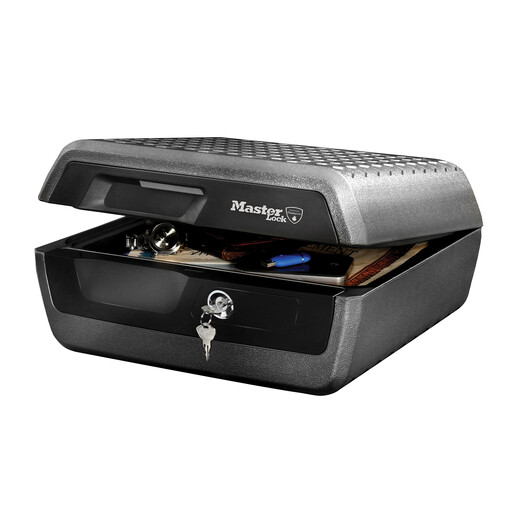
Why we chose it: This is the quintessential simple and reliable solution for protecting essential family documents (passports, birth certificates, property deeds). Its key-operated design saves you the worry of dead batteries or a forgotten code.
This model has verified UL and ETL certifications, guaranteeing real protection against fire and water, unlike uncertified, entry-level products. Its capacity is well-designed to hold A4 documents flat.
Certified protection combined with great ease of use. Its tubular key lock also has the advantage of preventing the lid from opening in the event of a fire.
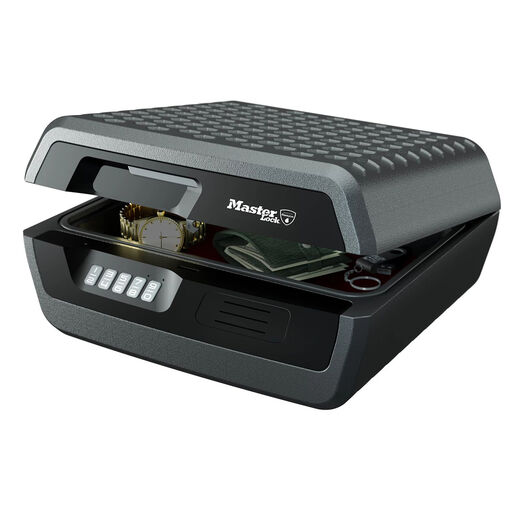
Why we chose it: Perfect for small businesses, freelancers, or tech-savvy individuals who need quick and regular access to their documents and digital media. The programmable combination offers both flexibility and enhanced security.
It benefits from a specific ETL verification for digital media, which ensures the survival of USB drives and hard drives in a fire. This is a crucial detail often overlooked in entry-level models.
Access is quick and keyless thanks to the programmable digital combination. Bonus : the ability to disable keypad sounds for discreet use.
We have selected a full range of products that meet these strict security criteria.
The ideal location for a portable safe or a fireproof security chest is on the ground floor, in a corner or a closet. This minimizes the risk of it falling through a floor weakened by fire. And even though its waterproofing protects against water, avoid flood-prone basements if possible to limit risks.
Not always. Paper only ignites at 177?°C (350?°F), but digital media (USB drives, hard drives, etc.) are damaged at much lower temperatures, starting at 50?°C (122?°F). To effectively protect your data, it is therefore imperative to choose a safe that has a specific certification for digital media, such as the ETL verification for media protection.
Most importantly, never store them inside the safe itself! The best solution is to entrust a spare key or a copy of the code to a trusted person (a relative, a lawyer) or to store them in a separate secure location, like a safe deposit box at a bank.