
Livraison le jour même ou le lendemain

Qualité garantie

Débloquez vos offres de bienvenue: Livraison GRATUITE | Jusqu'à -80 % | 30 jours d'essai gratuits à JoyPlus
Téléchargez l'application
Protecting your important papers, family heirlooms, and valuables from a fire or flood is essential. But when faced with the overwhelming market of safes, it's easy to get lost in marketing claims. However, a single overlooked technical detail can render your purchase completely useless, or even dangerous. Our mission: to help you decode spec sheets and identify the criteria that truly matter.
Before you make a decision, learn to spot the flaws hiding behind glossy promises.
To make the right choice, rely on objective data, not advertising slogans. Here are the three points to scrutinise.
These are the only labels that genuinely guarantee the performance of a fireproof and waterproof safe.
The volume and locking system must match your needs.
Even if your priority is protection against fire and water, burglar-resistant security should not be overlooked. A good burglar-resistant safe should include deterrents like steel locking bolts (which anchor deep into the body), a pry-resistant hinge, and solid steel construction.
Here is a selection of models that meet specific needs, all chosen based on the security criteria and pitfalls we've just discussed.
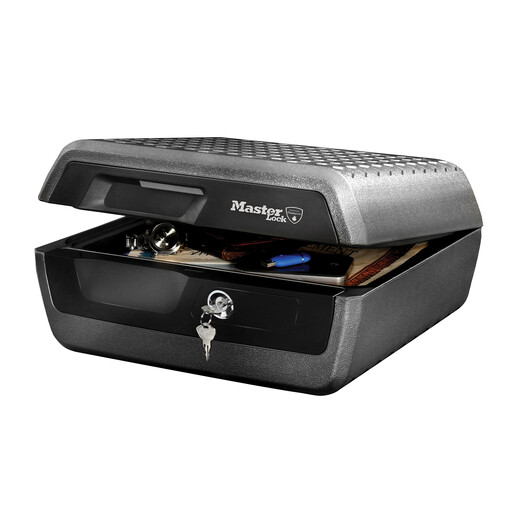
Why we recommend it: Perfect as a first safe, it offers certified protection for essential documents (passports, property deeds, etc.) and digital media, all at a very accessible price. Its format allows A4 documents to be stored flat.
This isn't just a "fire-resistant" box. It boasts UL and ETL certifications that guarantee real, verified protection against fire (1 hr at 927°C) and water. True peace of mind.
Dual fire and water certification. Sized for A4 documents. Tubular key lock, which is more secure than a standard key.
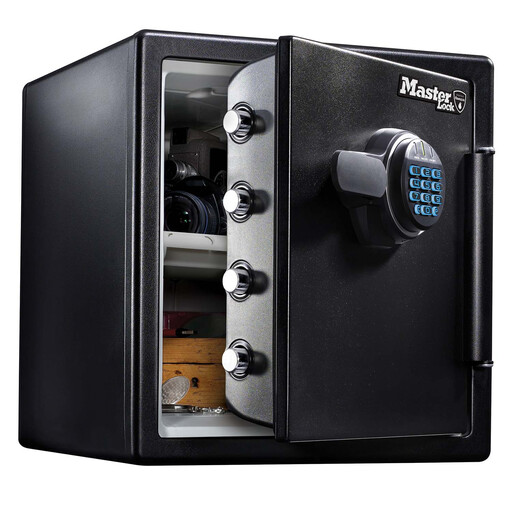
Why we recommend it: For those who need to protect a large volume of documents, electronics, or valuables. Its large capacity and advanced security features make it a perfect solution for professional (small business) or family use.
It avoids the "false waterproofing" trap by being transparent: the ETL water certification is only valid before it is bolted down. This honesty allows you to make an informed choice between mobility (with waterproofing) and bolting it down (for maximum anti-theft security).
Large 33.6L capacity. Enhanced security with 4 live-locking bolts and a pry-resistant hinge. User-friendly with its backlit digital keypad and interior LED lighting.
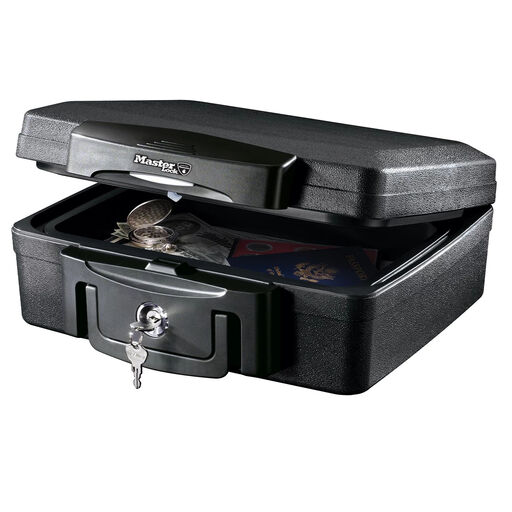
Why we recommend it: Ideal for securing a few essential items (ID cards, USB drives, backup disks) and for those looking for a portable solution. Its carrying handle makes it easy to move or take with you in an evacuation.
It avoids the pitfall of oversizing. There's no need to invest in a large safe if your needs are specific. This compact chest offers certified protection without taking up too much space and is easy to conceal.
Certified ETL protection for digital media (CDs, DVDs, USB drives). Portable design with a carrying handle. Complete protection against water submersion.
Explore our full selection of products that meet strict selection criteria and current standards.
A safe's steel structure is designed to last for decades. However, the seals that guarantee its waterproofing can wear out over time. The electronics of a digital safe also depend on its components. It is therefore advisable to check the condition of the seals every 5 to 10 years. Note that brands like Master Lock offer a lifetime after-fire replacement guarantee, a testament to their absolute confidence in their products' reliability.
It all depends on your priorities. For discretion, a closet or a basement are good choices. Avoid the office, as it's often the first room searched during a burglary. For fire protection, the ground floor is preferable, as upper floors are always more exposed to rising heat. If you choose to bolt it to the floor for maximum burglar-resistant security, keep in mind that this will likely void its waterproof rating. Finally, never bolt it to a wall, as its fireproof certification would no longer be valid.
Not necessarily. Paper begins to degrade at 177°C, but digital media (USB drives, hard drives, CDs) can be damaged at temperatures as low as 50°C. A safe with only a UL certification for paper will not save your electronic data. For that, you need a model that also carries a supplementary ETL Verified certification for digital media protection. Only this guarantees that the internal temperature will remain below that critical threshold.