
Livraison le jour même ou le lendemain

Qualité garantie

Débloquez vos offres de bienvenue: Livraison GRATUITE | Jusqu'à -80 % | 30 jours d'essai gratuits à JoyPlus
Téléchargez l'application
Keeping your most valuable possessions safe is a top priority. When faced with the risk of fire or flood, a simple drawer or metal box is woefully inadequate for protecting your important documents, digital media, and valuables. The problem? The safe market is flooded with marketing promises and confusing technical jargon.
As a Product Expert at Joybuy, my mission is to help you make sense of it all. Before you decide, it's crucial to know the common pitfalls to avoid buyer's remorse.
To make the right choice, ignore the marketing hype and focus on factual criteria. Here are the three points to scrutinize.
The true value of a fireproof and waterproof safe isn't measured in promises, but in certifications. The two benchmark certifications on the international market are:
A fireproof security case or a waterproof security box that doesn't display one of these logos offers no real guarantee of protection in a disaster.
The choice of mechanism depends on the balance you want between security and ease of use.
The first thing to do before buying: check the internal dimensions of the safe. For the protection of important documents, make sure it can accommodate A4 size sheets lying flat.
A portable safe is a flexible solution, especially for renters or if you move frequently. The downside: its light weight makes it an easy target for thieves. If you choose a portable model, check if it can be bolted to a load-bearing wall or the floor to deter burglars.
To put theory into practice, here are a few models that perfectly illustrate these criteria, meet specific needs, and avoid the common traps.
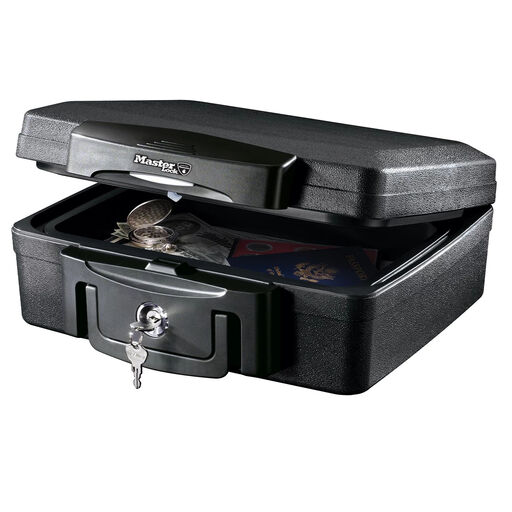
Who is it for? Ideal for securing the essentials (passports, birth certificates) and some digital media. Its carrying handle makes it perfect for those who need mobility.
It eliminates doubt with its clear UL and ETL certifications: 30 minutes of fire protection (for paper and digital media) and guaranteed ETL waterproof protection during submersion.
The combination of certified dual protection (fire and water) and an ultra-practical, portable design.
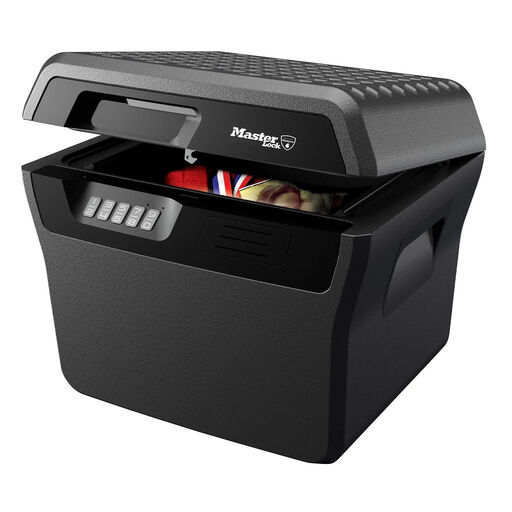
Who is it for? Perfect for small businesses or families who need to store more documents. Its digital lock offers modern, convenient access, so you'll never have to search for your keys again.
It avoids the trap of misleading dimensions: its internal capacity is designed to hold A4 documents flat. Of course, it comes with both UL and ETL certifications.
Its generous 18.5-litre capacity, combined with the convenience of a programmable digital lock.
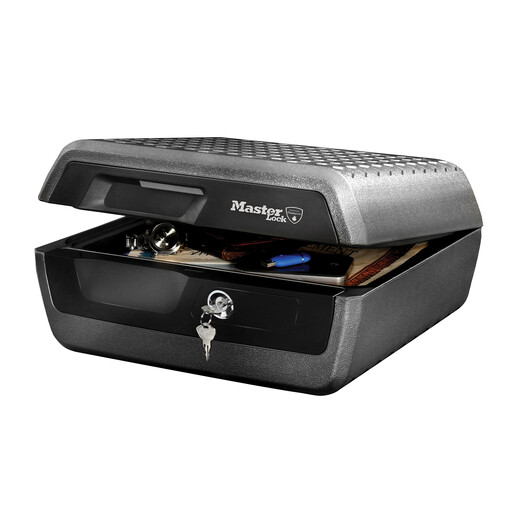
Who is it for? For those who seek absolute peace of mind and refuse to compromise. Its one-hour certification offers a much higher level of security for irreplaceable belongings.
It's in a different league with its superior fire certification: UL classified for 1 hour at 927 °C (1700 °F). A technical specification that places it a step above standard 30-minute models.
The winning trio: one hour of fire protection (UL), waterproof submersion protection (ETL), and an anti-pick tubular key lock.
Explore our full selection of products that meet all our criteria for reliability and security.
For maximum protection, place your safe on the ground floor, in a corner, and close to the floor, as heat and smoke always rise. Avoid basements and garages, which are often too damp. If it's portable, consider concealing it in a closet or under furniture, out of sight.
A portable safe is convenient, but its Achilles' heel is the risk of theft. If a burglar carries it away, its fire and flood protection become useless. If the model allows for it (with pre-drilled holes), bolting it to a load-bearing wall or concrete floor drastically increases its security. It's a trade-off between flexibility and maximum protection against theft.
The materials that provide fire and water resistance are designed to last; their effectiveness does not diminish over time. The only point of attention is the waterproof seal, which can wear out after years of opening and closing. A quick check from time to time is sufficient. For digital locks, the only maintenance required is changing the batteries, ideally once a year for peace of mind.