
Livraison le jour même ou le lendemain

Qualité garantie

Débloquez vos offres de bienvenue: Livraison GRATUITE | Jusqu'à -80 % | 30 jours d'essai gratuits à JoyPlus
Téléchargez l'application
Protecting what matters most to us is a natural instinct. Identity documents, family heirlooms, hard drives, or valuables: the thought of losing them in a fire, flood, or burglary is a source of genuine anxiety. A fireproof and waterproof safe is the ideal solution. But be careful—the market is flooded with marketing promises and vague claims that can easily mislead you.
As a product expert for Joybuy, my mission is to help you navigate this market. Let's review the common pitfalls to avoid and the essential criteria for making a truly informed choice that's perfectly suited to your needs.
Buying a safe is an investment in your peace of mind. However, a misunderstood feature can render that protection completely useless.
To ensure your safe will live up to its promises, here are the three technical points you absolutely must check.
These are the only true guarantees of your safe's performance. Here's how to decode them:
Fire and flood protection is useless if the safe can be forced open or simply carried away.
A safe that's too small quickly becomes a headache. Think about your current needs, but also your future ones.
Because everyone's needs are unique, here is a selection of products for different profiles, based on the criteria we've just discussed.
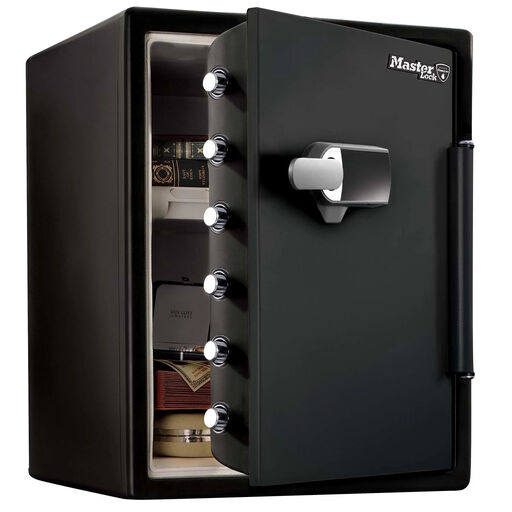
Why we recommend it: Perfect for families or small businesses that need to secure a wide variety of assets: important documents, digital backups, cash, and valuables. Its generous capacity and comprehensive certifications make it a true home fortress.
This Master Lock model doesn't just make empty promises. It boasts genuine UL/ETL certifications for fire protection for both paper AND digital media, as well as for waterproofing and drop resistance.
Triple certification (fire, water, impact) combined with serious anti-theft security (six live-locking bolts, alarm) and a very comfortable 56.5 L capacity.
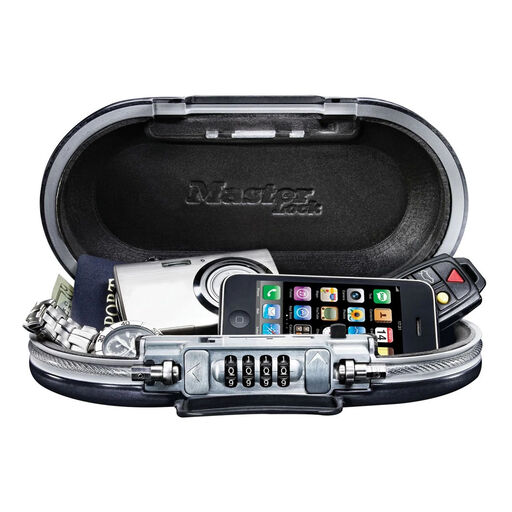
Why we recommend it: Essential for students, travellers, or anyone needing extra security in a hotel, dorm room, or office. It protects passports, smartphones, and cash from grab-and-go theft.
This product is refreshingly honest: it's not a high-security safe, but a portable deterrent. Its water resistance is a bonus; its real mission is to prevent theft with its anchor cable.
Compact, lightweight, and equipped with a 50 cm cable to secure it to a fixed object. Its programmable combination lock saves you the hassle of managing keys.
A safe is the last line of defence for your most precious belongings. But a good security strategy starts long before that: with detection and deterrence. For complete home protection, consider pairing your safe with an alarm or video surveillance system.
A safe is essential, but complete home security also involves surveillance. Discover our selection of solutions for 360° protection.
1. What is the lifespan of a fireproof safe? A safe doesn't have a strict expiration date. However, its waterproof and heat-insulating seals can degrade over time, especially if exposed to significant temperature or humidity fluctuations. It's advisable to check their condition every 5 to 10 years. Crucially: after a fire or flood, even if the contents are intact, the safe must be replaced. Its protective capabilities are permanently compromised.
2. Can I install a fireproof and waterproof safe myself? Yes, most home models can be installed without professional help. The trickiest step is bolting it to the floor. Make sure the surface is suitable (a concrete floor is ideal) and keep in mind that drilling into the safe will void its waterproof certification. For heavier models, having a second person to help is highly recommended.
3. Is a digital safe more secure than a key-operated one? Each system has its pros and cons. The digital safe is very convenient: no key to lose and a code that can be changed at will. Its Achilles' heel? Reliance on batteries and the (very low) risk of electronic failure. The key lock, on the other hand, offers rock-solid mechanical reliability, but the key can be lost, stolen, or copied. The choice, therefore, comes down to the flexibility of a digital system versus the purely mechanical robustness of a key lock.