
Livraison le jour même ou le lendemain

Qualité garantie

Débloquez vos offres de bienvenue: Livraison GRATUITE | Jusqu'à -80 % | 30 jours d'essai gratuits à JoyPlus
Téléchargez l'application
Protecting what matters most—deeds, passports, digital backups, or family heirlooms—is a no-brainer. In the event of a fire or flood, a good safe can save everything. The problem? The market is saturated with vague marketing promises and misleading claims. Before you pull out your credit card, here’s how to avoid the most common pitfalls for a truly useful and secure purchase.
Here are the most common mistakes and how to avoid them.
To make the right choice, rely on facts, not marketing. Here are the two essential technical points to verify.
Certifications are your best guarantee. Issued by independent laboratories after drastic tests, they attest to real protection. The two key standards to know are?:
Demanding at least one of these two certifications is your assurance that the product has undergone extensive real-world testing and will deliver on its promises.
NEVER trust the exterior dimensions. The only thing that matters are the internal dimensions. Measure them and compare them to what you plan to store inside.
Rather than an endless list, here is a selection of models that tick all the boxes for security and practicality.
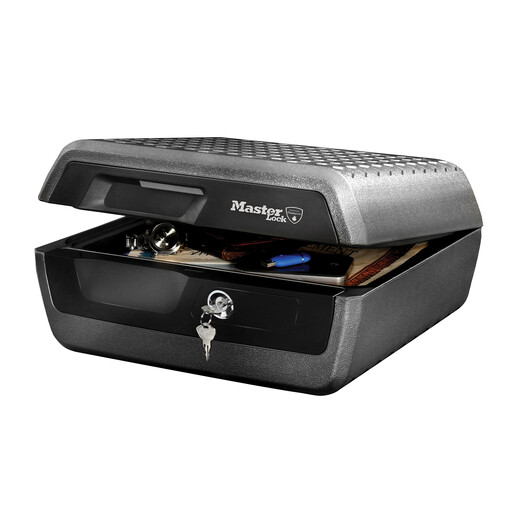
Why we recommend it : Perfect for securing essential family documents (deeds, passports, family records) and digital backups (USB drives, hard drives). Its compact and portable design allows it to be discreetly stored in a closet while ensuring serious protection.
Its internal dimensions are designed to hold A4 documents flat, without needing to fold them. Most importantly, it holds both UL and ETL certifications, which guarantee real protection against fire (1 hour at 927 °C) and full water immersion.
The dual certification by independent bodies provides absolute peace of mind, which is impossible to get with an entry-level product. The after-fire replacement guarantee is a real bonus.
Why we recommend it : This fireproof security case is perfect for protecting contracts, cash, or confidential client files. Its portable safe format makes it a practical ally at the office, when working remotely, or on the go.
Its tubular key lock offers better resistance to break-ins and, a crucial technical detail, prevents the lid from opening due to heat in a fire. This is an often-overlooked point on low-end models. The certified protection is a decisive factor for protecting a company's assets.
The combination of portability, a secure lock, and official certifications makes it a trusted solution for professionals who demand flexibility without sacrificing security.
We have selected other products that meet our strict selection criteria for standards and security.
Not necessarily. While paper only degrades above 177?°C, digital media (USB drives, DVDs, hard drives) are much more sensitive and can be destroyed at temperatures as low as 125?°C. To protect them effectively, you need to choose a safe with a specific certification for digital media, which guarantees a lower maximum internal temperature.
A key lock is the simplest and most reliable solution: no electronic failures are possible, and the price is often more affordable. An electronic lock, on the other hand, offers the convenience of keyless access (with changeable codes) but relies on batteries and can be vulnerable to moisture if not perfectly sealed. The choice is between mechanical robustness and digital convenience.
For maximum protection, place your safe or box on the ground floor or even in the basement, as heat and flames always rise. Avoid leaving it in plain sight. A closet, under a piece of furniture, or a pantry are ideal hiding spots. Most importantly, remember to keep a spare key in a completely separate and secure location.