
Livraison le jour même ou le lendemain

Qualité garantie

Débloquez vos offres de bienvenue: Livraison GRATUITE | Jusqu'à -80 % | 30 jours d'essai gratuits à JoyPlus
Téléchargez l'application
Investing in a fireproof and waterproof safe is a crucial decision for protecting your valuables. But with the overwhelming sea of marketing claims, it's easy to get lost. This guide breaks down the essential points to help you make an informed choice that's perfectly suited to your needs.
Before diving into technical specifications, let's review the most common traps to help you avoid any unpleasant surprises.
To make the right choice, three objective technical criteria must be scrutinized.
These are the most reliable performance indicators. Their strength? They are not issued by the manufacturers themselves but by independent testing laboratories.
The choice of mechanism depends on the balance you seek between ease of use and level of security.
Ask yourself how much volume you really need. A 10-litre capacity may be sufficient for passports and a few A4 documents, while a 50-litre volume will be necessary for storing binders, electronic devices, and other valuables.
For more specific needs or if you travel often, a fireproof and waterproof case or a portable safe can be an excellent alternative. These compact models are designed to be moved or stored discreetly in a closet or drawer.
Here are a few options selected based on the objective criteria we've just covered, catering to different user profiles.
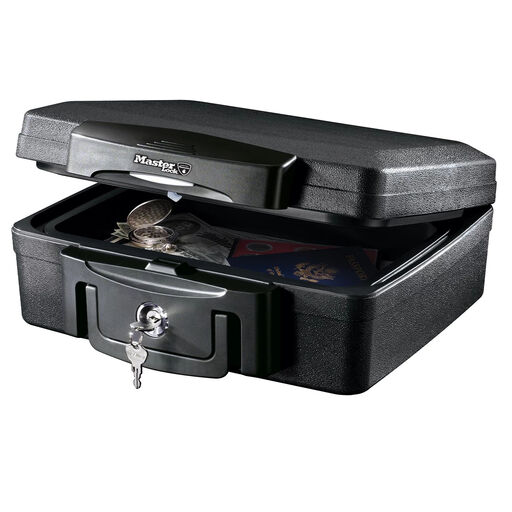
Why it's a match: Ideal for securing essential documents (passports, birth certificates, contracts) and small digital media. Its carrying handle makes it a practical ally for securing belongings on the move.
This model stands out with its specific ETL certification for digital media (CDs, USB drives), a crucial detail often missing from entry-level products that only protect paper.
Its dual certification (fire and water), covering both paper and digital media, all in a compact, portable format with a simple and proven key lock.
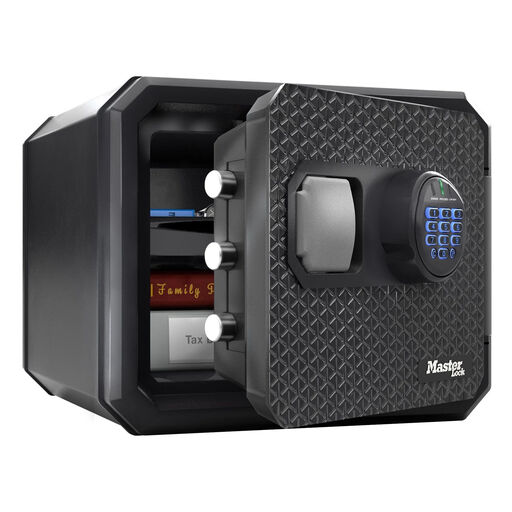
Why it's a match: With its 23-litre capacity and digital lock, it's perfect for families or home offices, allowing you to protect documents, digital backups, and valuables with quick and easy access.
It solves the tricky problem of anchoring. Its special bolt-down kit is designed to be waterproof, allowing it to be secured to the floor (for maximum theft protection) without sacrificing its ETL waterproof certification.
The automatic locking of the bolts upon closing and its waterproof anchoring capability offer double peace of mind, against both theft and water damage.
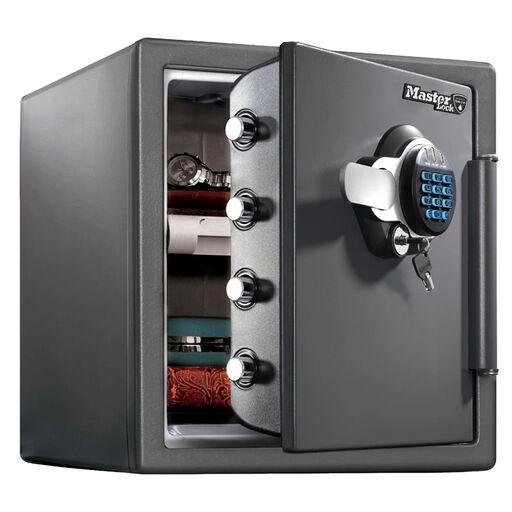
Why it's a match: Designed for professionals, small businesses, or the most demanding individuals, it offers a superior level of protection for strategic assets, important contracts, and high-value items.
It takes protection a step further than the standard by offering 2 hours of fire resistance (UL certified). In the event of a prolonged fire, this endurance makes all the difference.
The combination of its dual lock (requiring both a digital code and key) and its 2-hour fire certification makes it a particularly formidable fortress.
Explore our full selection of products that meet these demanding criteria and European safety standards.
1. What is the difference between fire protection for paper and for digital media? Paper protection (Class 350) ensures the internal temperature does not exceed 177°C. While this temperature preserves paper, it is fatal for digital media (USB drives, hard drives), which can be damaged at temperatures as low as 120°C. To protect these items, it is imperative to choose a model with an ETL "digital media" certification, which guarantees a much lower internal temperature is maintained.
2. Is it mandatory to bolt my safe to the floor? Bolting the safe to the floor is highly recommended to prevent a burglar from simply carrying it away. However, as we've discussed, drilling into the safe can void its waterproof rating. If this feature is important to you, opt for a model that comes with a waterproof bolt-down kit, or you will have to make a choice: prioritize theft protection over waterproofing. Important note: never bolt a safe to a wall, as this could compromise its fire resistance.
3. How do I maintain my safe's digital lock? Rest assured, maintenance is minimal. The best practice is to replace the batteries once a year (or as soon as the low battery indicator lights up) to avoid being locked out. Use high-quality alkaline batteries. Finally, and this is crucial, keep the master code and the backup key in a secure location—and obviously, never inside the safe itself.