
Livraison le jour même ou le lendemain

Qualité garantie

Débloquez vos offres de bienvenue: Livraison GRATUITE | Jusqu'à -80 % | 30 jours d'essai gratuits à JoyPlus
Téléchargez l'application
Protecting your valuable documents and digital memories is a top priority. In the event of a fire or flood, identity papers, property deeds, contracts, or backup hard drives can be destroyed in an instant. The fireproof and waterproof safe is the ideal solution, but be careful: the market is flooded with models that make vague, or even misleading, claims.
Our mission is to help you make an informed decision. Before you buy, let's review the common mistakes that could turn your purchase into a costly one and put your valuables at risk.
The 3 mistakes to avoid when buying a safe:
To avoid making a mistake, rely on objective, verifiable data. Here are the three key points to check before you buy.
Look past the marketing hype. Trust only official certifications, which guarantee lab-tested performance.
Fire isn't the only threat. A flood or the water from firefighters' hoses can cause just as much irreversible damage.
The internal volume, expressed in litres, determines what you can store inside.
To help you make an informed choice, here is a selection of models that meet our criteria, each suited to a specific need.
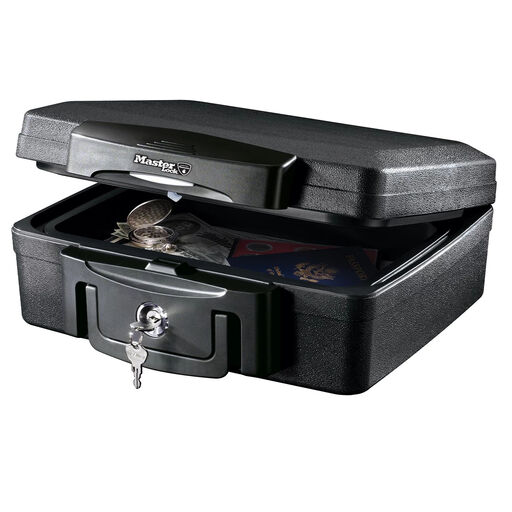
The User Profile: Perfect for students, young professionals, or anyone looking to protect a few essential documents (passports, contracts) and a backup USB drive. Its handle makes it very convenient to carry.
This model is ETL certified to protect digital media (CDs, USB drives) at temperatures up to 843°C. It avoids the common pitfall of standard safes that fail to protect electronic data from heat.
Dual Certification: UL fire protection for paper and ETL for digital media. Fully Waterproof: ETL certified for submersion, ensuring maximum protection in a flood.
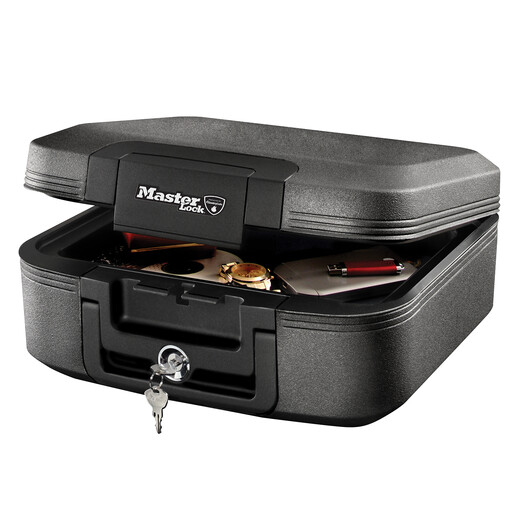
The User Profile: Ideal for a family wanting to store important documents (birth certificates, property deeds, insurance policies) without folding them. Its 7.8L capacity is designed to hold A4 documents flat.
Thanks to its internal width (32.5 cm), it holds A4 documents without bending the corners, a detail that preserves their integrity. Its ETL submersion certification is a major advantage against water damage.
A4-Sized: Designed to store documents flat. Easy to Carry: Its fold-down handle makes it easy to move when needed.
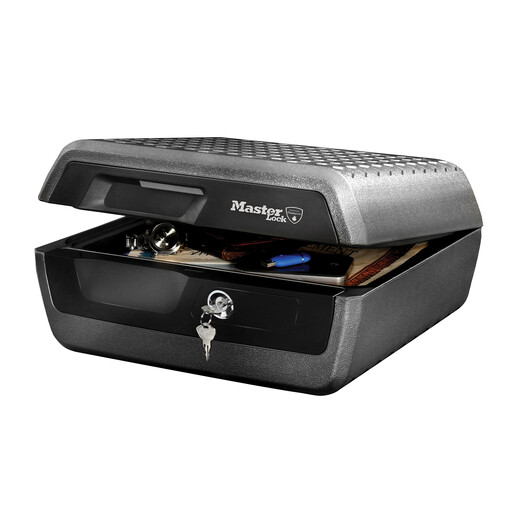
The User Profile: Designed for professionals, small businesses, or discerning individuals. Its one-hour fire resistance provides high-level protection for the most sensitive documents and computer backups.
It avoids the trap of basic certifications by guaranteeing 1-hour protection at 927°C. This is significantly more than the standard 30 minutes, a decisive advantage in a major fire.
Maximum Protection: Certified for 1 hour at 927°C by UL. Heat-Resistant Lock: Its tubular key lock is designed not to fail under heat, preventing it from opening accidentally.
Explore our full selection of products that meet our strict selection criteria and current standards.
The ideal location is a smart balance of accessibility and discretion. Forget obvious hiding spots like the master bedroom. The ground floor, at the back of a closet or under a desk, is often a good option. If you're concerned about flooding, the basement should be avoided unless your safe is certified for long-term submersion. And most importantly, never leave the spare keys nearby!
The structure of a quality safe is designed to last for decades. The main point of concern is the waterproof and fireproof seals. You should inspect them visually from time to time to ensure they are not cracked or damaged. Good to know: manufacturers like Master Lock offer a lifetime after-fire replacement guarantee, a testament to their confidence in the reliability of their products.
Absolutely not! This is a classic rookie mistake. If you lose the main key, you will have no way to access your belongings. Always keep the two provided keys in two different, secure locations known only to you (or a trusted person).