
Livraison le jour même ou le lendemain

Qualité garantie

Débloquez vos offres de bienvenue: Livraison GRATUITE | Jusqu'à -80 % | 30 jours d'essai gratuits à JoyPlus
Téléchargez l'application
Protecting what matters most, whether it's official documents, family keepsakes, or digital media, is a top priority. In the face of a fire or flood, a fireproof and waterproof safe is the common-sense solution. But be careful: the market is flooded with models that make lofty claims but sometimes hide deal-breaking flaws. To avoid buyer's remorse, it's crucial to know how to sidestep the most common pitfalls and invest in protection that is truly up to the task.
Here are the three pitfalls you must avoid:
To make an informed choice, you need to examine the few technical parameters that make all the difference in a safe's real-world protective capabilities.
Protection worthy of the name is based on objective standards. Here's how to decipher them:
Security against break-ins is just as crucial. A good home safe or professional model relies on several pillars:
Choosing a large safe or a more compact model depends on what you plan to store. Our advice: aim a little bigger than your immediate needs so you don't run out of space later.
Regarding installation, the dilemma of the bolt-down safe is a key issue. Securing it to the floor is the most effective way to prevent thieves from carrying it away. However, as we've seen, this can void the waterproof promise. Only a few rare models come with a waterproof bolting kit that preserves this dual protection.
To help you see more clearly, we've identified models that meet specific needs, taking into account performance criteria and the pitfalls to avoid.
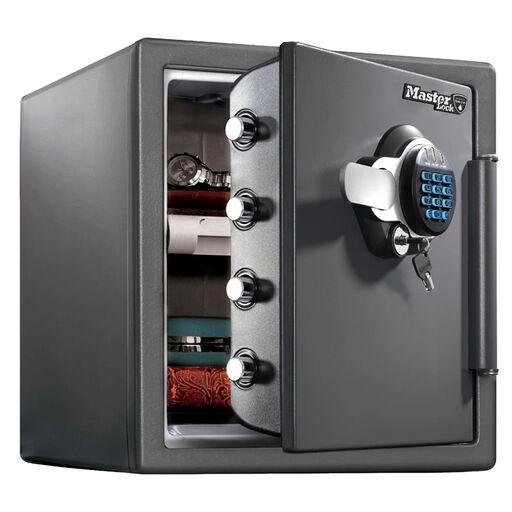
Why this model? Perfect for professional use or for protecting notarised deeds and contracts. Its dual-lock system (digital code + mandatory key) provides enhanced access control, while its extended fire protection ensures maximum peace of mind.
This model goes beyond standard protection. It offers 2 hours of fire resistance, double that of most home safes, and combines it with enhanced physical security (dual lock, 4 live bolts).
Extended fire protection: UL certified for 2 hours at 927°C.
Enhanced security: Dual digital and key locking system.
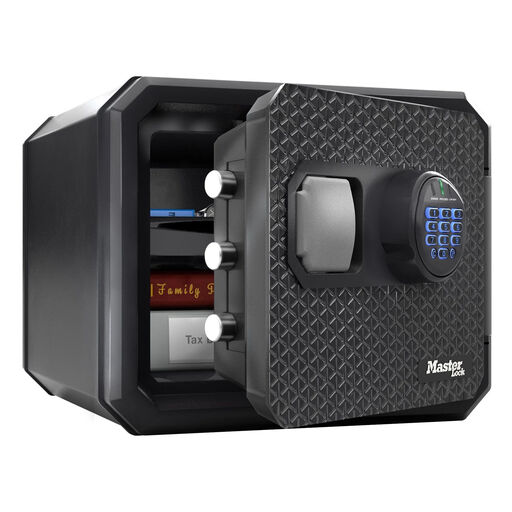
Why this model? This is the ideal solution for individuals who want to both bolt down their safe for maximum theft security and maintain complete protection against water damage.
It solves the bolting dilemma by including a specially designed waterproof hardware kit. This allows it to be secured to the floor while maintaining its ETL waterproof certification, a rare advantage in the market.
Includes waterproof bolting kit: Maintains water protection even after being bolted down.
Automatic locking: The bolts engage automatically when the door is closed.
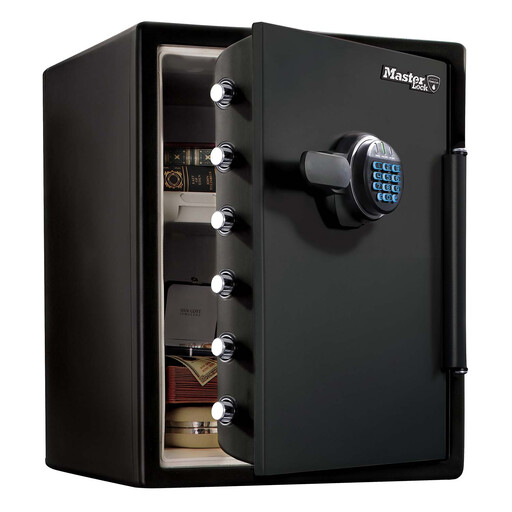
Why this model? With its extra-large capacity, this safe is aimed at families or small businesses needing to store a significant volume of documents, valuables, and digital media. Its well-designed interior makes access and organization easy.
It provides a complete, certified solution (fire, water, drop, break-in) for a large volume, eliminating the need for multiple, less effective small security boxes. Its six locking bolts ensure robust physical security.
Extra-large capacity: 56.5 litres to store numerous items.
Interior organization: Includes a tray, a drawer, and LED lighting.
If your needs are mainly about organization and protection from dust or unauthorized access for less sensitive items, other solutions may be a better fit.
Yes, in almost all cases. Drilling through the casing to bolt it to the floor creates entry points for water. The ETL waterproof certification is then no longer valid. To maintain this protection, you must either choose a freestanding (unbolted) model or select a safe specifically sold with a waterproof bolting kit, like one of the models in our selection.
For optimal fire protection, it is recommended to install it on the ground floor or in the basement, on a concrete floor. Avoid placing it in a closet or near flammable materials. Installing it in a corner of the room can also protect it from flames for longer. Never mount it to a wall, as this could compromise its fire resistance.
Media such as USB drives, external hard drives, CDs, or DVDs are much more sensitive to heat than paper. A standard fireproof certification (which keeps the temperature below 177°C) is not sufficient. A specific certification for digital media is required, which guarantees that the internal temperature will not exceed 120°C and that the humidity level will remain below a critical threshold. Check that the ETL certification explicitly mentions protection for "digital media."