
Livraison le jour même ou le lendemain

Qualité garantie

Débloquez vos offres de bienvenue: Livraison GRATUITE | Jusqu'à -80 % | 30 jours d'essai gratuits à JoyPlus
Téléchargez l'application
Protecting your most valuable possessions is a top priority. When faced with the risk of fire or flood, a fireproof and waterproof safe is the definitive solution for securing your important documents, digital media, and valuables. But be warned: the market is flooded with products that often make misleading claims. To help you navigate your options, we've broken down the most common pitfalls and the essential criteria to check before you buy.
Navigating the maze of options can quickly become a daunting task. Often, marketing claims hide critical flaws that only become apparent at the worst possible moment: when disaster strikes.
To make an informed decision, rely only on objective, verifiable data. Here are the two key parameters to scrutinize.
Certifications from independent laboratories like UL (Underwriters Laboratories) and ETL (Intertek) are your best guarantee.
Beyond protection from the elements, resistance to break-ins is crucial.
Every need has its solution. To guide you, here is our selection of proven models suited for different profiles.
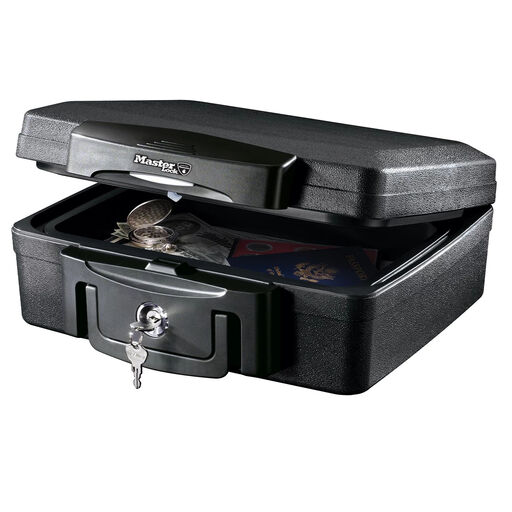
Its Profile : Perfect for securing a few essential documents (passports, deeds) and digital media. Its carrying handle makes it an ideal fireproof security chest for portable use or for those who lack the space for a larger safe.
This model is ETL certified for digital media protection at 843 °C, preventing the risk of data destruction. Designed to be portable, it is not meant to be bolted down, so its water protection remains fully intact.
Dual UL/ETL certification for fire (paper and digital) and ETL certification for full immersion. Its portability is a decisive advantage.
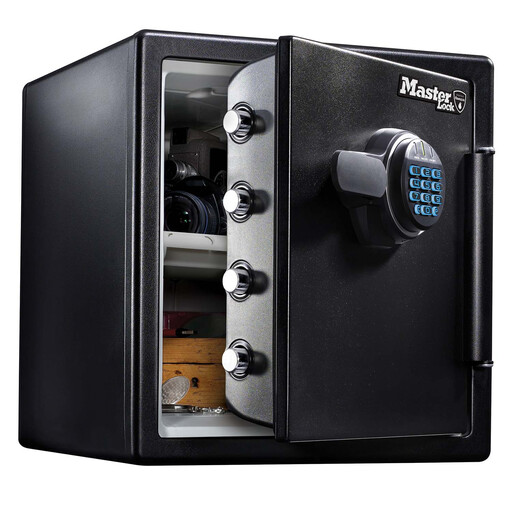
Its Profile : With its 33.6-litre capacity, it meets the needs of a family or small business for storing binders, electronic devices, and valuables. Its backlit digital keypad and interior organisation (shelf, door pocket) make it a practical everyday ally.
It boasts clear and robust certifications: UL rated for 1 hour at 927 °C and ETL verified for water (up to 12 cm for 24 hours). The manufacturer transparently states that water protection is only guaranteed before the safe is bolted down.
An excellent balance of capacity, high-level fire protection (1 hour at 927 °C), physical security (4 locking bolts), and thoughtful features like the interior LED light.
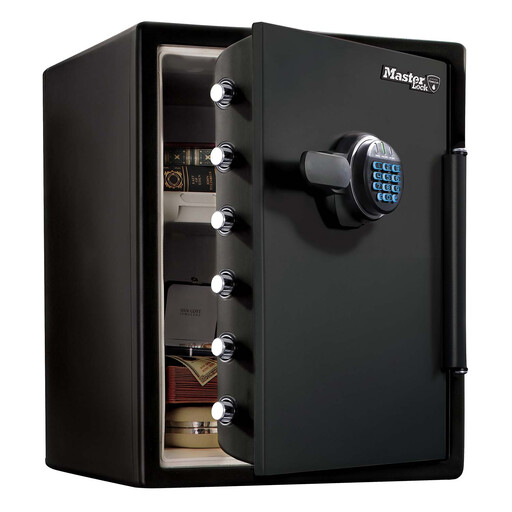
Its Profile : Designed for professionals or individuals with significant storage needs. Its large 56.5-litre capacity can accommodate numerous documents, bulky electronic equipment, and valuables, making it an excellent professional safe.
This model stands out with its explicit ETL certification for protecting digital media (CDs, USB drives) at 927 °C, in addition to its UL certification for documents. It is therefore perfectly suited for mixed-media protection.
Very large capacity, enhanced security with six locking bolts, and certified protection for all types of assets, including heat-sensitive items like data media.
We have compiled a complete, up-to-date list of products that meet our strict selection criteria and the most demanding security standards.
The difference is crucial and comes down to the maximum internal temperature the safe can reach during a fire. Paper begins to degrade and become unreadable at around 177?°C. In contrast, digital media (USB drives, hard drives, CDs) can be damaged at temperatures as low as 65?°C, not to mention their sensitivity to humidity. A safe certified only for paper will not protect your digital data. Always check for a specific certification for "digital media".
For the vast majority of models, the answer is no. Drilling into the safe to insert mounting bolts voids the waterproof certification. However, there are exceptions: some high-end models, like the 23L Master Lock (model 101023185), come with a special waterproof bolting kit that allows you to anchor the safe while preserving its ETL water protection certification. Always read the manufacturer's instructions carefully.
Battery life varies with use, but you can generally expect one to two years. Most safes will give a visual or audible signal to warn you when the batteries are low. If they die completely, don't panic: your code is stored in memory. Access is then possible in two ways: either with a backup key (included with purchase) or by using an external 9V battery held against contacts on the keypad to temporarily power the system and enter your code. A word of advice: always keep the backup key in a secure location—and most importantly, never inside the safe itself.