
Livraison le jour même ou le lendemain

Qualité garantie

Débloquez vos offres de bienvenue: Livraison GRATUITE | Jusqu'à -80 % | 30 jours d'essai gratuits à JoyPlus
Téléchargez l'application
The nightmare of losing everything in a fire or flood: passports, property deeds, digital backups... Faced with this risk, a fireproof and waterproof safe is the common-sense solution. The problem? The market is flooded with models making alluring marketing promises, but their reliability often leaves much to be desired. To prevent your investment from literally going up in smoke, here are the pitfalls to avoid before you choose.
For real protection, trust the technical specifications and certifications, not the advertising slogans.
To make an informed choice, focus on these three non-negotiable points. They are your best insurance against nasty surprises.
Only independent laboratories can validate a safe's fire resistance. The two benchmark certifications are UL (Underwriters Laboratories) and ETL (Intertek).
Water damage isn't just a small leak. Between a flood, a burst pipe, or the tons of water sprayed by firefighters, simple "rain resistance" doesn't stand a chance. Demand a security box with ETL verification for water submersion. This standard guarantees that the safe will keep its contents dry for a specified time, even when fully submerged. This is what separates salvaged documents from those headed for the trash.
The internal volume is a decisive factor. To archive contracts or diplomas, choose a model that can hold A4 documents flat so you don't have to fold them.
When it comes to locking mechanisms for a home safe, there are two schools of thought:
Here are a few models that meet specific needs, all selected based on the objective criteria we've just detailed.
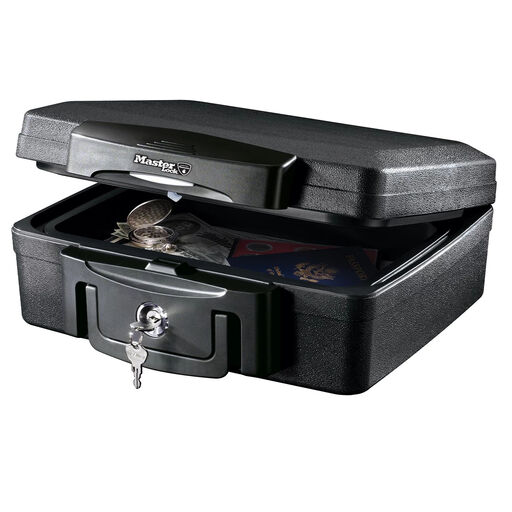
Why it stands out: Ideal for individuals who want to protect their vital documents (passports, birth certificates, property deeds) and a few valuables. Its fire-resistant security case format with a handle makes it easy to store in a closet or grab during an evacuation.
It doesn't rely on vague promises. It boasts UL and ETL certifications for 30 minutes of protection at 843°C, plus ETL verification for water submersion. Proof, not promises.
Certified protection for both paper documents AND digital media. Its mechanical key lock ensures reliable locking, even in extreme conditions.
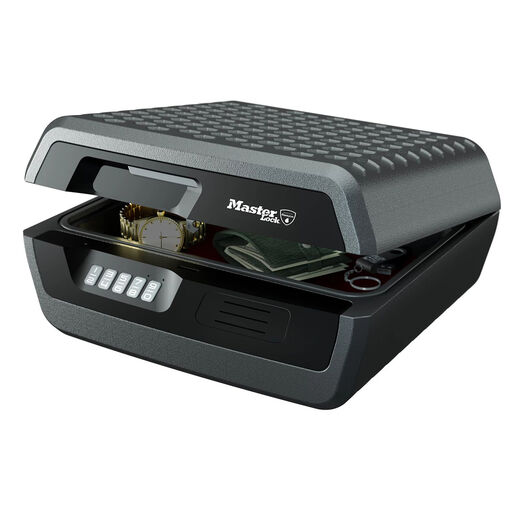
Why it stands out: Perfect for freelancers or families who need more space. Its 10L capacity allows for storing stacks of A4 documents flat. The programmable digital combination lock simplifies daily access, without the hassle of a key.
It combines a comfortable internal volume with comprehensive certifications (UL/ETL for fire and ETL for water). Its digital lock is designed not to be a weak point, keeping the safe sealed no matter what.
Large enough for unfolded A4 documents. The digital code access is both convenient and secure.
We have analysed and compiled a complete selection of products that meet these demanding security standards.
For the consumer, these two certifications are on par. They guarantee that a product has been tested by an independent third-party organisation according to strict protocols. The important thing is to ensure that the Master Lock portable safe (or any other brand) you are interested in has one of these certifications, and not to rely on a simple "fire-resistant" marketing claim.
A portable safe has the advantage of being mobile, but this flexibility also makes it easier to steal. If your only concern is protection from fire and water at home, bolting it down is not essential. However, if the risk of burglary is a priority, it's better to opt for a heavy model designed to be bolted down, or simply place your portable safe inside a larger, already-secured safe.
The battery life of a digital combination lock depends on usage, but you can generally expect one to two years. Quality models provide ample warning with a low-battery indicator. As a precaution, change the batteries once a year to avoid any nasty surprises. Finally, remember to keep the backup key or master code in a safe place, but separate from the safe itself.