
Livraison le jour même ou le lendemain

Qualité garantie

Débloquez vos offres de bienvenue: Livraison GRATUITE | Jusqu'à -80 % | 30 jours d'essai gratuits à JoyPlus
Téléchargez l'application
Protecting your most valuable possessions—identity documents, family heirlooms, digital media, or cash—is a top priority. When facing risks like fire, flood, or theft, a fireproof safe is the common-sense solution. However, the market is flooded with models that make vague marketing promises, and disappointing purchases are all too common.
Before you invest, it's crucial to understand the most common pitfalls. Many users discover—far too late—that their safe doesn't provide the protection they expected. Here are the key points to check to make an informed choice and avoid unpleasant surprises.
To cut through the confusion, focus on the objective features that determine the true security level of your future safe.
Never rely on marketing claims alone. Demand certifications issued by independent laboratories like UL (Underwriters Laboratories) or ETL (Intertek).
The opening mechanism should suit your usage habits and desired security level.
The volume of your safe should obviously match what you plan to store inside. A small safe or a fireproof security case will be sufficient for passports and a few important documents. If you need to store binders, a laptop, or larger valuables, you'll need to look for a model with a greater capacity. A portable safe with a handle can be an excellent solution for those who need to transport their belongings securely.
Rather than an exhaustive list, here is a selection of products suited to different user profiles, based on objective protection criteria.
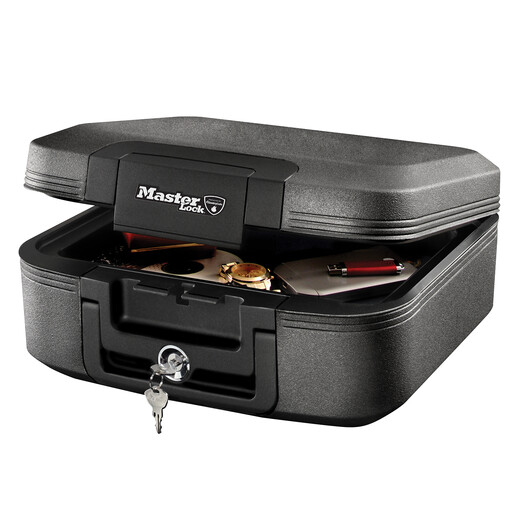
Why this model? Perfect for protecting essential documents (A4 size), passports, and digital media, whether at home or on the go. Its carrying handle makes it a very practical and easy-to-store portable solution.
This model clearly displays its certifications: UL for fire (30 min at 843°C / 1550°F) and ETL for water submersion, which cuts through vague promises. It protects paper as well as digital media.
Complete Certified Protection: Fire and water resistance verified by ETL/UL. Portable Design: Integrated handle for easy transport.
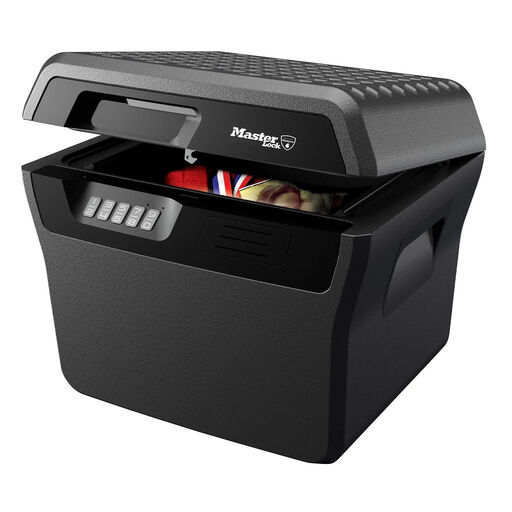
Why this model? The perfect compromise for family use or a small office. Its 18.5L capacity allows you to store A4 documents flat, electronic devices, and other valuables, all while offering the convenience of a digital lock.
It combines certified fire and water protection with a modern access system. It's not just fireproof; it's also tested for water submersion, avoiding the classic trap of incomplete protection.
Programmable Digital Access: Allows you to set a user code and a master code. Optimized Capacity: Designed to store A4 documents without folding.
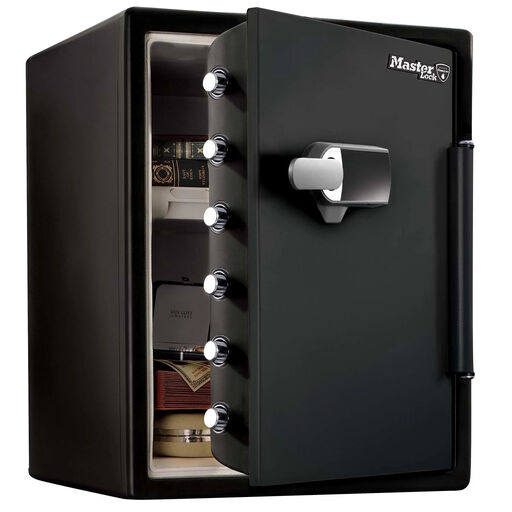
Why this model? Designed for SMBs, freelancers, or individuals with high-value assets. Its very large capacity (56.5L) and multiple layers of protection make it a fortress for the most demanding environments.
This model goes far beyond simple fire protection. It incorporates true anti-theft design (6 bolts, pry-resistant hinge) and drop resistance (ETL certified), leaving no ambiguity about its dual-layer security.
Multi-Risk Protection: Certified for fire (1h at 927°C / 1700°F), water, and drops. Reinforced Security: Steel construction with 6 live-locking bolts and an integrated alarm.
Discover our full selection of products that meet our strictest security and certification criteria.
Not always. Digital media are far more sensitive to heat than paper. To be protected, the safe must have a specific certification, often labeled "ETL Verified for Digital Media Protection". This guarantees that the internal temperature will not exceed 121°C / 250°F. This is a point you must check if you plan to store electronic devices in it.
Bolting it down is highly recommended for an anti-theft safe, as it prevents a burglar from simply carrying it away. However, be careful: drilling into the safe to bolt it to the floor can compromise its waterproof seal. Some manufacturers, like Master Lock, even specify that their waterproof certification is voided if the bolt-down kit is used. You will therefore have to make a trade-off between theft protection and protection from water damage.
It's simply the certified duration of resistance at a given temperature. A 30-minute rating is often sufficient for a typical house fire, which is usually brought under control quickly by firefighters. A 60-minute (or longer) rating offers superior security, which is relevant for offices or homes where emergency response might take longer. It all depends on your own risk assessment and the value of what you are protecting.