
Livraison le jour même ou le lendemain

Qualité garantie

Débloquez vos offres de bienvenue: Livraison GRATUITE | Jusqu'à -80 % | 30 jours d'essai gratuits à JoyPlus
Téléchargez l'application
Fire, flood... No one is safe from disaster. In this context, protecting your important documents and digital memories isn't a luxury, but a necessity. Passports, property deeds, contracts, or backup hard drives: losing them can be catastrophic. A fireproof security case is a simple and effective first line of defence to keep these assets safe.
The problem is, the market is flooded with products that make tempting promises, but their reliability often leaves much to be desired. To help you see things more clearly and invest in a solution that's truly worth it, we've broken down the pitfalls to avoid and the essential criteria to check before you buy.
Investing in ineffective protection is as good as having none at all. Here are the common mistakes that can be costly:
To avoid getting lost in the jungle of options, focus on these few technical points. They, not the marketing spiel, are what guarantee the quality and effectiveness of your future portable safe.
These are YOUR benchmarks for trust. Don't rely on anything else. The two reference labels are from the independent laboratories Underwriters Laboratories (UL) and Intertek (ETL).
A worthy fireproof and waterproof box must also prove its resistance to immersion. Here again, the ETL label is the standard. The "ETL Verified for Full Submersion" mark means the case has been tested to guarantee it remains waterproof even when fully submerged, perfectly simulating a flood or a massive dousing by firefighters. This is a non-negotiable criterion.
Rather than an endless list, we've chosen to select products that check all our security boxes, matching them with clear user profiles.
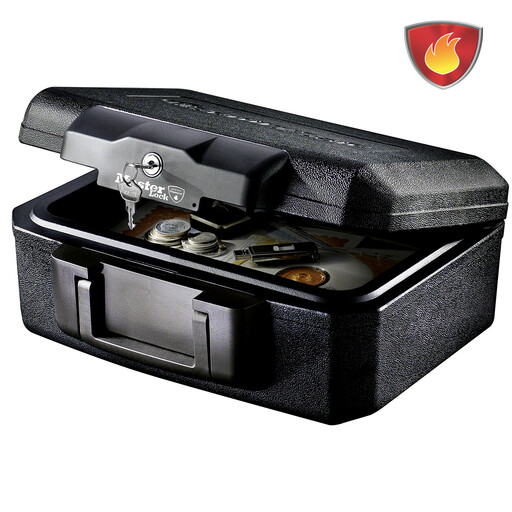
The verdict: Perfect for those who primarily want to protect their important documents (passports, deeds, wills) from fire. A focused and accessible solution for a first layer of security at home.
This model doesn't just make vague promises. It boasts a UL Classified certification that guarantees its fire resistance. Concrete, verifiable proof of performance.
It protects documents as well as digital media (ETL Verified), all in a compact size that's easy to hide in a closet.
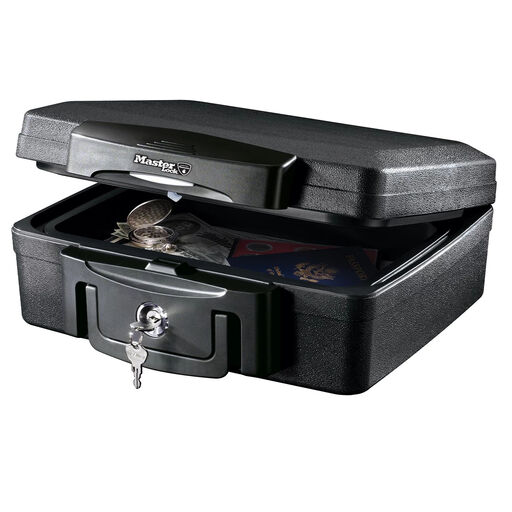
The verdict: The solution for those who live in a flood-prone area or simply refuse to compromise. This case offers certified dual protection against fire and water for absolute peace of mind.
It avoids pitfall #2 by adding water protection, certified ETL Verified for Full Submersion. The guarantee that your belongings will stay perfectly dry.
Its dual certification (fire and water) makes it a fortress. Its carrying handle transforms it into a portable safe, ready to be taken with you in an emergency.
Explore our full selection of products that meet our security criteria and current standards.
In everyday language, the two are often confused. Yet, the difference is significant. A "fire-resistant" material will take longer to burn. A certified fireproof product (under UL or ETL standards) goes further: it guarantees that the temperature inside will remain below a certain threshold for a given period, thus protecting its contents. It's this thermal insulation capability that makes all the difference.
For maximum protection, choose the ground floor or basement. In a fire, heat rises, and upper floors are more exposed and more prone to collapse. For discretion, avoid obvious hiding spots: the back of a closet or under a piece of furniture are still your best bets.
Most models, like those from Master Lock, come with a spare set of keys. Pro tip: give the second key to a trusted person or store it in a secure location different from where the safe is kept (at a relative's house, in a bank safe deposit box...). If you lose both, you'll need to contact the manufacturer's customer service with your product's serial number to find out about possible replacement solutions.