
Livraison le jour même ou le lendemain

Qualité garantie

Débloquez vos offres de bienvenue: Livraison GRATUITE | Jusqu'à -80 % | 30 jours d'essai gratuits à JoyPlus
Téléchargez l'application
Protecting what matters most is a natural instinct, whether it's important documents, family heirlooms, or business assets. When faced with the risks of fire, flood, or burglary, a fireproof safe stands out as the ideal solution. However, the market is flooded with models making vague marketing claims that can create a dangerous false sense of security.
To avoid buyer's remorse, it's crucial to know how to spot the most common traps. This is a lesson many unfortunately learn only after disaster strikes, when they discover their safe was not up to the task.
To make an informed decision and choose the right home safe, focus on the objective specifications that define its true level of protection.
Never trust vague claims. Demand independent certifications that verify the safe's actual performance. The two leading benchmark labels are:
These labels always specify two critical pieces of information: the duration of resistance and the maximum internal temperature reached. For example:
The type of lock should suit your usage habits and need for convenience.
A good anti-theft safe is more than just its lock. Scrutinize its construction:
To help you see how these criteria apply in practice, here are a few models that meet very specific needs.
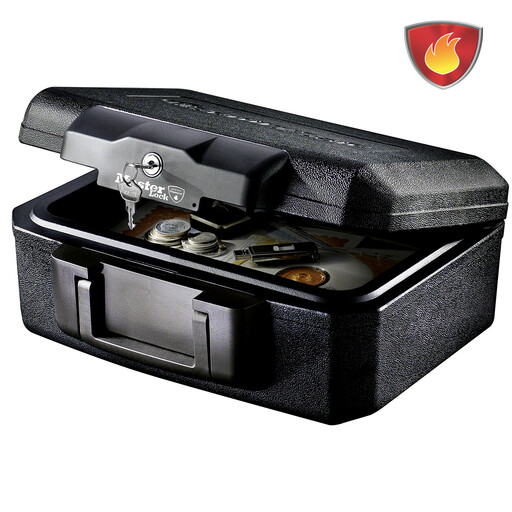
Why it stands out: Ideal for safeguarding essential documents (passports, birth certificates) and some digital media. Its carrying handle makes it very convenient for those who need to transport their valuables securely. It's an excellent first-time purchase.
It doesn't just make empty promises. It clearly displays its UL and ETL certifications for protecting both documents AND digital media (30 minutes at 843 °C), so you know exactly what you're buying.
Certified protection for documents and digital media, all in a compact, portable design. The key lock ensures simple, foolproof security.
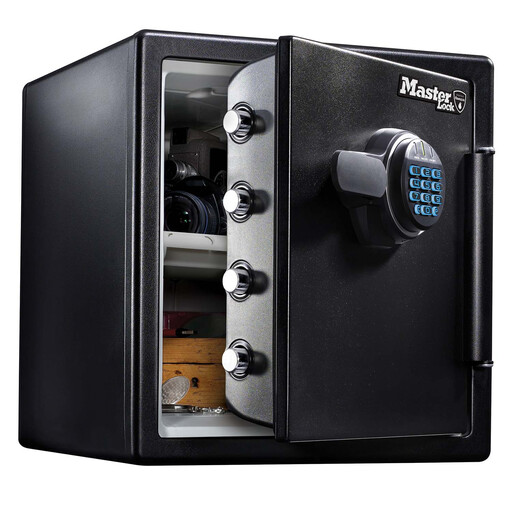
Why it stands out: Perfect for families who want to centralise the protection of their papers, jewellery, and digital backups. Its generous 33.6 L capacity offers ample space, and its interior layout is well-designed.
It anticipates the waterproofing trap by specifying that the ETL certification is only valid before the safe is bolted down. Its robust construction, with four live-locking bolts and a pry-resistant hinge bar, meets the requirement for a solid structure.
A very high level of certified protection against fire (1h at 927 °C), water, and impact. The programmable digital lock with its backlit keypad perfectly blends security with user convenience.
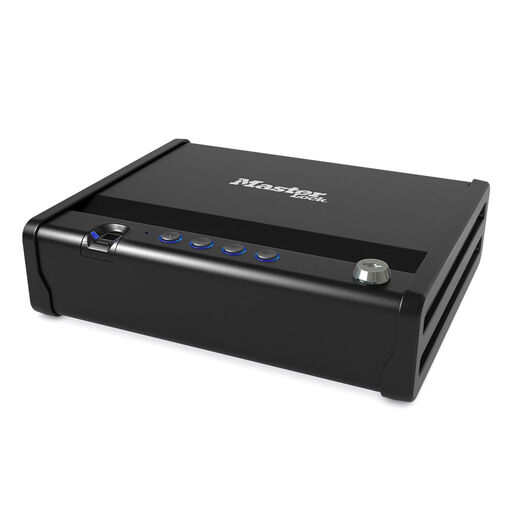
Why it stands out: Designed for those who need quick, frequent access to their valuables (watches, jewellery, cash) in an office or bedroom. Its automatic, silent opening is a real asset for discretion.
It avoids the "high-tech lock on a cardboard box" trap thanks to its concealed hinges, which are far more resistant to prying. It is honest about not being fireproof, focusing instead on access security and anti-theft protection.
Instant biometric access and silent, automatic opening. Its design with concealed hinges and an included bolting kit enhances security against theft.
We have compiled a comprehensive, up-to-date selection of products that meet these demanding selection criteria and security standards, including travel models and secure key boxes.
Yes, for effective protection against theft, bolting it down is highly recommended. A small or medium-sized safe that isn't anchored will simply be carried away by burglars to be broken into later at their leisure. However, keep in mind that the drilling required for installation will most likely void its waterproof certification. It's a trade-off between maximum protection against theft and protection against water damage.
Choose a location that is both discreet and structurally sound. The ground floor or basement, on a concrete slab, are the preferred options. Upper-story floors may not be able to support the weight of heavier models, especially in a fire that could weaken the building's structure. Avoid very humid areas like a poorly ventilated cellar. A closet, office, or garage are classic locations that allow you to conceal the safe while keeping it accessible.
A quality safe, with its steel construction, can last for decades. However, the insulating materials that provide fire protection can degrade over time, especially if exposed to moisture. On electronic models, components like the keypad or locking mechanism may also require maintenance or a simple battery change. It is therefore advisable to follow the manufacturer's recommendations and inquire about the after-fire replacement guarantee that some brands, like Master Lock, offer.