
Livraison le jour même ou le lendemain

Qualité garantie

Débloquez vos offres de bienvenue: Livraison GRATUITE | Jusqu'à -80 % | 30 jours d'essai gratuits à JoyPlus
Téléchargez l'application
Safeguarding your important documents, precious memories, and valuables is a top priority. In the event of a fire or flood, a high-quality safe can literally save everything. However, the market is flooded with models making vague promises, making it easy to choose poorly. Our mission: to help you cut through the noise. This guide breaks down the essential criteria for selecting a security solution that truly meets your needs.
Before you commit, let's review the common mistakes that could turn your investment into a costly, useless gadget.
To make the right choice, rely on objective data, not just marketing claims.
These are what guarantee your safe's real-world performance. The two leading international standards are UL (Underwriters Laboratories) and ETL (Intertek).
The type of lock should suit your usage habits and desired level of convenience.
Beyond the lock itself, check for solid steel deadbolts (the steel bolts that secure the door to the frame) and a pry-resistant hinge for better resistance against break-in attempts.
Carefully assess what you plan to store. A document safe must be able to accommodate A4 or letter-sized formats lying flat. For jewellery, cash, or electronics, look for an interior with adjustable shelves, drawers, or carpeted lining to prevent scratches.
Rather than an endless list, here are three targeted solutions for specific needs, all from the Master Lock catalogue—a brand renowned for the reliability of its products.
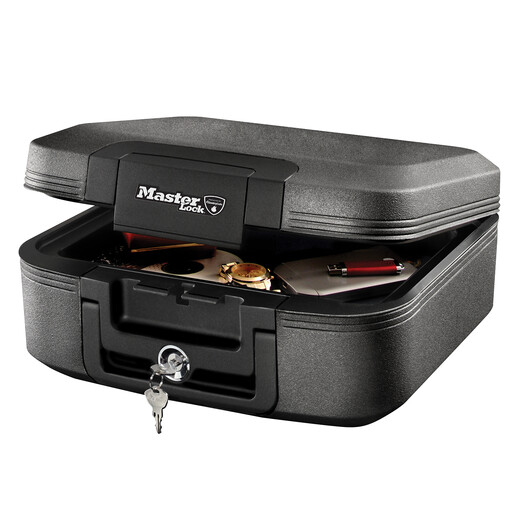
Why we recommend it: Perfect for renters or anyone needing to protect a few essential documents (passports, property deeds) and valuables without a permanent installation. Its carrying handle makes it as convenient as a piece of luggage.
It has clear UL and ETL certifications for fire and water, a far cry from empty promises. Its format is designed to hold A4/letter documents flat, avoiding the "too small" trap.
A portable fireproof case that combines certified protection for paper and digital media with the simplicity of a tubular key lock, which is harder to pick.
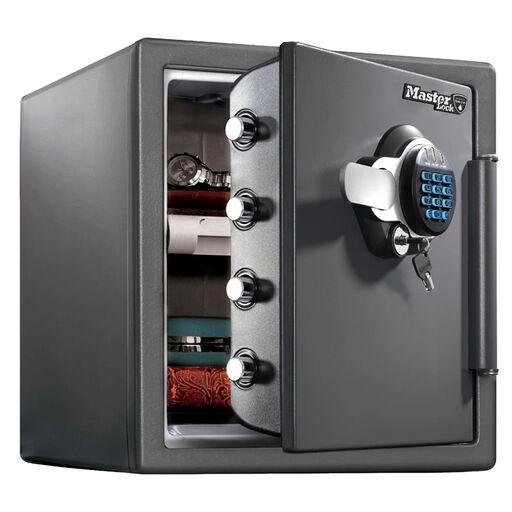
Why we recommend it: Ideal for homeowners or small business owners who need to secure a significant volume of documents, digital backups, and valuables with a superior level of protection.
This goes far beyond basic models with 2-hour fire protection. Its dual locking system (digital + key) enhances security against break-ins, not just disasters.
Top-tier protection: 2-hour fire resistance at 927°C (1700°F), certified waterproofing, and a mandatory dual lock (code + key) for complete peace of mind.
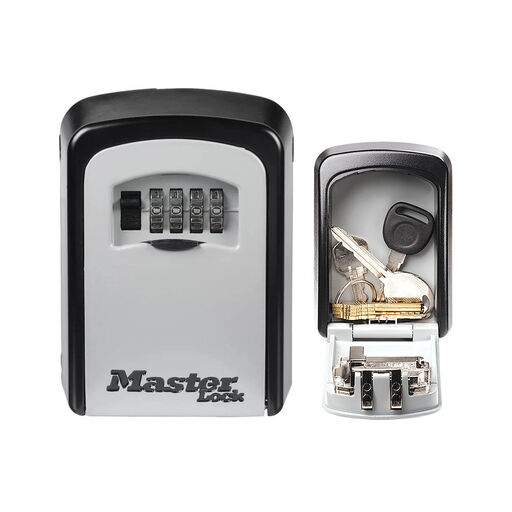
Why we recommend it: The perfect solution for short-term rental managers (like Airbnb hosts), families, or businesses that need to provide secure access to keys without being on-site. It mounts easily to a wall.
It solves a very specific problem that traditional safes don't address. No more falling into the trap of hiding a key under the doormat or in a flowerpot—an open invitation for burglars.
A robust, weather-resistant wall-mounted key box with a customisable 4-digit combination for simple, secure access sharing.
Explore our full selection of products that meet our strictest criteria for security and reliability.
A safe's steel body is built to last for decades. However, the waterproof seals can degrade over time, especially if exposed to extreme conditions. For models with a digital combination lock, it's advisable to replace the batteries annually. The manufacturer's warranty period is often a good indicator of expected longevity.
Bolting it down is highly recommended to prevent a thief from simply carrying the entire safe away. However, read the manufacturer's instructions carefully. On some models, drilling the necessary holes for mounting can void the fire or water resistance certification. As a general rule, floor mounting is the preferred method for certified safes.
Not always. Paper begins to char at 177°C (350°F), but digital media is vulnerable at temperatures as low as 120°C (250°F), and can even be damaged by high humidity alone. To protect these types of items, it is essential to choose a safe with a specific ETL certification for digital media protection. Only this standard guarantees that the internal temperature and humidity will remain low enough for them to survive.