
Livraison le jour même ou le lendemain

Qualité garantie

Débloquez vos offres de bienvenue: Livraison GRATUITE | Jusqu'à -80 % | 30 jours d'essai gratuits à JoyPlus
Téléchargez l'application
Protecting what matters most—passports, property deeds, digital backups, or family heirlooms—is a given. In the face of a disaster like a fire or flood, a portable, fireproof safe emerges as the ideal solution. The problem is, the market is saturated with products making flashy marketing claims that only create confusion.
Before you invest, it's crucial to know how to avoid the most common pitfalls. Too many buyers end up with boxes that offer only an illusion of security because they failed to pay attention to essential technical details. Here are the mistakes to avoid at all costs.
To make the right choice, rely on objective features rather than advertising slogans. Here are the three non-negotiable checkpoints.
A safe's effectiveness isn't a matter of taking a company's word for it; it's proven by the certifications it has earned. The two key labels to look for are:
The choice of mechanism depends on your use case and your preferences for simplicity and security.
Size matters. Before choosing, make a list of what you want to protect.
To help you see more clearly, here are a few models that meet specific needs, selected based on their verifiable technical specifications.
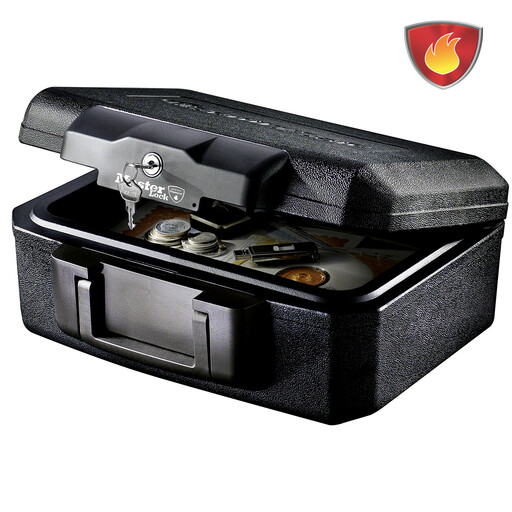
Ideal for: Those who need to secure a few essential documents (passports, birth certificates) and USB drives. Its compact size and carrying handle make it a perfect solution for home use or for taking valuables on the go.
This model doesn't just make vague promises. It is UL certified for documents and ETL certified for digital media, thus avoiding the trap of unverified claims and the false sense of security for your data.
The key lock ensures rock-solid mechanical reliability. Its dual certification (fire protection for both documents and digital media) makes it a safe and versatile choice at an affordable price point.
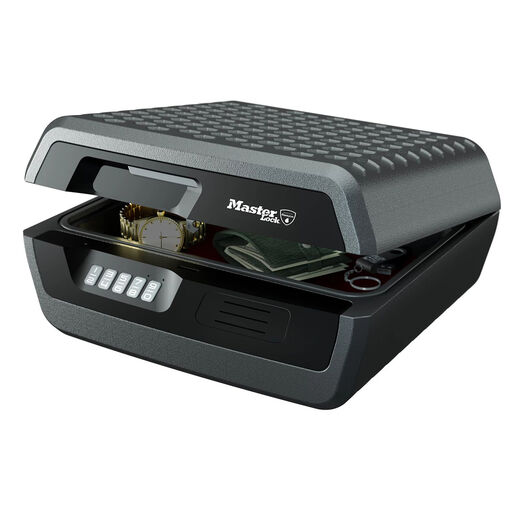
Ideal for: A homeowner or family looking for comprehensive protection. Its 10 L capacity allows for storing A4 documents flat, and its dual fire and water protection offers maximum peace of mind against all disaster scenarios.
This safe directly addresses pitfalls #1 and #2. It has an ETL Verified certification for water submersion, clearing up any ambiguity between "water-resistant" and "waterproof." Its UL/ETL fire certification is also clearly defined for both documents and digital media.
The dual certified protection (fire and water) is its knockout feature. The programmable digital combination lock adds a welcome layer of convenience and security for quick, controlled access.
Ideal for: A freelancer or small business that needs to protect contracts, client data on hard drives, and other administrative documents. This model offers the capacity and certifications required to secure these critical business assets against both fire and water.
It avoids the pitfall of inadequate protection for digital media. Its ETL certification for electronic media ensures that business data backups are just as protected as paper contracts—a crucial, often-overlooked detail.
Its ability to store A4 documents flat is a decisive advantage in a professional setting. The digital lock, with its silent mode, allows for discreet access in an office environment.
We have compiled a complete selection of products that meet these strict selection criteria and current safety standards.
1. What is the lifespan of a portable fireproof safe? The structure and fire-resistant materials of a quality safe are designed to last for decades without losing their effectiveness. For models with a digital lock, you just need to replace the batteries every one to two years. An important point is the after-fire replacement guarantee. Some brands, like Master Lock, promise to replace your safe if it has been damaged in a fire.
2. Where should I place a small home safe for optimal protection? For maximum fire protection, it is advisable to place the safe on the ground floor and in a corner of the room, as fire and heat tend to rise. Avoid basements or garages prone to moisture, unless your safe is explicitly certified for water submersion. Its portable format allows it to be easily concealed in various, non-obvious locations.
3. Are UL and ETL certifications really necessary? Yes, absolutely. They are the only objective, independent proof that your fire-resistant document case will deliver on its promises in real-world conditions. Without these labels, it's impossible to be certain of the level of protection. Buying an uncertified safe is simply playing Russian roulette with your most precious belongings.