
Livraison le jour même ou le lendemain

Qualité garantie

Débloquez vos offres de bienvenue: Livraison GRATUITE | Jusqu'à -80 % | 30 jours d'essai gratuits à JoyPlus
Téléchargez l'application
With promises of spotless cleanliness, long-lasting freshness and effective results from 20 °C, choosing a washing machine detergent can quickly become a headache. But the key things to consider are quite straightforward: the type of laundry, the programme you use, how soiled your clothes are, skin sensitivity and the real cost per wash.
A large bottle doesn’t necessarily mean better value. To compare products, look at the cost per wash, taking into account the recommended dosage, water hardness and load size. A detergent advertised as providing 40 washes may require more product if your water is hard or your laundry is particularly dirty.
A fragranced detergent can leave clothes smelling pleasant, but that doesn’t mean it will remove stains more effectively. Some fragrance ingredients may also bother people with sensitive skin. In a household with children or reactive skin, check the ingredients list and choose a formula whose properties are clearly stated on the packaging.
A detergent designed for a standard cycle won’t necessarily work in the same way on a quick programme. Capsules are usually placed at the bottom of the drum, while liquid detergent is poured into the appropriate compartment. Products intended for hand-washing, including some detergents for wool or silk, shouldn’t be used in a washing machine unless the label says they can be.
The right format mainly depends on your routine. If you run several small loads a week, liquid detergent gives you more flexibility. For a simple routine with no measuring, capsules reduce the risk of using too little or too much detergent.
A low-temperature detergent should be suitable for programmes at 20 or 30 °C. For a quick-cycle detergent, check that the packaging mentions fast dissolution or use on express programmes. As the product has less time to work, the dose, load size and level of soiling matter even more.
However, energy-saving claims need to be considered in context. Consumption also depends on the washing machine, the temperature selected, the volume of laundry and how often you wash. For example, Ariel claims savings of up to 60 % per wash when switching from 60 °C to 30 °C with its Ultra Stain Remover product. This is a manufacturer’s claim and applies under the specific conditions it states.
For everyday laundry, choose a formula suitable for whites and colours. Delicate fabrics need a detergent for delicates and careful attention to the care label. Wool and silk often require a specialist detergent and a suitable programme.
Claims such as “hypoallergenic”, “fragrance-free” or “for sensitive skin” should always be considered alongside the ingredients list. They don’t replace checking for any fragrances, preservatives or allergens that must be declared. If you experience irritation or discomfort, stop using the product and ask a healthcare professional for advice.
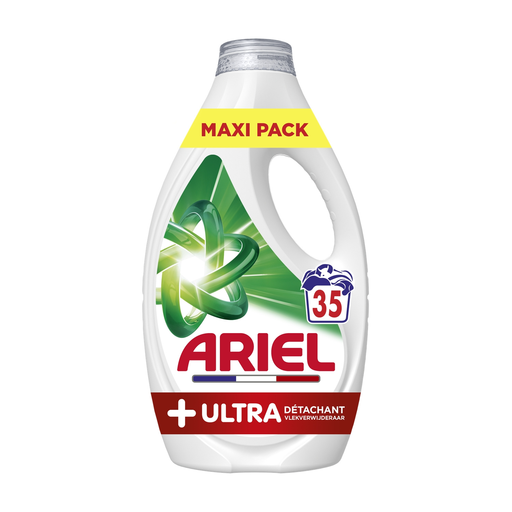
Why it suits this type of user : With its 1,575 L liquid format and 35 advertised washes, this detergent is suitable for everyday use and makes it easy to adjust the dose to the size of your load.
The number of washes is clearly stated, and the manufacturer says it can be used for cold washes and quick cycles. Still, check the dosage instructions on the label.
A liquid formula, the option to pre-treat some stains as directed, and made in France.
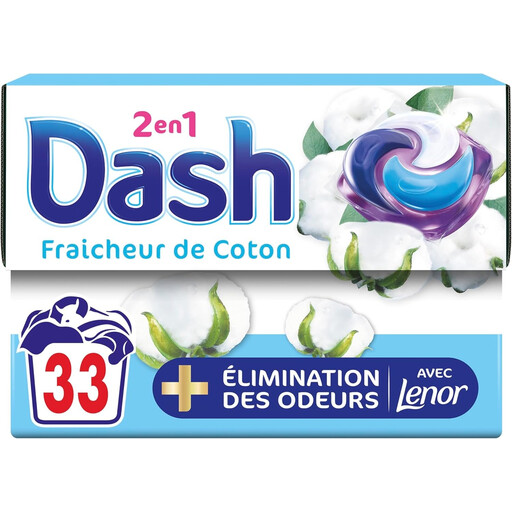
Why it suits this type of user : Pre-measured capsules will appeal to households looking for a quick routine and a fresh cotton scent, without having to measure detergent for every wash.
The manufacturer says to place the capsule at the bottom of the drum and add a second for loads over 6 kg or very dirty laundry.
A pack of 33 capsules, claimed to dissolve at low temperatures, and made in France.
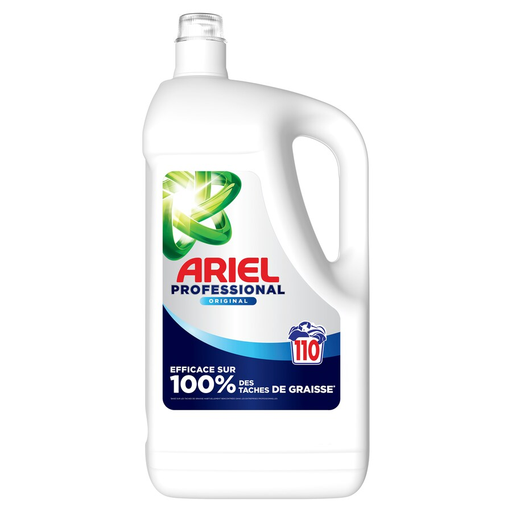
Why it suits this type of user : With its 4,95 L bottle and 110 advertised washes, this format is aimed at larger families, households that build up plenty of laundry, or professional use.
The recommended amounts vary according to how soiled the laundry is, helping you avoid using too much despite the large pack size.
A professional-size format, with a recommended dose of 40 to 80 ml depending on the load and how soiled it is.
We’ve brought together a comprehensive selection, updated in real time, of products that meet these demanding criteria while complying with European safety regulations.
Choose a product whose packaging clearly states that it’s suitable for quick cycles or works fast. Also reduce the load size and adjust the dosage: an overloaded express programme may leave some stains visible, even with a detergent described as highly effective.
Not necessarily. Capsules make dosing easier, but their cost per wash may be higher than that of liquid detergent sold in a large format. Compare the pack price with the number of advertised washes, and take recommendations for larger loads into account.
Look for a detergent labelled as suitable for sensitive skin, then check its ingredients, particularly for fragrances and preservatives. Rinse your laundry thoroughly and avoid using too much detergent. A marketing claim isn’t a medical guarantee: if a reaction persists, ask a healthcare professional for advice.