
Livraison le jour même ou le lendemain

Qualité garantie

Débloquez vos offres de bienvenue: Livraison GRATUITE | Jusqu'à -80 % | 30 jours d'essai gratuits à JoyPlus
Téléchargez l'application
A nib that bleeds, a tip that flattens after a few pages, or colours you never use can quickly turn a tempting set into a disappointing purchase. Yet fine-tipped pens remain invaluable companions for note-taking, diagrams, drawing, detailed colouring, illustration and bullet journaling.
Before choosing a pack of fineliners or fine-tipped felt pens, it’s worth looking beyond the simple number of colours advertised. Here are the criteria to consider when comparing models available in the UK, so you can avoid any unwelcome surprises.
A 0.4 mm nib is generally suitable for fine writing, outlines and annotations. However, the result also depends on the nib material, the pressure you apply and the paper you use. A soft fibre nib can produce a slightly different line to one reinforced with a metal tip.
Models ranging from 0.05 mm to 1.0 mm, such as certain precision pen sets, offer more possibilities for technical drawing and illustration. On the flip side, the finest nibs require a light touch and a perfectly smooth surface.
An ink described as water-resistant or smudge-proof does not guarantee it won’t bleed through thin paper. For note-taking and bullet journaling, check how it behaves on both sides of your notebook. If you work with watercolours or alcohol markers, a fast-drying pigment ink may be more suitable. Testing on a scrap piece of paper is still the best precaution.
Water-based inks are common in colouring pens and note-taking pens. They are pleasant to use, but can react very differently depending on the paper’s weight and coating.
A set of 40, 60 or 100 colours offers plenty of choice, but it quickly loses its appeal if the shades are hard to identify. A roll-up case, a rigid box or caps colour-coded by size and shade make daily selection much easier.
Storage also affects the lifespan of your pens. After each use, make sure the caps are firmly replaced. Store them according to the manufacturer’s recommendations, typically in a dry place away from heat and direct sunlight.
For writing, diagrams and bullet journaling, 0.4 mm pens offer a particularly versatile compromise. A nib surrounded by metal can be more practical when using a ruler or stencil, as it reduces direct contact between the fibre and the edge of the tool.
For illustration, a set that includes several sizes allows you to switch from fine details to bolder outlines without changing ranges. However, a metal tip isn’t automatically suitable for every technique. The pressure you apply and the paper texture remain key factors.
Here are the details to look for on the product page:
Some descriptions mention odourless or non-toxic ink. This does not replace the need to read the warnings, particularly those regarding ingestion, eye contact and small parts such as caps. Children under 3 years old must not use these items due to the risk of small parts.
A set of 10 to 20 shades can be enough for notes and colour-coding your studies. For drawing, mandalas or regular creative projects, 30 to 65 colours give you a more nuanced palette. Sets of 60 or 100 dual-tip colours often combine a fineliner and a brush tip. However, they take up more space and are generally more expensive.
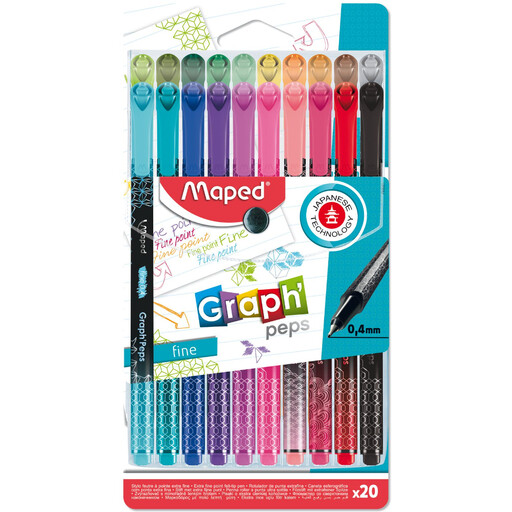
Why this suits this profile: With 20 colours and a 0.4 mm nib, this pack provides a versatile foundation for notes, diagrams, colouring and your first detailed drawings.
The nib width is clearly stated, and the set stops you paying for a huge palette before you know what you need.
20 colours, metal-protected 0.4 mm nib, triangular barrel and water-based ink described as fast-drying.
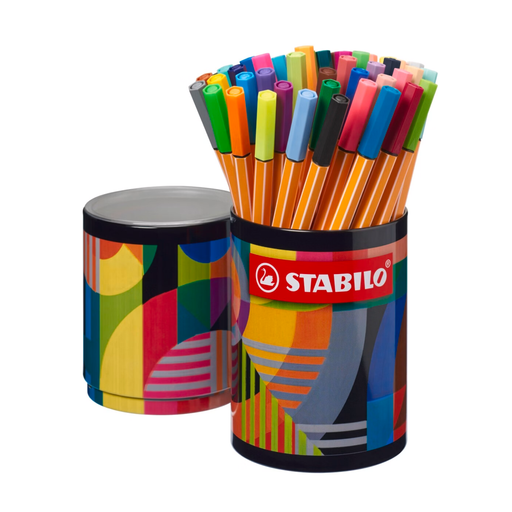
Why this suits this profile: Its metal tin and 45 carefully chosen shades are designed for those who want a structured palette for drawing, bullet journaling and regular creative projects.
The storage protects the pens during travel and makes it easy to find each colour, without juggling multiple loose pouches.
45 colours, 0.4 mm nib protected by metal, round metal tin and plastic reported to be 96% bio-based according to ISCC Plus certification.
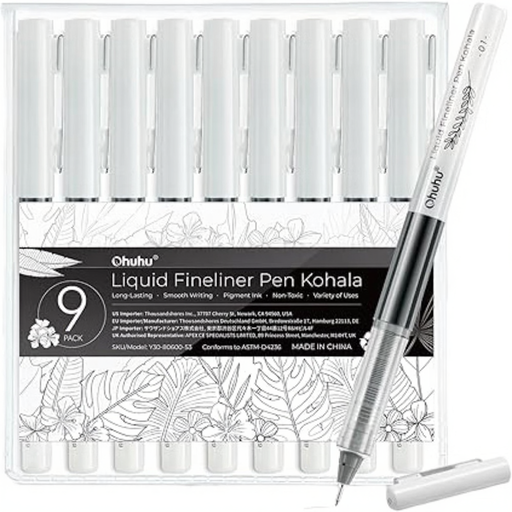
Why this suits this profile: Illustrators and users who switch between micro-details, outlines and lettering get several sizes in one black case.
The nib sizes are clearly listed, from 0.15 mm up to a brush tip. You don’t need to buy a different pen for each stage of your drawing.
9 pens, black pigment ink described as water and alcohol resistant, transparent barrel and size markings on the caps.
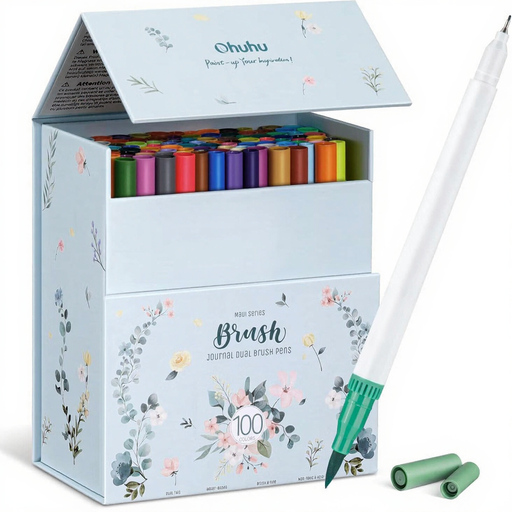
Why this suits this profile: Colouring, lettering and illustration enthusiasts can switch between precision and broad washes thanks to the two tips on each pen.
The blank colour chart and numbered shades make identification easy. Spare nibs are also a welcome addition for frequent use.
100 colours, 0.4 mm fineliner, 1 to 6 mm brush tip, storage case and spare nibs included.
We’ve put together a comprehensive, real-time selection of products that meet these exacting criteria, while complying with European safety regulations.
A 0.4 mm nib is a practical compromise for lectures, lists and annotations. For very small handwriting or illustration details, a finer nib can work, provided you use smooth paper and keep a light hand.
It depends on how often you use them, the type of ink, the paper and how well you replace the cap. To slow down drying, recap each pen immediately after use and store it in a dry place away from sunlight. A nib that snags, uneven ink flow or faded colour are usually signs it’s time to replace the pen.
This depends on the paper weight and the ink. Always test a colour on a similar page before filling a notebook or starting a drawing. With thin paper, use a light touch and check the reverse side. For layered work, a thicker paper or one designed for markers is a better choice.