
Livraison le jour même ou le lendemain

Qualité garantie

Débloquez vos offres de bienvenue: Livraison GRATUITE | Jusqu'à -80 % | 30 jours d'essai gratuits à JoyPlus
Téléchargez l'application
Choosing a set of fine-tipped felt pens might seem straightforward. Yet, between fineliners, colouring pens and craft markers, the tip, the ink and the surface you use can completely change the result.
Whether you’re taking notes, keeping a bullet journal, sketching a diagram or colouring with precision, three mistakes crop up time and again:
For precision pens, line width is the first thing to look at.
A metal-encased tip generally copes better when used against a ruler or stencil. That doesn’t mean it’s indestructible, though: to keep your lines consistent, try not to press down too hard.
Water-based ink pens are the most common for paper, note-taking and craft activities. They can also be easier to clean. However, how they behave depends on the thickness and porosity of the paper. On thin paper, always test in the margin or on the back of a page.
Water-resistant or permanent inks serve different needs: labelling, drawing on non-porous surfaces, or projects that need to last. They can stain fabrics and aren’t suitable for a notebook if you want to be able to correct or erase easily.
Claims like “washable”, “smudge-proof” or “doesn’t bleed through paper” should be taken with a pinch of salt. The result varies depending on the surface, drying time and how hard you press on the tip.
A hexagonal or triangular barrel stops the pen from rolling off your desk and gives a comfortable grip. A textured grip zone can also make a real difference during long note-taking or drawing sessions.
To decide how many colours you need, start with your habits:
A rigid case, a roll-up pouch or a display stand helps prevent losses and protects the tips. Whatever storage you choose, always put the cap back on after use and keep the pens away from heat and direct sunlight.
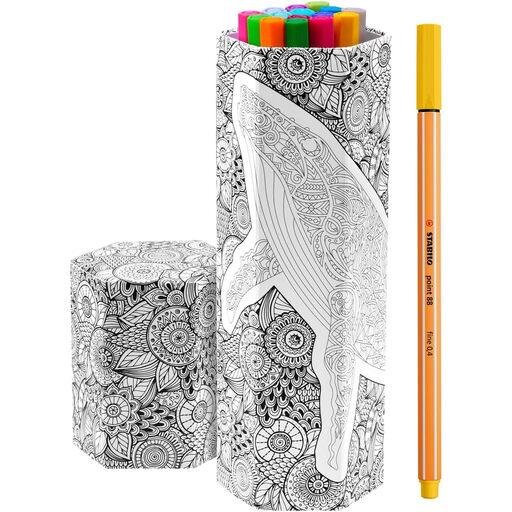
Why this suits this profile: with 15 shades and a 0.4 mm tip, this set covers the everyday needs of students, schoolchildren and creative stationery fans.
The fine, metal-encased tip lets you draw along a ruler, while the water-based ink is suitable for notes and drawings on standard paper.
0.4 mm line, 15 colours, hexagonal barrel and made in Germany.
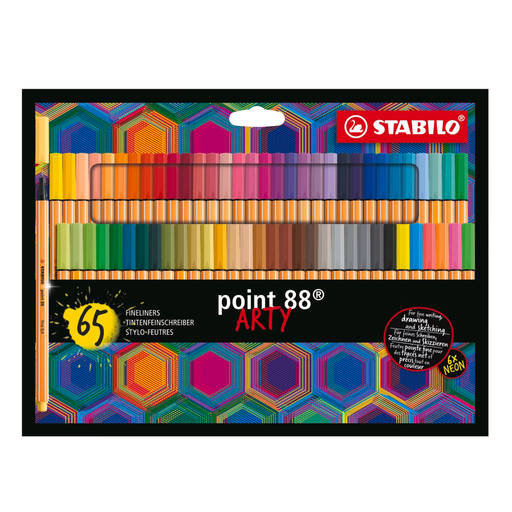
Why this suits this profile: this generous palette is designed for those who want to multiply the shades for mandalas, pixel art, illustrations and bullet journals.
The number of shades is clearly stated and the set includes six fluorescent colours. That means you can build a coherent palette rather than buying blind.
0.4 mm metal-encased tip, 65 colours and barrel and cap plastic reported to be 96 % bio-based according to the mass balance method.
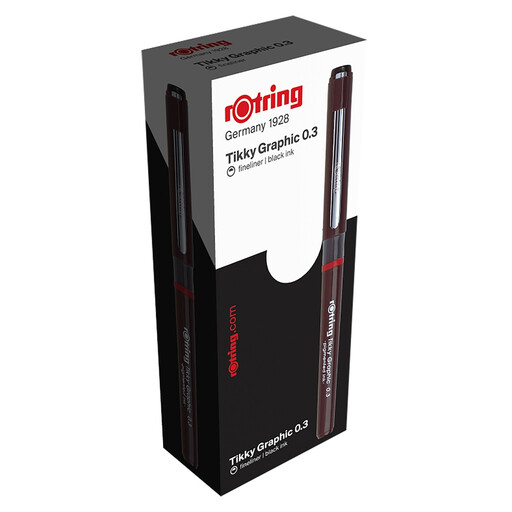
Why this suits this profile: this precision pen is perfect for technical drawing, architecture, illustration and highly detailed black line work.
The 0.3 mm width is clearly stated and the water-resistant pigment ink is ideal for lines that need to stay perfectly legible.
Ink level window, Free ink technology and horizontal storage recommended.
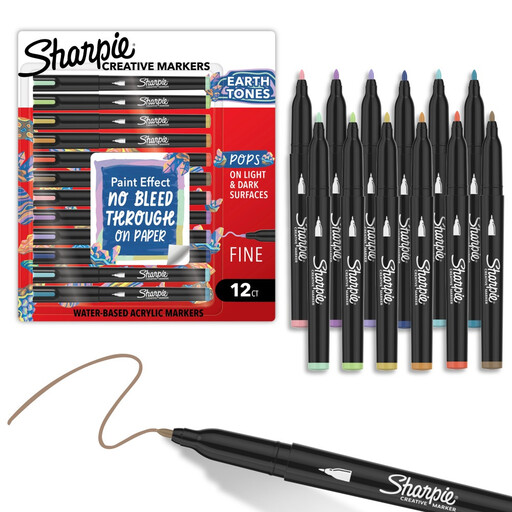
Why this suits this profile: this set is designed for creations on wood, glass, ceramic, metal, canvas or stone – not for everyday note-taking.
The product page details the compatible surfaces and advises testing in a discreet area first. A simple precaution that avoids nasty surprises.
Water-based paint-effect ink, 12 colours and fine tip for details.
For revision cards, note-taking pens and diagrams, a 0.4 mm tip paired with water-based ink offers a very practical compromise. For detailed work, go for 0.3 mm and a stable barrel. For colouring, focus mainly on the richness of the palette and the line width.
Looking for washable markers? Check exactly which surfaces are suitable: “washable” doesn’t mean every stain will come out of every fabric. With young children, follow the recommended age on the packaging and keep the caps out of reach.
We’ve put together a complete, real-time updated list of products that fully meet these strict selection criteria and European safety regulations.
A 0.4 mm tip works well for compact headings, boxes, outlines and annotations. For very tight spaces, 0.3 mm will be more comfortable. On the other hand, a 0.7 mm tip will make headings stand out more.
It all depends on the thickness and quality of the paper, as well as the amount of ink deposited. Test on the back of a page before filling it. Thicker paper generally reduces the problem, but can’t rule it out completely.
The lifespan depends on how often you use it, storage conditions and how well you look after the cap. Close each pen immediately after use, avoid heat and store the set in a dry place. A metal-encased tip will hold up better when used with a ruler, but it’s not indestructible.