Parents of a child under 3
When choosing a drink for dinner, age matters more than claims such as “filtered” or “long-life”. As a precaution, Santé publique France recommends not giving soya or soya-based products to children under 3.


For a child under 3, don’t choose a soya drink for dinner, even if it is described as filtered, UHT, organic or fortified. As a precaution, Santé publique France recommends avoiding soya and soya products at this age. For milk feeds, Assurance Maladie advises continuing with infant formula until the age of one, and says growing-up milk can then be given until the age of 3. How a soya drink is preserved does not change this distinction.
When choosing a drink for dinner, age matters more than claims such as “filtered” or “long-life”. As a precaution, Santé publique France recommends not giving soya or soya-based products to children under 3.
A soya drink for an older child calls for a different comparison: plain or flavoured, ingredients and sugars. This choice does not apply to a child under 3. Anses also advises taking older children’s consumption of soya foods into account.
First, check the child’s age and the type of milk you’re looking for. The storage method and recipe of a soya drink only become relevant comparison points once you’ve ruled out buying it for a child under 3.
| Criteria | What to check | Who is it for? |
|---|---|---|
| Child’s age | For a child under 3, look for soya in the product name and ingredients, whatever the packaging says. | If my child is under 3, I want to rule out soya before comparing pack sizes. Around 63% of consumers would put age suitability first. |
| Milk feeds | Distinguish a plant-based drink from infant formula or growing-up milk, and check the age guidance before making any changes. | When I need to change the milk my young child usually has, I’m looking for an option that’s right for their age, without treating a plant-based drink as infant formula. This would be the priority for around 25% of consumers. |
| Storage and recipe | For a purchase intended for someone aged 3 or over, compare the ingredients, sugars and storage instructions. | If I’m also buying for an older child, I’d like a carton that’s easy to store or a plain recipe, while keeping their soya consumption in mind. Around 12% of consumers would prioritise these practical considerations. |
UHT describes a preservation process. It does not change Santé publique France’s recommendation to avoid soya products before the age of 3.
For dinner for a child under 3, rule out any drink containing soya before comparing the packaging or shelf life.
Carrefour’s product listing for an Alpro drink mentions added calcium and vitamins. Their presence does not make this an infant formula or remove the precaution around soya before the age of 3.
Check the product category and the age it is intended for. For milk feeds before the age of one, follow Assurance Maladie’s guidance on infant formula. If a change is needed, ask a healthcare professional for advice.
E.Leclerc’s listings distinguish between the plain Bio Village drink and the vanilla version, which contains grape juice concentrate and cane sugar, among other ingredients. This difference matters when comparing drinks for people aged 3 or over, not when choosing a soya drink for a toddler.
For this separate purchase, read the ingredients list and nutritional information for each variety rather than relying on the range name alone.
These products show useful differences on the label when buying for someone aged 3 or over. No recipe or fortification claim changes the precaution for children under 3.
Carrefour’s listing shows a 1 L carton of soya drink containing sugar, calcium and vitamins B2, B12 and D2, among other ingredients.
According to Carrefour’s listing, its 1 L organic plain soya drink contains water and organic soya beans.
E.Leclerc’s listings show a plain organic UHT soya drink and a vanilla version, both in 1 L cartons.
These two growing-up milks are options to consider for a child aged 12 months or over if you’re looking for a milk feed rather than a soya drink. They are not filtered soya drinks and are not presented here as options for a child under one.
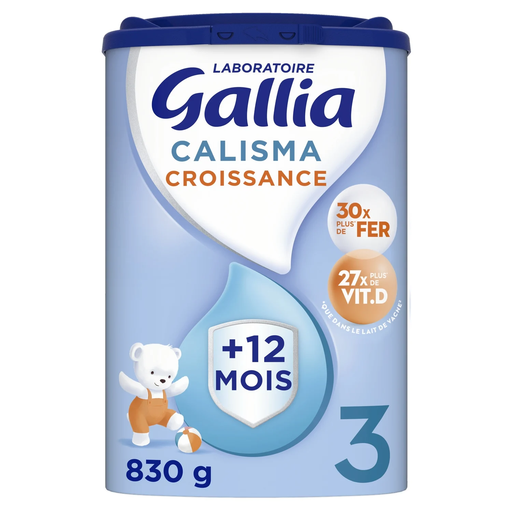 Image unavailable
Worth considering for a child’s milk feeds from the age of 12 months, but not as a replacement for infant formula before their first birthday. This powdered product needs to be prepared: follow the measuring and storage instructions on the packaging. If your child has an allergy or follows an exclusion diet, check the allergens and ask for advice before changing their milk.
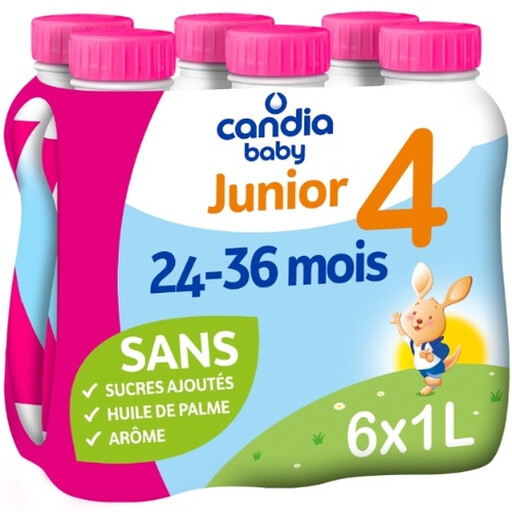 Image unavailable
Worth considering if you’re looking for growing-up milk in cartons for a child aged 12 months or over. The pack contains six 1 L cartons; check the age guidance and storage instructions after opening on the packaging. If your child follows an exclusion diet, check the ingredients before changing their milk feeds.
No. As a precaution, Santé publique France recommends not giving soya or soya-based products before the age of 3. Claims such as “filtered”, UHT or organic do not change which ingredient the recommendation applies to.
Don’t replace breast milk or infant formula with an everyday plant-based drink. Assurance Maladie advises continuing with infant formula until the age of one. If you’re considering a change to your child’s diet, ask a healthcare professional for advice.
Assurance Maladie says that milk for young children, known as growing-up milk, can be given after the age of one and until the age of 3. This doesn’t make a soya drink suitable at this age. If your child has an allergy or follows an exclusion diet, get professional support when choosing their milk.
Don’t assume that reaching the age of 3 automatically makes daily soya consumption suitable. In its work on isoflavones, Anses recommends not serving soya-based foods in collective catering. For a family purchase, take into account the other soya foods your child eats.