
Livraison le jour même ou le lendemain

Qualité garantie

Débloquez vos offres de bienvenue: Livraison GRATUITE | Jusqu'à -80 % | 30 jours d'essai gratuits à JoyPlus
Téléchargez l'application
Limescale, a persistent chlorine smell or inconsistent water pressure can quickly take the enjoyment out of your shower. A filtered shower head may seem like a simple solution, but not all models offer the same level of filtration, flow rate or ease of maintenance.
Before you buy, three common pitfalls are worth keeping in mind:
If you are looking for a shower head for hard water, examine the cartridge composition carefully. Activated carbon is generally used to reduce certain odours and residual chlorine. Depending on the manufacturer’s design, it may be combined with calcium sulphite, KDF or PP cotton.
However, take care not to confuse an anti-limescale shower head with a genuine water softener. An integrated filter may trap certain impurities or reduce the presence of specific components, but it will not necessarily turn very hard water into soft water. The figures quoted by the manufacturer should be checked in the product documentation and considered in the context of real-world use.
A shower head with an anti-chlorine filter may be useful if you find the smell of chlorine unpleasant. If your water is particularly high in minerals, also check the stated cartridge lifespan and the replacement requirements.
Most French installations use a standard shower connection, generally listed as G1/2 or 1/2 inch. This makes it easier to ensure compatibility with an existing hose, but you should still check the connection direction and the accessories supplied.
A tool-free installation is particularly convenient for tenants. It allows you to replace the shower head without altering the plumbing. Also remember to check:
A cartridge will often last for less time in a family home than in a single-person household. Its lifespan depends in particular on the volume of water used and the water quality in your area.
A high-pressure shower head should not be judged solely by how the spray feels. A well-spaced nozzle plate, a flow restrictor and a design that limits water loss can all improve comfort. Conversely, a flow rate that is too low can make rinsing your hair slow and inconvenient.
Models marketed as water-saving shower heads should be compared based on their measured flow rate, where this information is provided. A saving claimed by the manufacturer does not guarantee the same results in every bathroom: mains pressure and the tap position also affect water consumption.
Multiple spray settings allow you to adapt the shower to every situation: rain, massage, concentrated spray or mist. For a family, an easy-to-turn control and nozzles that can be cleaned quickly may be more useful than a large number of settings.
The products below are presented based on the features stated in the available product listings. Claims relating to filtration or water consumption should be interpreted according to the installation and usage conditions.
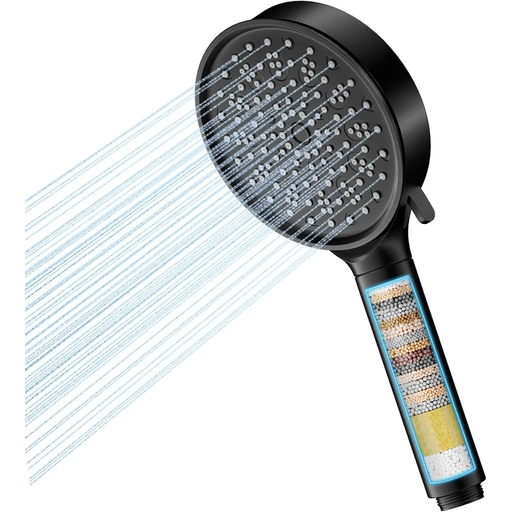
Why this product suits this profile : Its G1/2 connection and pre-installed filter make the initial installation simple. The six modes let you try different spray patterns without needing additional accessories.
The listing specifies a 20-stage cartridge and recommends replacing it every 3 to 4 months, or when the flow rate decreases. Maintenance requirements are therefore clearly stated.
Six spray modes, a 124 × 124 mm panel and a pressure limiter supplied separately according to the product listing.
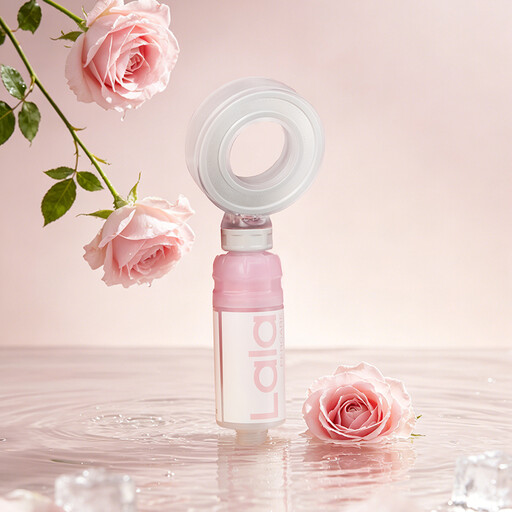
Why this product suits this profile : Its design and advertised rose infusion are aimed at people looking for a sensory experience alongside filtration.
The transparent body makes it possible to monitor the cartridge condition visually. The listing states that it has four-stage filtration and specifies that the lifespan varies according to the number of users.
Advertised manual installation, a honeycomb flow system and filtration combining high-density PP cotton with calcium sulphite.
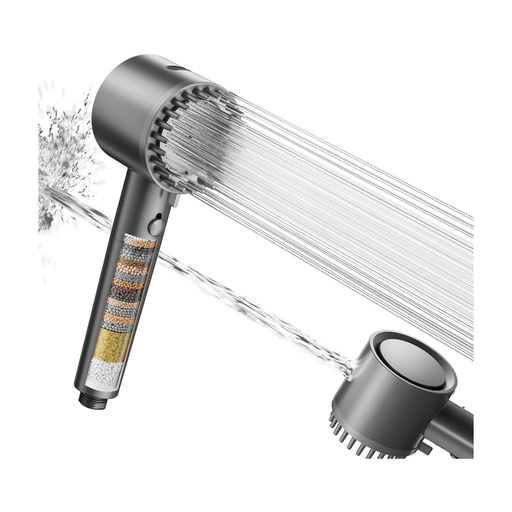
Why this product suits this profile : The handheld format, 1.5 m hose and five modes are suitable for families, washing hair, bathing children or cleaning the shower enclosure.
The cartridge is pre-installed and the listing recommends replacing it every 3 to 4 months, or if the flow rate drops. A cleaning tool is also included.
Five modes, a 1.5 m anti-twist hose and a standard 1/2-inch connection, as stated in the specifications.
We have put together a complete, real-time updated list of products that fully meet these strict selection criteria and European safety regulations.
Turn off the water, unscrew the old shower head, check the washer, then screw the new model on by hand. Avoid tightening it with pliers: you could damage the thread or the finish. Once the shower head is installed, let the water run for a few moments to flush out any particles left over from manufacturing.
To extend its lifespan:
No. Its effectiveness depends on the filter medium, flow rate and water quality. A filtered shower head may target certain components specified by the manufacturer, but it does not replace a water softener installed on the water inlet. To find out how hard your water is, check the information provided by your local council or use a suitable test.
The replacement frequency varies according to the model and the number of people in the household. The product listings for the models featured generally recommend replacing the filter every three to four months, or sooner if the flow rate decreases. A family taking several showers a day will probably need to change the cartridge more often than someone living alone.
Not necessarily. Consumption depends on the actual flow rate, mains pressure and the length of the shower. To choose a water-saving shower head, prioritise a model with a stated flow rate, a suitable flow restrictor and nozzles that allow you to rinse effectively without making your shower longer.