Shoppers keeping an eye on sugar
You’re looking for a ‘sugar-free’ or ‘no added sugar’ claim on a filled biscuit. The Gerblé products featured by Auchan show why it’s also important to check the sugars, polyols and ingredients in each recipe.


If sugar content guides your choice of filled biscuits, distinguish between ‘sugar-free’ and ‘no added sugar’, then check the sugars per 100 g. If you’re more interested in whole wheat or a familiar format, these factors can help guide your choice, but they don’t prove that the biscuits contain less sugar. Nutri-Score can help you compare products when it appears on the packaging; according to Santé publique France, displaying it is voluntary in France.
You’re looking for a ‘sugar-free’ or ‘no added sugar’ claim on a filled biscuit. The Gerblé products featured by Auchan show why it’s also important to check the sugars, polyols and ingredients in each recipe.
You check the ingredients list, nutritional information per 100 g and the proportion of wholemeal flour before choosing. The whole-wheat Prince featured by Carrefour illustrates a preference for a particular ingredient, but it doesn’t replace checking the sugars.
You prefer a familiar flavour or a pack that’s convenient to share or take with you. The Oreo and Prince products featured by Carrefour show that format should be considered separately from ingredients and allergens.
When shopping, start with what matters most to you: sugar content, the recipe or the flavour and format. Then compare filled biscuits intended for similar occasions by checking their packaging.
| Criteria | What to check | Who is it for? |
|---|---|---|
| Sugar content | Distinguish between ‘sugar-free’ and ‘no added sugar’; check ‘of which sugars’ and polyols per 100 g. | I want to choose a filled biscuit based on its sugar content, rather than just its appearance or format. Around 50% of shoppers would make this their priority. |
| Ingredients | Compare the ingredients and nutritional information per 100 g; check the proportion of wholemeal flour if it’s listed. | I’m interested in a whole-wheat recipe, but I want to know what’s in it before adding it to my basket. This would be the main priority for around 30% of shoppers. |
| Flavour and format | Check the packaging and allergens in your chosen recipe. | If I’m sharing biscuits or taking them with me, I choose a familiar flavour and convenient format first, without assuming this means they contain less sugar. Around 20% of shoppers would prioritise this. |
According to Santé publique France, displaying Nutri-Score is voluntary in France. So, the absence of the logo isn’t enough on its own to assess a recipe.
If it’s shown, use it as a guide when comparing similar products, then check the nutritional information and ingredients.
The Gerblé sugar-free cocoa-filled biscuit featured by Auchan contains 456 kcal and 20 g of polyols per 100 g. The sugar claim doesn’t tell you everything about its ingredients.
Compare the energy, sugars, saturated fat and the portion you plan to eat.
At Auchan, the Gerblé cocoa and hazelnut product labelled ‘no added sugar’ contains 3.9 g of sugars per 100 g, while the cocoa product labelled ‘sugar-free’ contains 0 g per 100 g.
Check the exact claim and the ‘of which sugars’ line on the product you choose.
Ingredients and allergen information vary between filled biscuit recipes, including those with a sugar-related claim.
Check the label on the product and batch you buy, including any ‘may contain’ warnings.
The cocoa and vanilla filled biscuits featured by Auchan are labelled ‘sugar-free’; a cocoa and hazelnut recipe carries the separate claim ‘no added sugar’.
The whole-wheat chocolate Prince featured by Carrefour is suited to those who prefer wholemeal flour, rather than those looking for sugar-free biscuits.
The vanilla-filled Oreo Original featured by Carrefour is a classic recipe, with no sugar-reduction claim for the product in question.
Carrefour’s product listings for Prince and Oreo let you check the ingredients in these products before comparing their recipes.
These two LU Prince chocolate products are whole-wheat recipes and come in different pack sizes. If you’re looking for a ‘sugar-free’ or ‘no added sugar’ claim, check for it and check the sugars per 100 g on the product you’re considering.
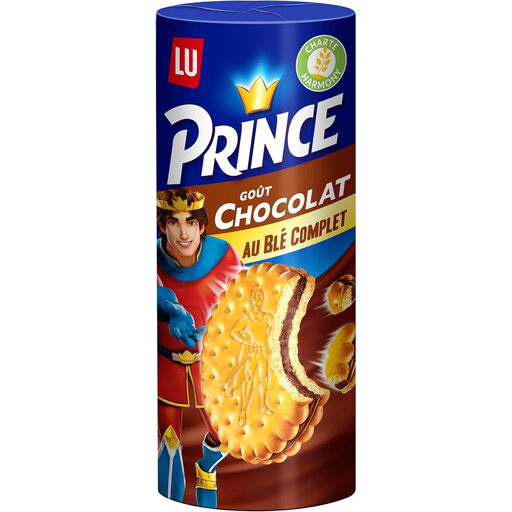 Image unavailable
Consider this if wholemeal flour matters more to you than a sugar-reduction claim. The 300 g Prince product featured by Carrefour contains 15% whole-wheat flour; also check the ‘of which sugars’ line and allergens on the pack you buy.
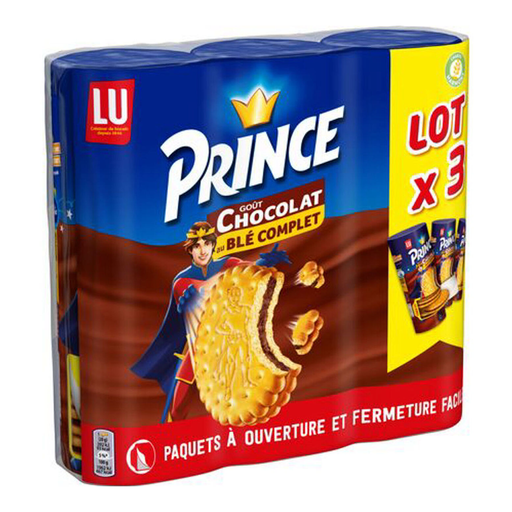 Image unavailable
This multipack is a good choice if you’re looking for this type of filled biscuit in three 300 g packs. To compare its recipe with another pack size, check the ingredients, sugars per 100 g and allergens listed on the packs.
No. Santé publique France says displaying it is voluntary; it supplements the mandatory nutritional information. Compare biscuits without the logo using their labels, rather than assuming how they would score.
For each one, check the nutritional information per 100 g and the ingredients list, including sugars, saturated fat, salt and allergens. Santé publique France says the new Nutri-Score algorithm is being rolled out gradually in France from March 2025, so check the pack you buy.
No: the claim refers to sugars, not energy content. The ‘sugar-free’ Gerblé cocoa biscuit featured by Auchan contains 456 kcal per 100 g. Check the energy value and the portion you plan to eat rather than judging the calories by the claim alone.
Check the ingredients in the specific recipe you’re buying. Depending on the variety, the Gerblé, Oreo and Prince product listings featured by Auchan and Carrefour mention wheat, milk, soya, egg or nuts. Also check the packaging for any ‘may contain’ warnings.