
Livraison le jour même ou le lendemain

Qualité garantie

Débloquez vos offres de bienvenue: Livraison GRATUITE | Jusqu'à -80 % | 30 jours d'essai gratuits à JoyPlus
Téléchargez l'application
Whether it's for the back-to-school rush or a major office declutter, choosing your filing supplies can seem trivial. And yet... who hasn't regretted an impulse buy? That binder whose rings bend after a month, those pockets that stick out and get damaged, or that sorter that buckles under the weight of your notes... In the end, these small frustrations cost you dearly, in both time and money. Before you fill your cart, let's review the mistakes to avoid and the essential criteria for an investment that lasts.
Being tempted by the lowest price or an eye-catching design is often a recipe for disappointment. Here are the three classic traps to sidestep to ensure your back-to-school supplies go the distance.
For a document organization system that holds up, whether for school or for the office, you need to look closely at a few technical details that make all the difference.
Make no mistake: the difference between these two formats is crucial.
Polypropylene (PP) reigns supreme in the modern office supplies market, but be warned, not all qualities are created equal.
Capacity is obviously a key criterion. An expanding sorter is brilliant for centralizing multiple subjects or projects. Its accordion spine adjusts to the volume of documents—no more, no less. For binders, capacity is linked to the ring diameter or spine thickness (e.g., a 40 mm spine can hold up to 250 sheets). Finally, a display book with 100 pockets offers 200 views, ideal for large files.
To put theory into practice, here are a few products that perfectly meet these criteria, tailored for different profiles.
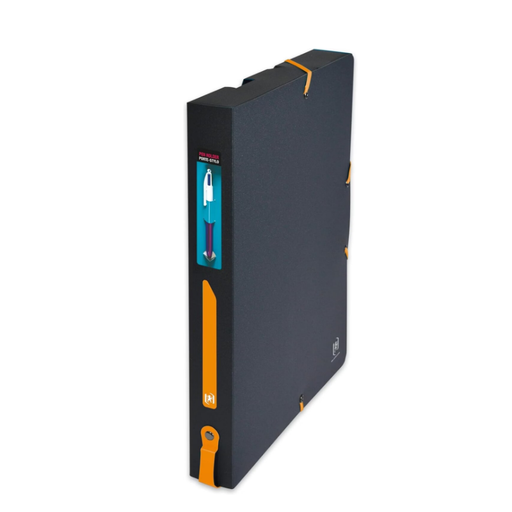
Why we love it: This clever 2-in-1 tool combines a binder and a 3-flap folder. With its rigid cover and elastic closure, it's built for trips between classes, the library, and home.
Its A4XL format ends the nightmare of pockets and dividers sticking out. Its rigid polypropylene cover withstands shocks and prevents cracks from mobile use.
The integrated 3-flap folder is perfect for slipping in un-punched documents, handouts from class, or a notepad. Ultra-practical for keeping everything in one place.
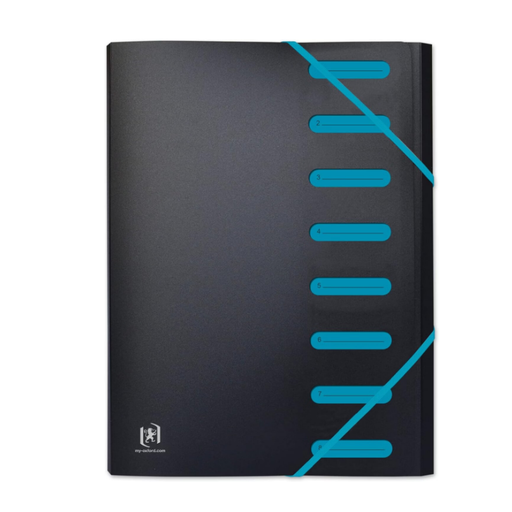
Why we love it: Perfect for those who juggle multiple subjects or projects. It allows you to segment everything cleanly, with a capacity that adapts to your needs thanks to its expanding spine.
Its rigid, opaque PP cover acts as a true shield for your documents. The expanding spine adjusts to the volume of paper, which prevents straining and damaging the structure, unlike a conventional sorter.
The integrated zip pocket for storing a pen, USB drive, or scissors, and the index sheet for customising the tabs. It's a true mobile office.
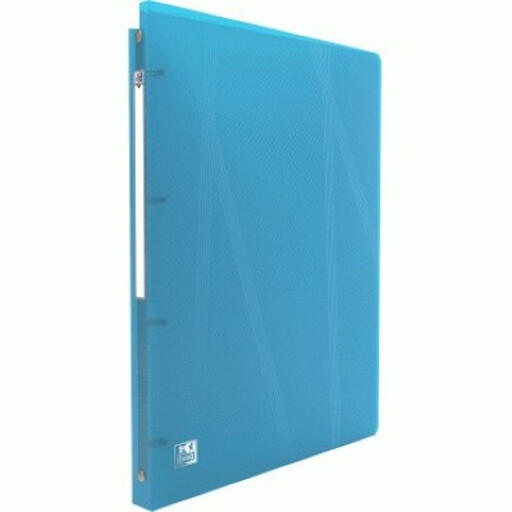
Why we love it: The simple and effective solution for light filing needs (a single subject, a small project). Lightweight, compact, and economical, it gets straight to the point.
Even with a flexible cover, the polypropylene used is of respectable quality for moderate use. This isn't a low-end product that will tear at the slightest provocation. A sensible choice for its intended purpose.
Its translucent cover to identify contents in a flash, and its spine label to easily find it on a shelf.
Explore our full selection of products that tick all the boxes: quality, durability, and everyday practicality.
What's the difference between an A4 binder and an A4XL binder? To put it simply: an A4 binder is made for hole-punched A4 sheets, period. An A4XL binder, which is wider, is essential for storing plastic pockets and A4 dividers without them sticking out and getting damaged. If you use sheet protectors, A4XL is a must!
How can I tell if an organizer or folder is sturdy enough? Trust your senses. A rigid, opaque polypropylene (PP) cover is often a sign of durability. For a flexible model, handle it: plastic that feels brittle or too flimsy is a bad sign. Also, check the seams of the pockets and the sturdiness of the closure system (elastic, press stud).
How many sheets can a standard binder hold? It all depends on the spine thickness and the diameter of the rings. As a guide, a binder with a 20 mm spine can hold about 100 sheets of 80 gsm paper. A model with a 40 mm spine can hold up to 250 sheets. Pro tip: rely on the manufacturer's specifications and never overload your binder, as this can damage the ring mechanism.