
Livraison le jour même ou le lendemain

Qualité garantie

Débloquez vos offres de bienvenue: Livraison GRATUITE | Jusqu'à -80 % | 30 jours d'essai gratuits à JoyPlus
Téléchargez l'application
A well-organised folder can quickly become illegible if the tabs peel off, the cards lack stiffness, or the colours follow no logical system. For students, teachers, professionals, administrative staff and home users alike, filing and stationery accessories should be chosen based on how you'll use them, not just how they look on the packaging.
A tab that sticks very firmly might seem more reliable. But if it tears the page or leaves marks, it quickly becomes annoying to use on documents you consult regularly. On the other hand, a tab that's not sticky enough risks coming off the first time you put it in a bag or folder.
For repositionable filing tabs, check that the adhesive is suitable for paper and can be removed cleanly. The product listing should also state the dimensions and number of pieces.
Small tabs work well for colour-coding or short abbreviations. However, they leave little room for writing "to sign", "invoices" or "chapter 3". Medium-sized tabs are better suited to administrative files, calendars and folders used by several people.
The usable width isn't the only thing to look at: height, stiffness and visibility on the edge of the document matter just as much.
A multicoloured assortment isn't enough to improve document organisation. Before choosing your accessories, assign a function to each colour: urgent, to process, archived, coursework, document to sign, or important reference. In most cases, a system limited to three or four colours remains clearer than an overly complicated code.
Compare the dimensions given in millimetres. Tabs of 15.8 × 38.1 mm, for example, stay discreet and work well for diaries. A size of 25.4 × 38.1 mm offers more space for handwritten notes.
The quantity should also match your usage. A dispenser of 40 tabs may be enough for occasional use, while a pack of 140 flags will be more practical for a school year, an administrative department or a personal library.
On documents that are frequently flicked through, a tab made of stiff paper will generally hold its shape better than a very flexible one. Adhesive dividers and markers intended for ring binders should also remain visible without covering too much of the text.
If you use cards for diagrams, tables or exercises, choose paper that's stiff enough. Quadrille-ruled Bristol cards are particularly suitable for structured notes, revision cards and practical work that requires regular grid lines.
Standard adhesive bookmarks are used to mark a page or an area. Arrow-shaped flags draw the eye more precisely to a specific line. For contracts, forms and administrative files, a printed "SIGN HERE" marker can save time at the moment of signing.
Do not apply the adhesive to skin. Store dispensers in a dry place, away from direct light, and keep small items out of the reach of children under 3 years old.
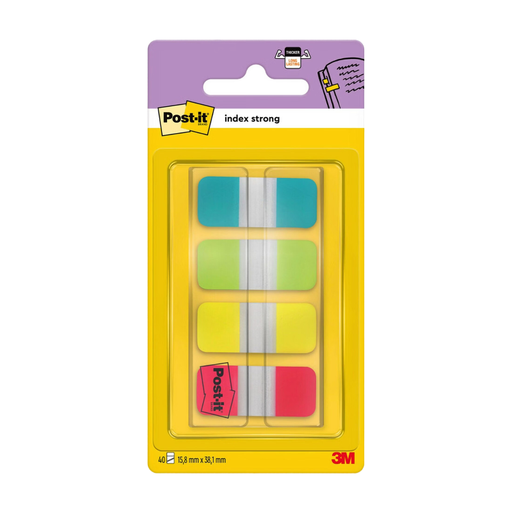
Why this choice suits this profile: With their small size of 15.8 × 38.1 mm, these tabs are ideal for students and home users who want to set up colour-coded filing in a diary, notebook or folder.
The dispenser contains 40 repositionable tabs, allowing you to adjust your filing system without having to buy multiple packs.
Four colours, a writable surface and stiff paper designed for diaries, folders and ring binders.
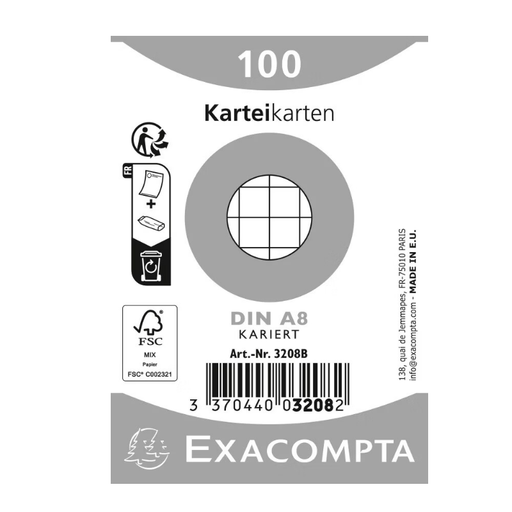
Why this choice suits this profile: This support is aimed at those who want neat, rigid, protected cards for keeping notes, diagrams or revision cards in good condition over time.
The 5 × 5 grid makes writing and drawing easier, while the protective film reduces wear and exposure to moisture.
55 × 74 mm size, 100 cards, Bristol paper and protected surface.
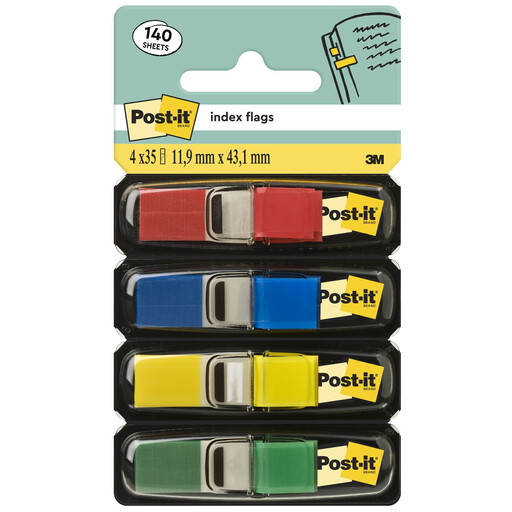
Why this choice suits this profile: The four separate dispensers fit easily into an office, classroom or department that annotates books and documents on a daily basis.
With 140 flags in total, you reduce the risk of running out of adhesive bookmarks during heavy use, without being limited to a single colour.
Four colours, four dispensers, 35 flags per dispenser and 11.9 × 43.2 mm size.
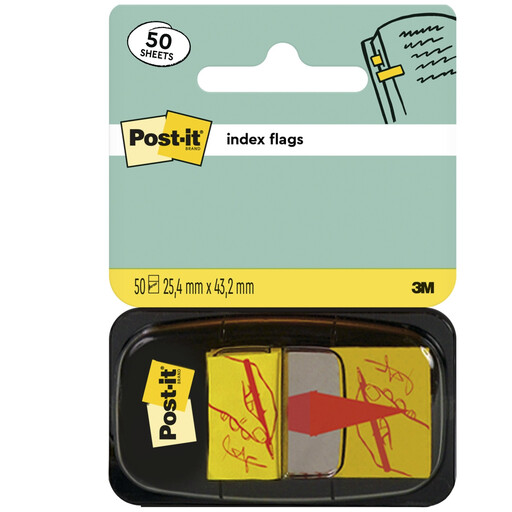
Why this choice suits this profile: These markers are aimed at professionals in property, accountancy, law or administration who need to quickly identify an area that needs signing.
The printed symbol immediately indicates the required action, without relying on a handwritten note that could be ambiguous.
Medium size of 25.4 × 43.2 mm, highly visible yellow colour and 50 flags per dispenser.
We've put together a complete, real-time updated selection of products that meet these demanding criteria and European safety standards.
Office supplies and school stationery are thus easier to manage: each accessory serves a specific purpose, whether it's filing, annotating, revising or preparing a folder.
It depends on the surface, dust and how often they're handled. Models described as repositionable can be lifted and replaced, but their stickiness may decrease after many uses. Always test on a scrap sheet before applying them to an important document.
Post-it flags are mainly used to mark a page, line or specific piece of information. Adhesive dividers, which are generally wider or stiffer, are designed to create clearly visible sections in a ring binder, diary or folder.
For quick revision, small-format memo cards are easy to carry. For diagrams, tables and structured notes, quadrille-ruled Bristol cards offer a stiffer surface and regular grid lines. Before comparing prices, check the weight, size and quantity.