
Livraison le jour même ou le lendemain

Qualité garantie

Débloquez vos offres de bienvenue: Livraison GRATUITE | Jusqu'à -80 % | 30 jours d'essai gratuits à JoyPlus
Téléchargez l'application
Between coursework, admin tasks, bills and professional files, filing and organising A4 documents is about more than just buying a ring binder. A poorly sized model can crease your papers, make finding a document difficult, or become a hassle to carry around.
This selection of filing supplies is aimed at students, teachers, remote workers, professionals and anyone who wants to organise their paperwork based on practical criteria, rather than relying solely on colour or marketing claims.
A ring binder may boast a generous capacity, but you also need to account for the thickness of A4XL punched pockets, dividers and bulky documents. When filled to the max, the mechanism becomes harder to close and can put excessive pressure on the punched holes.
For a small volume, a 20 mm A4 ring binder can be perfectly adequate. For a file that’s likely to grow, a 30 or 40 mm model gives you more leeway – as long as you don’t cram it right to the last sheet.
In the UK, ring binders and A4 dividers often use a 4-hole or multi-ring system. However, not all pockets and sheets use the same configuration. So check the number of holes before you buy, especially if you already own a ring binder.
The A4XL format also deserves a bit of attention: its extra width around an A4 sheet prevents overhang and offers better protection for documents stored in a pocket.
A pretty coloured cover doesn’t guarantee durability or ease of use. For daily transport, go for a secure closure, a sufficiently rigid spine and a material that’s easy to clean. At home, an A4 storage box can be more practical than a ring binder if you rarely need to access the documents inside.
Before you choose, start by estimating the volume you need to store:
The closure is key if the storage needs to be carried around. Flat elastic bands or a cover with a flap reduce the risk of papers slipping or falling out.
Polypropylene (PP) is lightweight, resists everyday moisture and is easy to clean. It’s particularly well suited to students and anyone who regularly transports their documents. Rigid cardboard, on the other hand, holds up well on a shelf and is a great option for stable desk filing.
Eco-friendly filing supplies should be judged on verifiable factors: percentage of recycled content, absence of plastic film, certification and place of manufacture. The Exacompta Autentik ring binders shown below, for example, are described as being made from recycled cardboard and certified Blue Angel. This certification provides information about the product, without claiming that all its uses have the same environmental impact.
A4 punched sheets are ideal for notes and documents you refer to regularly. For receipts, photos, index cards or fragile sheets, add pockets. A4XL models in particular prevent a sheet from sticking out of the pocket.
A label on the spine or coloured tabs help you quickly find the right file. The simplest system is often the most effective: one colour per subject, one section per project, or one compartment per document type.
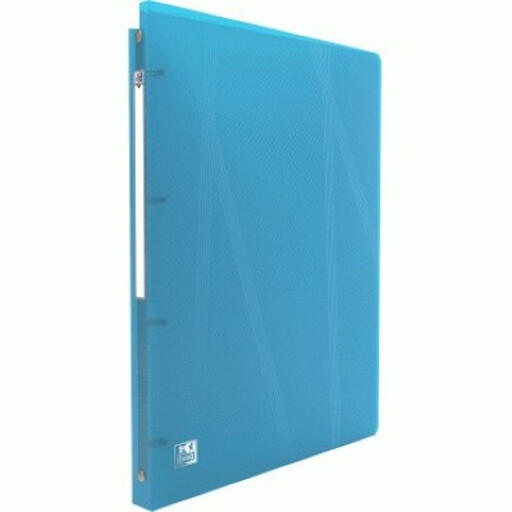
Why this suits this profile: Its A4 size, 20 mm spine and four rings are ideal for a first school or home filing system of around 100 sheets.
Its capacity is matched to a limited volume – so you avoid choosing a binder that’s too bulky for just a few documents.
Soft translucent polypropylene cover, self-adhesive spine label and stated manufacture in France.
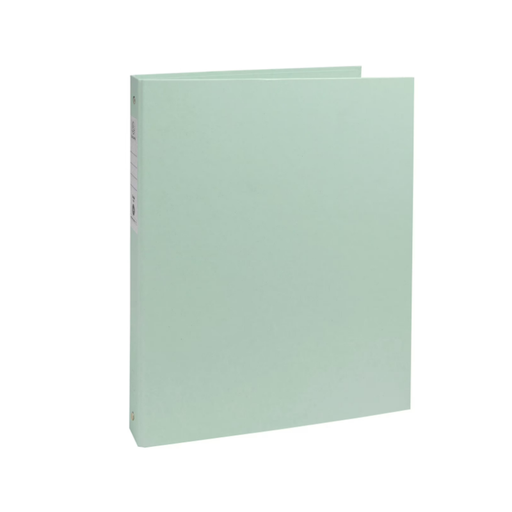
Why this suits this profile: Its rigid cover and 30 mm spine are ideal for long-term filing at the office, at home or in a study space.
Its rigid cover protects a file kept on a shelf better than a soft folder that’s handled regularly.
Stated 100% recycled cardboard, no lamination or plastic film, with Blue Angel certification indicated by the manufacturer.
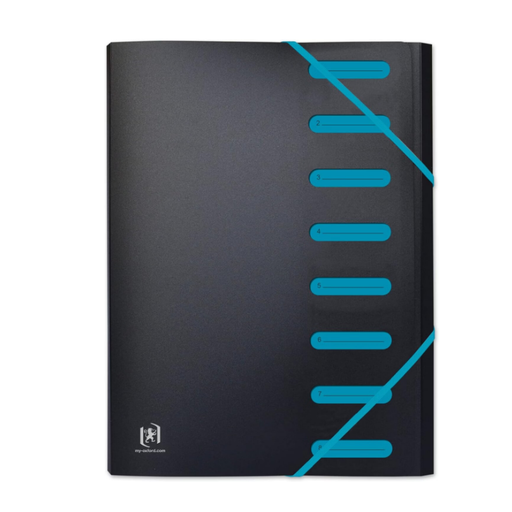
Why this suits this profile: Its eight compartments let you separate subjects, projects or document categories within a single expandable student organiser.
Documents don’t pile up in a single section – compartment-based filing reduces mixing and unnecessary handling.
Adjustable sliding spine, flap covering part of the cover and internal zipped pocket for small accessories.
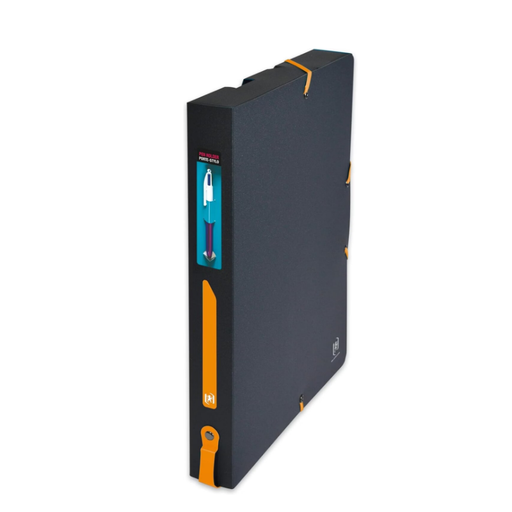
Why this suits this profile: The A4XL format and elastic closure make it easy to carry coursework, pockets and unpunched documents.
The integrated three-flap folder holds unpunched documents instead of wedging them between the rings.
40 mm spine stated to hold up to 250 sheets, four rings, integrated flap and spine label.
We’ve put together a comprehensive, real-time updated list of products that fully meet these strict selection criteria and European safety regulations.
Start by defining your categories: subject, project, client or type of document. Then add A4 dividers identified by colour, and place the documents you refer to most often at the front. Reserve pockets for fragile sheets or those that can’t be punched.
The A4 format measures 21 × 29.7 cm. The A4XL format adds a margin around the sheet, which prevents overhang in pockets and behind dividers. It’s particularly well suited to a ring binder used with thick pockets.
It all depends on the material, how often they’re transported and the load they bear. Avoid damp, excessive heat and overloading. Regularly check the condition of the rings, punched holes and closures – replacing a worn component is often enough to extend the life of the entire filing system.