
Livraison le jour même ou le lendemain

Qualité garantie

Débloquez vos offres de bienvenue: Livraison GRATUITE | Jusqu'à -80 % | 30 jours d'essai gratuits à JoyPlus
Téléchargez l'application
Effective filing isn’t just about picking the colour of a folder or the thickness of its cover. For students, teachers, professionals and families alike, filing and document storage should first and foremost prevent crumpled sheets, overflowing folders and papers that vanish the moment you need them.
Three common mistakes crop up when buying:
Before comparing A4 ring binders, flap folders, document wallets and other filing supplies, there are a few technical criteria worth your attention.
A4 is the standard size for most administrative, school and office documents. However, an A4 ring binder can quickly become too tight once you add dividers, plastic pockets or several punched sheets.
For everyday use, a 20 to 30 mm spine is usually enough for a moderate volume. 40 mm models are better suited to thick files, university course materials or documents you need to keep long-term. Capacities given in number of sheets are only a guide: they vary depending on paper weight and whether you use pockets.
The A4XL format is also worth considering. It lets you store A4 pockets and dividers without them sticking out of the cover.
Polypropylene is popular for its resistance to light moisture and easy cleaning. A rigid cover offers better protection for documents you carry around regularly, while a flexible cover slips more easily into a bag and takes up less space.
Cardboard gives a more understated look and good rigidity. If you care about where materials come from, you can also choose products that detail their composition and certifications. The Exacompta Autentik model shown below uses recycled cardboard and mass-dyed board, with no lamination or plastic film.
A spine label is just as useful: it makes storing documents on a shelf much easier and saves you opening several folders to find an invoice, a set of notes or a contract.
A flap folder with an elastic band protects unpunched sheets and is practical for documents you need to carry. The rivets, flaps and expandable spine should be sized according to the volume you expect.
A ring binder is better suited to documents you consult, sort or add to regularly. Check the number of rings, their diameter and whether they are compatible with your punched pockets. An elastic closure can also keep the contents secure when you’re on the move.
For home or office archiving, sort documents by topic, by date or by priority. A clear label and a colour per category make finding things much quicker.
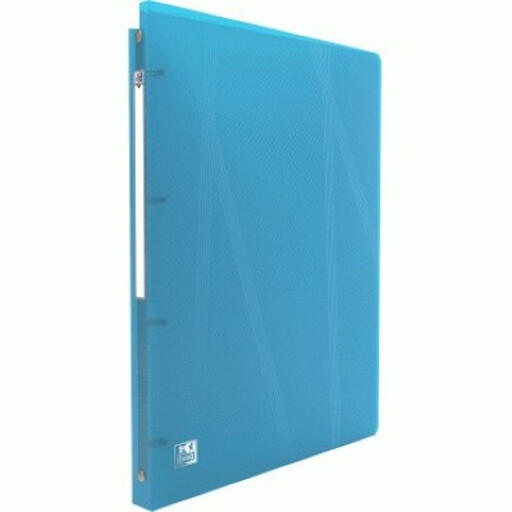
Why this suits this profile: its compact A4 size and capacity of around 100 sheets are ideal for your first school, home or admin filing system, without taking up too much space.
Its 20 mm spine reduces the risk of overfilling. The spine label lets you quickly identify what’s inside.
Translucent polypropylene cover, four round rings and made in France.
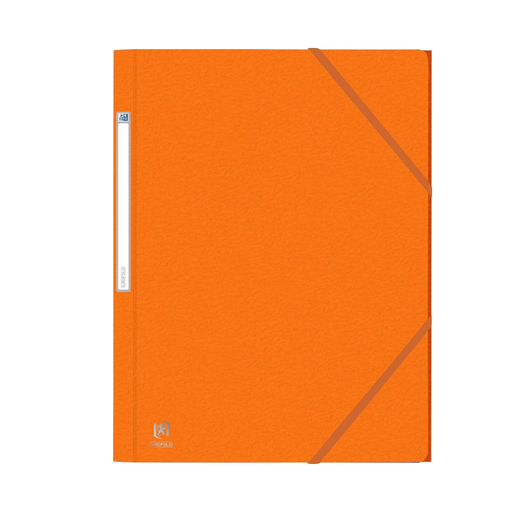
Why this suits this profile: its textured 600 g board and structured finish sit naturally in a professional office or a particularly well-organised personal system.
Its three flaps, reinforced with triple riveting, and its flat elastic band keep unpunched sheets secure during transport.
Extra-wide spine, adhesive label on the back and made in France.
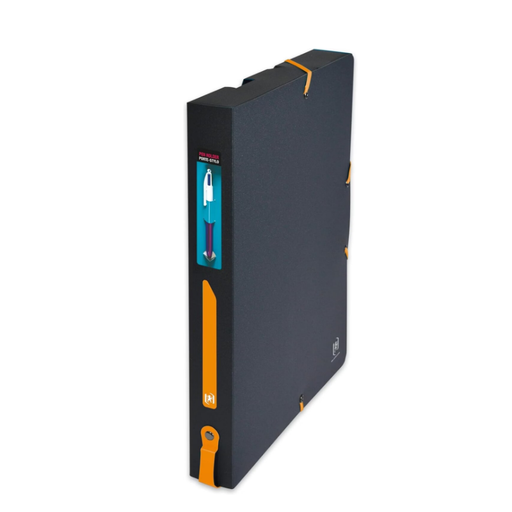
Why this suits this profile: this ring binder combines four rings, a 40 mm spine and an integrated three-flap folder. A well-rounded solution for course materials, projects and files you carry around often.
The A4XL format stops pockets from sticking out. The back folder gives you a place to keep unpunched documents before they are filed properly.
Advertised capacity of up to 250 sheets, rigid polypropylene cover and elastic closure.
A ring binder alone isn’t always enough to organise a file. Perforated A4 paper makes it easy to insert sheets directly into the rings, while pockets and dividers separate different categories. Whether at school or in the office, smooth paper that’s thick enough improves writing comfort and reduces tearing around the holes.
The Clairefontaine pack, which includes a wallet of perforated sheets and a wallet of double-sided copy paper, offers 300 pages per wallet in A4 size, on 90 g Velouté paper. The sheets are said to be made in France and PEFC certified. The resealable lid helps keep the paper clean between uses.
For unpunched documents, an expandable folder or a flap folder offers better protection for loose sheets. However, avoid filling a folder beyond its capacity: the flaps and closure will then be under constant strain.
We have put together a complete, real-time updated list of products that fully meet these strict selection criteria and European safety regulations.
Start by assigning one category per binder or per colour. Then add dividers with clear headings, and place the documents you consult most often at the front. Sheets you want to keep without punching can be stored in an integrated flap folder or in a separate one.
A 20 to 30 mm spine is generally enough for a standard file. For several school subjects, projects or archives you refer to regularly, a 40 mm model gives you more room. The actual capacity, however, depends on the paper weight and the type of pockets you use.
Avoid overloading the rings or flaps, close the elastic bands properly and keep folders away from damp and direct sunlight. For polypropylene covers, a quick wipe with a slightly damp soft cloth is usually enough. Important documents should also be kept in a dry place at a stable temperature.