People keeping an eye on their energy intake
If you’re taking a snack to a festival, compare the kcal per 100 g and the amount you plan to eat, rather than relying on the name of the mix alone.


To choose a pack to take to a festival, first compare the kcal per 100 g, then think about how much you plan to eat: labels such as ‘natural’ or ‘no added salt’ aren’t enough to assess its energy content. If you prefer a simple ingredient list, look at unsalted, unsweetened nuts. For a mix with dried fruit, check the sugars and the ingredients list for that specific recipe too.
If you’re taking a snack to a festival, compare the kcal per 100 g and the amount you plan to eat, rather than relying on the name of the mix alone.
If you’re looking for a less processed recipe, check the ‘sugars’ and ‘salt’ figures separately, as well as the ingredients list. ‘No added salt’ tells you nothing about the product’s other characteristics.
Before offering it to others, check the allergens, any ‘may contain’ warnings and the storage instructions on the packaging.
When comparing snacks for the same occasion, start with the values per 100 g, then check the ingredients and whether the pack is suitable for sharing.
| What to consider | What to check | Who is it for? |
|---|---|---|
| Energy and portion size | Compare the kcal per 100 g, then decide how much to take or serve. | For a snack to enjoy throughout the festival, I want to compare the energy content without confusing the pack size with my portion. Around 36 % of consumers would make this their top priority. |
| Sugars and added ingredients | Check the ‘sugars’ figure and look for sugar, coated fruit and oils in the ingredients list. | If I choose a dried fruit mix, I want to know what it contains beyond the fruit itself. This would be the main concern for around 29 % of consumers. |
| Salt and ingredients | Check the ‘salt’ figure; look separately at the kcal and sugars, even if the pack says ‘no added salt’. | If I’m choosing an alternative to a salty savoury snack, I’ll look first for an unsalted recipe without assuming it’s lower in calories. Around 21 % of consumers would prioritise this. |
| Sharing and storage | Check the allergens, any ‘may contain’ warnings and the storage instructions after opening. | When several people are sharing the same pack, I want to be able to show them the packaging and store what’s left according to its instructions. Sharing would be the priority for around 14 % of consumers. |
These labels describe different things. According to E.Leclerc, the TOKAPI walnut and almond mix with no added salt contains 0,0 g of salt, but 510 kcal and 35,7 g of sugars per 100 g.
Use the salt claim to assess salt alone, then compare the kcal, sugars, fat and ingredients.
Manger Bouger notes that dried fruit is naturally high in sugars. Auchan’s ingredients list for its FRUTSY Nature mix also includes sugar and oil.
Check the ingredients and the ‘sugars’ figure on the pack you choose, and don’t confuse total sugars with added sugar.
A mix may contain several allergenic ingredients. In France, the Ministry of the Economy states that allergenic ingredients must be listed and highlighted on the label.
Show the packaging to anyone concerned before sharing, and check for any ‘may contain’ warnings too.
Storage instructions after opening depend on the product and its packaging.
Check the instructions before you set off, and reseal the pack as directed after serving yourself.
Carrefour offers Carrefour Original mixes containing nuts and, depending on the product, cranberries.
TOKAPI offers mixes of nuts and dried fruit with no added salt.
The FRUTSY Mix & Go range includes Énergie and Nature recipes.
Monoprix offers dried fruit, as well as a product of roasted cashews with no added salt.
Lidl’s Alesto range includes plain nuts, dried fruit and savoury snacks.
Aldi offers TRADER JOE'S® raisins, unsalted shelled almonds and a cashew and peanut mix.
If you’re taking a snack to a festival, here’s a pack to consider. Compare its nutritional information and packaging with your selection criteria.
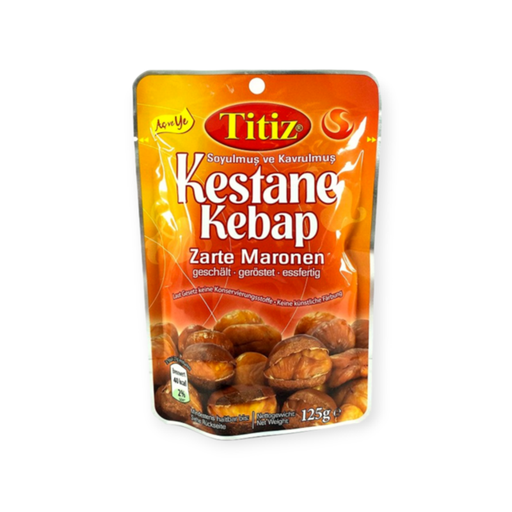 Image unavailable
This 125 g pack could be a handy snack to take to a festival. Before sharing it, check the nutritional values on the packaging, along with the allergen information and any ‘may contain’ warnings.
No. Salt and energy are two separate things. According to E.Leclerc, its TOKAPI walnut and almond mix with no added salt contains 0,0 g of salt but 510 kcal per 100 g. Compare the kcal and sugars separately.
You can’t tell from the product category alone: compare the kcal per 100 g for the specific products. Manger Bouger notes that dried fruit is naturally high in sugars. For a mix, check the ingredients list too, to see whether any sugar has been added.
Check the highlighted allergenic ingredients and any ‘may contain’ warnings on the packaging. In France, the Ministry of the Economy states that allergenic ingredients must be declared and highlighted. Show the label to anyone concerned before serving the product.
Follow the instructions on the pack you choose, particularly those on storage after opening. Reseal it as directed rather than applying the instructions for one product to every mix.