What should you look for?
First, consider whether you’ll be able to prepare the soup on site. This will help you choose between a carton and a sachet; portion size and ingredients can then help you narrow it down.
Liquid soup in a carton
Worth considering : if you can’t rely on having water to prepare a soup; Carrefour, for example, stocks small 30 cl cartons.
Bear in mind : liquid weighs more in your bag than a dry sachet, and once opened, the contents must be stored according to the manufacturer’s instructions.
Dehydrated soup in a sachet
Worth considering : if you want to save space before preparation and will have access to the required water and equipment, with permission to use them.
Bear in mind : a sachet isn’t ready to eat. Follow the instructions and check how much soup it makes.
| What to consider | What to check | Who is this for? |
|---|
| Preparing it on site |
Instructions, water requirements and festival rules on equipment and containers. |
If I can’t rely on having access to water, I look for a soup that doesn’t need reconstituting. Around 31% of consumers would put this kind of independence at the top of their list. |
| Size and portions |
How much you’ll need to carry, the number of portions and how much soup it makes once prepared. |
If I’m carrying my provisions on foot, I want to keep them compact without taking more portions than I need. Around 25% of consumers would share this priority. |
| Ingredients and nutritional values |
Ingredients and allergens in the exact product; salt and other nutritional values shown on the same basis, per 100 g or 100 ml. |
If a recipe needs to meet my dietary requirements, I check the ingredients rather than relying on its name. Around 25% of consumers would prioritise this check. |
| Sharing with a group |
A quantity that suits the group and storage instructions for after opening. |
If I’m serving several people, I’d rather choose an amount we can finish without having to store an opened carton for long. Sharing would be the main priority for around 19% of consumers. |
Soup sachets on Joybuy
These are soup sachets that need to be prepared. For a festival, choose one of these only if you’ll be able to use the water and follow the preparation instructions, in line with the rules on site.
 Image unavailable
Royco, dehydrated noodle, carrot and mushroom soup, 3 × 20 cl
Worth considering if you can prepare soup on site using the water required. The pack contains three 20 cl portions; check the instructions and allergens on the packaging.
View on Joybuy
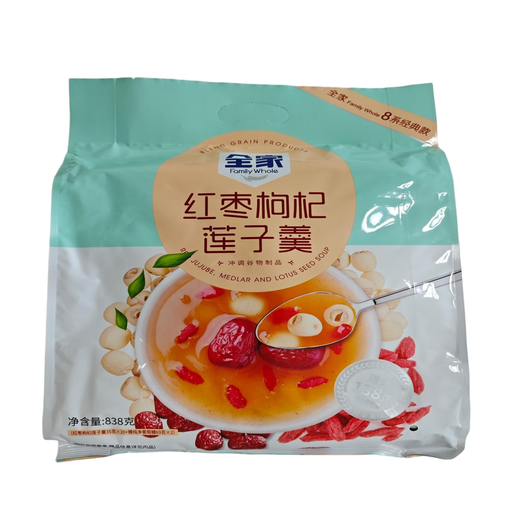 Image unavailable
Family Whole, red date, goji berry and lotus seed soup, 838 g
Worth considering if you have access to water and can follow the preparation instructions. The pack weighs 838 g, so factor this into the weight of your provisions and check the instructions before you set off.
View on Joybuy
 Image unavailable
Knorr, Thai noodle and mushroom soup, 69 g
Only worth considering if you have access to the water and cooking equipment you need. The sachet makes 0.70 L; check the preparation steps and allergens on the packaging.
View on Joybuy
Frequently asked questions
Does a long-life soup carton need to be refrigerated before opening?
Follow the storage instructions on your chosen carton. Once opened, follow the manufacturer’s guidance on storage time and temperature: the printed date alone is no longer enough to tell you how to store it.
What’s the difference between a best-before date and a use-by date on soup?
A best-before date, shown as ‘best before’, doesn’t mean the same thing as a use-by date, shown as ‘use by’. As the Ministry of the Economy explains, check which date appears on the product you buy, and distinguish it from the instructions that apply after opening.
How do you compare allergens and salt in two soups?
Read the ingredient list for each soup, then compare the salt content on the same basis, per 100 g or 100 ml. The DGCCRF says allergens must be highlighted in the ingredient list and salt must be included in the nutrition declaration.
Is ‘no preservatives’ enough to help you choose?
No. On its own, this claim doesn’t tell you about portion size, allergens, salt or storage after opening. Check each of these details separately on the soup you plan to take with you.
Can you transport home-made preserves in the same way as pre-packed soup?
Don’t assume their preparation and storage requirements are the same. Anses says home-made or artisan preserves and cured foods are the foods most often implicated in human cases of botulism. For pre-packed soup, follow the instructions for that specific product.


