
Livraison le jour même ou le lendemain

Qualité garantie

Débloquez vos offres de bienvenue: Livraison GRATUITE | Jusqu'à -80 % | 30 jours d'essai gratuits à JoyPlus
Téléchargez l'application
A sagging mesh or a drooping fence can ruin the entire look of your garden. Not to mention, it fails at its primary purpose: to define and secure your property. The main challenge during installation? Achieving a tension that is both uniform and long-lasting. For a professional-grade result, brute force isn't enough: it's all about choosing the right tools.
As the head of product selection at Joybuy, my mission is to help you navigate the vast landscape of available options. This guide introduces the essential accessories for a successful fence installation, with two key principles in mind: efficiency and durability. We will review the essential selection criteria before unveiling our top product picks to help you bring your project to life.
Before you get started, let's go over the few details that separate an amateur installation from a sturdy fence built to stand the test of time.
The fence tensioner, also known as a strainer, is the cornerstone of your installation. Several types exist, but for a flexible mesh fence, the most common and effective is the ratchet or cogwheel model. Its mechanism allows you to wind the tension wire and lock it firmly in place, ensuring gradual, controlled tightening without exhausting yourself. Just remember to check its compatibility with the diameter of the wire you'll be using.
The tension wire is the backbone of your fence. A poor-quality wire will inevitably loosen or rust over time. The right choice? A galvanized steel wire, which offers excellent protection against corrosion. For greater discretion and enhanced protection, green plastic-coated wire is an excellent alternative. Its plastic sheath provides an additional barrier against moisture and allows it to blend in with the greenery. Its tensile strength (measured in MPa) is also a good indicator of its ability to handle tension without breaking.
But tensioning a fence involves more than just the tensioner. You will also need a quality wire rope cutter to cleanly snip the tension wire to the correct length. A standard cutting plier would likely crush and fray the wire, making it difficult to insert into the tensioner. A dedicated cutter, however, guarantees a clean, precise cut that will make your life much easier. It's a small investment for a polished finish and a safer job.
Here is our selection of fence installation accessories. They all meet our standards for durability and practicality, designed for homeowners aiming for an impeccable result.
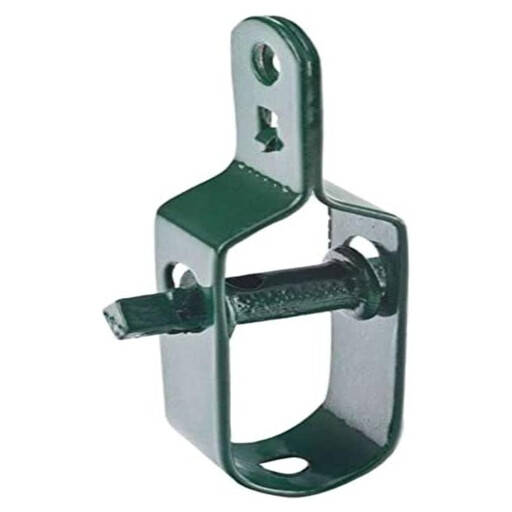
Why it stands out: This Tenax tensioner is all about simplicity and efficiency. Its winding mechanism allows you to adjust the wire tension with pinpoint accuracy. Its green plastic coating serves a dual purpose: discreet integration into your garden and long-lasting protection against rust and weather.
Benefits:
Who is it for? For homeowners installing or renovating a flexible mesh fence who are looking for a reliable, simple, and built-to-last wire strainer.
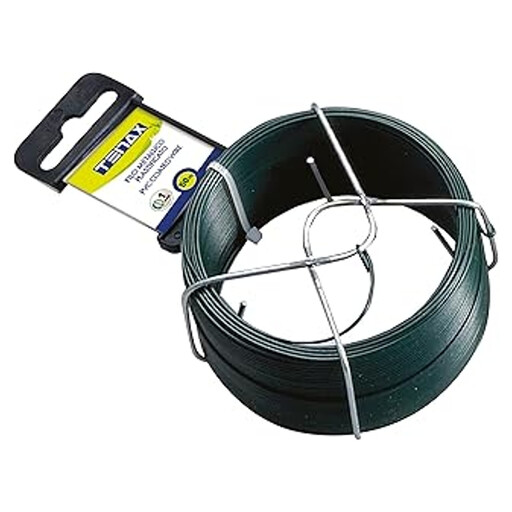
Why it stands out: This tension wire combines a galvanized iron core with a green plastic sheath. This double protection makes it particularly resistant to rust and the elements. Both malleable and robust, it boasts a tensile strength of up to 300 MPa, making it an excellent choice for your fence as well as for your DIY and gardening projects.
Benefits:
Who is it for? For anyone looking for a fence tension wire that is both durable and discreet. It will also be very useful for gardeners for staking plants or for DIY enthusiasts for small repairs.
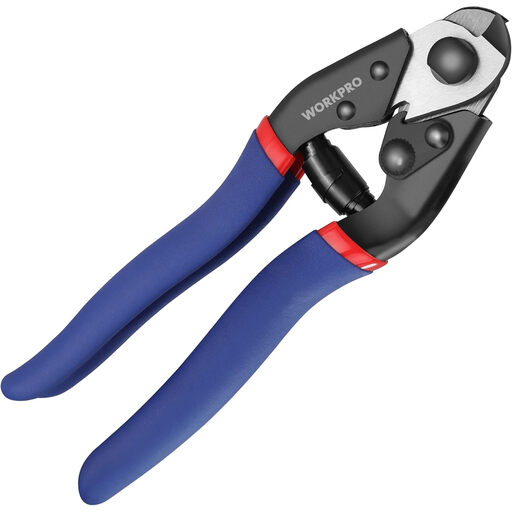
Why it stands out: This WORKPRO wire rope cutter is forged from Chrome Vanadium (CR-V) steel, an alloy renowned for its toughness and wear resistance. Its sharpened jaws are specially designed to cut steel cables without crushing them. Its return spring and ergonomic handles reduce fatigue, while the safety lock allows for risk-free storage.
Benefits:
Who is it for? The essential tool for any DIYer installing a fence. It is for those who demand a reliable tool for clean, professional finishes on their cables and metal wires.
Do the products in our selection not quite match your project? Are you looking for a different wire diameter, a specific tensioner model, or other accessories? Feel free to explore our complete category. There you will discover a much wider range of solutions for all your projects.
? Explore our full range of metal wire and accessories.
For optimal tension, follow these steps:
For a standard mesh fence (1 m to 1.50 m high), a galvanized steel tension wire of 2 to 2.5 mm in diameter is generally sufficient. A green plastic-coated wire will offer superior durability and aesthetics. Simply verify that its tensile strength is adequate to prevent it from loosening over time.
Absolutely. Using a wire rope cutter is very strongly recommended. Unlike a standard cutting plier, it is designed to shear steel wires cleanly without crushing them. This not only makes it easier to insert the wire into the tensioner but also ensures a cleaner, safer finish.