
Livraison le jour même ou le lendemain

Qualité garantie

Débloquez vos offres de bienvenue: Livraison GRATUITE | Jusqu'à -80 % | 30 jours d'essai gratuits à JoyPlus
Téléchargez l'application
Whether you’re preparing revision notes, a bullet journal, an illustration or a customisation project, felt-tip pens and creative markers aren’t all suited to the same tasks. A tip that’s too wide lacks precision, a permanent ink can leave indelible marks on certain surfaces, and a poorly thought-out assortment might leave several colours languishing at the bottom of a drawer.
So before you place an order, it’s worth taking a close look at the tip, the ink formulation and the compatible surfaces, rather than relying solely on the number of pens in a set.
A pen described as “universal” isn’t necessarily the best choice for fine drawing or lettering. A 4 mm round tip is fine for filling in and bold strokes, but it’ll be far less precise than a 0.2 mm to 0.5 mm fineliner for outlines, diagrams or small details.
Drawing pens, fineliners and brush pens don’t suit the same techniques. So check the shape and width of the tip before choosing a set.
A water-based ink may be washable or erasable, but that doesn’t automatically make it suitable for glass, metal or plastic. Conversely, an acrylic marker can offer opaque coverage on many surfaces, provided you test it first on an inconspicuous area.
Terms like “permanent”, “water-resistant” or “archival” should be interpreted in relation to the surface, drying time and conditions of use. They don’t guarantee the same result on paper, wood, fabric or a varnished object.
A large assortment can be great for colouring, but far less relevant for note-taking or technical drawing. For everyday use, a few well-chosen colours with refills available are often more practical than an XXL set.
A tip with a metal collar can make it easier to use with a ruler or stencil. For erasable markers, also check that the line width remains sufficiently visible on a smooth surface.
Colouring pens with water-based ink are generally designed for paper. Acrylic markers contain a paint that can produce an opaque, matt finish; depending on the product description, some models are water-resistant once dry. Permanent markers are intended for long-lasting markings, while water-soluble models are better suited to temporary annotations.
For documents, water-based highlighters are particularly handy. Their chisel tip often allows you to achieve two line widths. For a creation you want to preserve, check the information about lightfastness and water resistance. However, these indications don’t guarantee preservation in all conditions.
Always test the marker on a scrap piece or in an inconspicuous spot. Glass, metal, plastic, wood and fabric don’t absorb ink in the same way. Acrylic markers often need to be shaken and then primed on a test surface. Replace each cap after use and store the pens following the manufacturer’s recommendations, often horizontally for liquid inks.
For school and office use, also check the warnings: small caps aren’t suitable for children under 3 years old, and inks must not be ingested. Compliance with a standard, such as ASTM D4236 for certain art products, tells you about the evaluation framework used by the manufacturer, but doesn’t replace common-sense precautions.
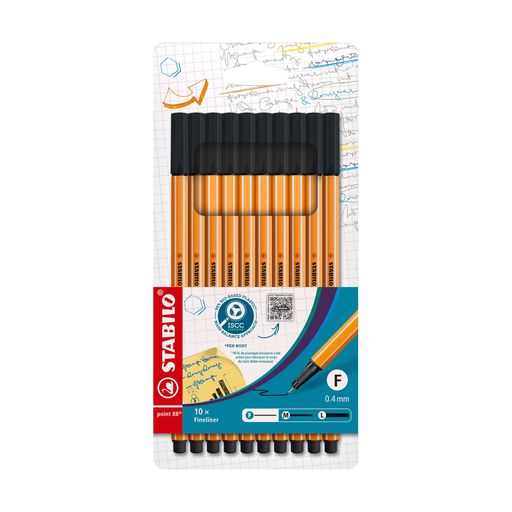
Why this choice suits this profile: This pack of ten black fineliners is ideal for notes, diagrams, revision cards, mandalas and bullet journals, without multiplying the number of references.
The fine 0.4 mm tip stops you ending up with a pen that’s too wide for details. The metal collar makes it easier to use with a ruler.
Ten black pens with a 0.4 mm tip, with a body stated to be made from 96% ISCC PLUS certified bio-based plastic.
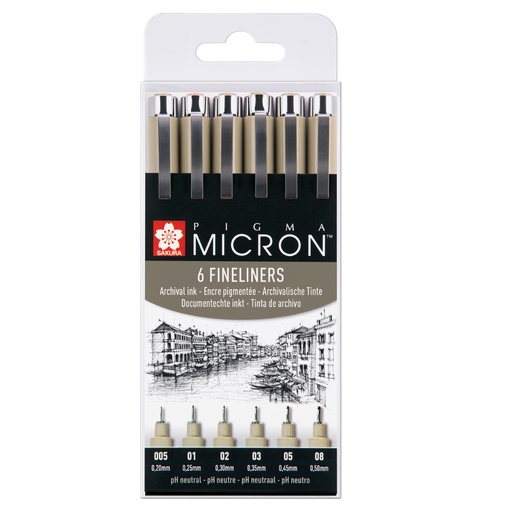
Why this choice suits this profile: The variety of tip sizes is perfect for detailed illustrations, inking, technical drawing and sketchbooks that need several line thicknesses.
The set doesn’t limit you to a single diameter – it brings together several tip sizes so you never have to compromise when drawing.
A pigment ink stated to be water-resistant and lightfast, with six different line widths.
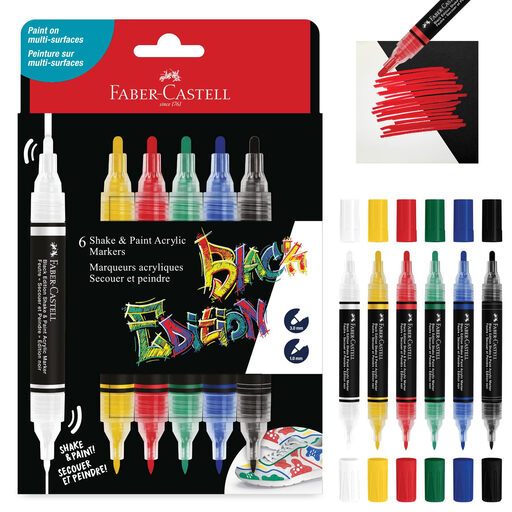
Why this choice suits this profile: This set is aimed at customisation projects and creative hobbies on paper, wood, glass, metal, plastic, stone or fabric.
The two tips – 3 mm and 1 mm – mean you don’t have to buy a separate tool for filling in and another for outlines. A test is still essential depending on the surface.
A water-based opaque acrylic ink, six colours, a dual tip and a finish stated to be water-resistant once dry.
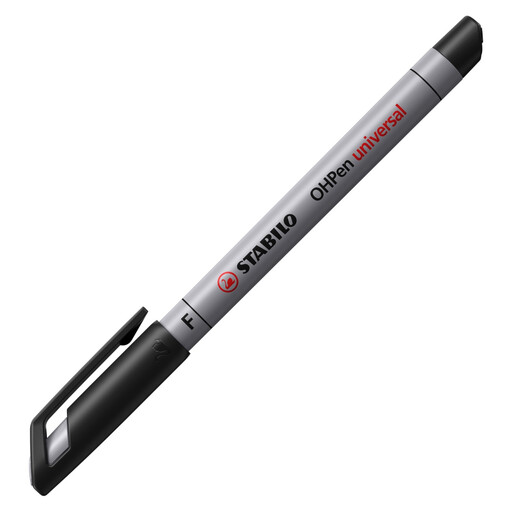
Why this choice suits this profile: It’s ideal for presentations, transparencies, temporary labels and smooth surfaces where the marking needs to be removable with water.
The water-soluble ink is clearly intended for removable marking. There’s no risk of confusing it with a permanent marker used by mistake on a non-porous surface.
Four colours, a fine 0.7 mm tip, a pocket clip and erasing with a damp cloth on compatible smooth surfaces.
We’ve put together a comprehensive selection, updated in real time, of products that meet these strict criteria as well as European safety regulations.
A fineliner has a fine, stable tip, ideal for outlines, details and regular writing. A brush pen has a flexible tip whose line varies depending on the pressure you apply – it’s better suited to lettering, calligraphy and more expressive strokes.
Replace the cap immediately, don’t leave the tip exposed and store the pens following the manufacturer’s recommendations. For acrylic markers, shake the product with the cap on, then prime the tip on a test sheet. A dry or clogged tip can alter the ink flow and affect the finish.
No. Even when a product is described as a multi-surface marker, the result depends on the porosity, treatment and cleanliness of the surface. Do a test first, let it dry, then check the adhesion before customising an object.