
Livraison le jour même ou le lendemain

Qualité garantie

Débloquez vos offres de bienvenue: Livraison GRATUITE | Jusqu'à -80 % | 30 jours d'essai gratuits à JoyPlus
Téléchargez l'application
Whether you’re a student, teacher, office worker, bullet journal enthusiast or a parent looking for washable markers for children, choosing from the many felt-tip pens and highlighters available can quickly become a headache. Sets often promise a generous palette or vibrant colours, without necessarily specifying whether their tips are suitable for the paper you use, the level of precision you’re after, or how often you’ll be using them.
Before placing an order, three mistakes crop up particularly often.
A set of 60 or 100 shades may look appealing, but it won’t necessarily replace a fine 0.4 mm pen, a chisel-tip highlighter or a brush pen. For annotating a lesson, line width and readability are often more important than the number of colours available.
Water-based ink can be pleasant to use, but the result depends heavily on the paper’s weight and porosity. On thin paper, it may bleed through or leave a mark on the reverse side. For colouring, lettering or watercolour effects, also check whether the ink is described as washable, blendable or water-soluble.
A brush tip lets you easily vary line thickness by adjusting pressure. It’s ideal for expressive lettering, but less comfortable for small characters and detailed diagrams. Conversely, a fine-tip pen offers excellent precision but takes longer to fill large areas. The best choice therefore depends above all on the stroke and the result you’re aiming for.
For taking notes, a transparent water-based ink helps maintain good readability. Pastel highlighters generally attract less attention than fluorescent models, which make text stand out more.
For creative activities, pay close attention to the features stated:
A well-organised case, a colour chart or numbered colours make storage easier and help you quickly find the right shade. To preserve ink flow, carefully replace the caps after each use. Some manufacturers also recommend horizontal storage, particularly for acrylic markers and dual-tip sets.
For products intended for young children, check the recommended age, the possible presence of small parts and the supervision instructions. Even colouring pens described as non-toxic should not be put in the mouth.
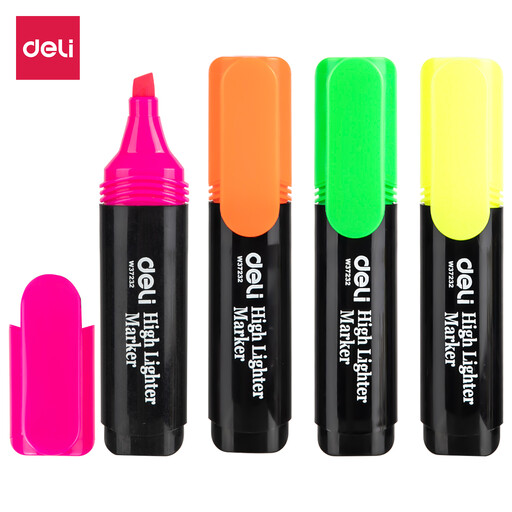
Why this choice suits this profile: With its four colours, this set lets you get started with note-taking, organising your lessons or marking documents without stockpiling lots of references.
Its deliberately limited format stops you paying for shades that would sit unused at the bottom of your pencil case when your goal is simply to highlight every day.
Four assorted colours in a format suited to school and office supplies.
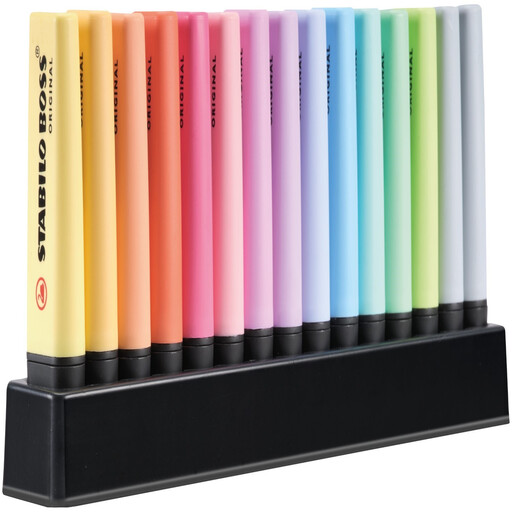
Why this choice suits this profile: Those who like to make their notes look polished have 14 pastel shades for lessons, planners and bullet journals.
Its chisel tip offers two line widths, so you don’t need to buy a separate tool for underlining and another for highlighting.
Transparent water-based ink, 15 pieces, 2 to 5 mm tip and claimed anti-dry-out technology for up to 4 hours without the cap.
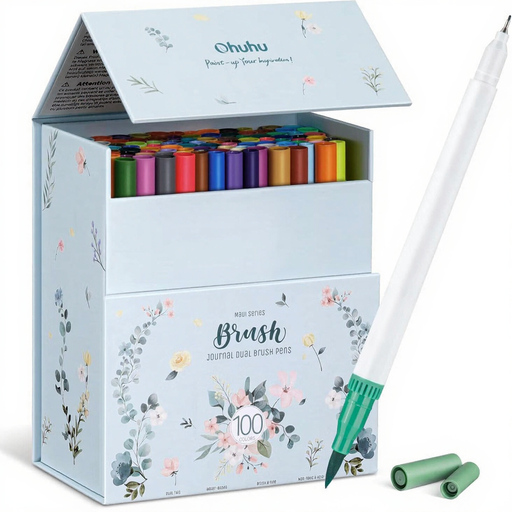
Why this choice suits this profile: Colouring, illustration and calligraphy enthusiasts benefit from a 0.4 mm fineliner tip and a 1 to 6 mm brush tip on every pen.
The two tips cover complementary uses: no need to buy multiple sets for details and large areas.
100 numbered colours, colour chart, five replacement tips and water-based ink described as blendable on suitable paper.
We’ve put together a complete, real-time updated selection of products that meet these demanding criteria, as well as European safety standards.
Always test the colour on the last page of your notebook or on a sheet of the same weight. For very liquid inks and water effects, choose thicker paper and slip a protective sheet underneath the page you’re working on.
It all depends on the type of ink, storage conditions and how often you use them. Replace the caps after each session and keep the pens away from heat and sunlight. Anti-dry-out claims made by a brand apply to specific usage conditions: they don’t remove the need to put the cap back on properly.
Not necessarily. Check the recommended age, warnings about caps and the possible presence of small parts. An ink described as washable may still leave marks on some fabrics or materials. When the instructions recommend it, use these products under adult supervision.