
Livraison le jour même ou le lendemain

Qualité garantie

Débloquez vos offres de bienvenue: Livraison GRATUITE | Jusqu'à -80 % | 30 jours d'essai gratuits à JoyPlus
Téléchargez l'application
A set of felt-tip pens and creative markers might seem easy to choose… until the ink bleeds through the paper, the tip dries out too quickly, or the colours don’t match what you had in mind. Students, teachers, illustrators, parents and craft enthusiasts all have different needs.
Before you place an order, three pitfalls are particularly common:
The tip directly affects the finish and how comfortable the pen feels to use:
For children, choose pens that are easy to grip and have ventilated caps. Small parts are not suitable for children under 3 years old.
Water-based ink is generally suitable for paper and is easier to clean. However, it can bleed through thin sheets. For colouring, check the paper weight and test the pen in an inconspicuous area.
Watercolour markers contain water-soluble ink that can be blended with a damp brush, provided you use suitable paper. Pigmentation and lightfastness vary between products – don’t assume they all offer the same level of permanence.
Acrylic markers and paint pens lay down a more opaque layer. They can be used on wood, glass, ceramic, metal, stone and some textiles. A test is always advisable, especially on a delicate surface or one that will be handled regularly.
Whiteboard markers and water-soluble pens are designed for non-porous surfaces. A permanent marker has no place on a wipe-clean board.
A large set is only worthwhile if you’ll actually use all those shades. For note-taking or revision, 10 to 20 colours are usually plenty. For illustration, colouring or craft projects, a palette of 30 to 100 shades makes gradients and colour-coding much easier.
Also take a look at the storage system: rigid case, box or roll-up pouch. Replace the cap after every use and follow the recommended storage position. Some models, particularly acrylic markers, need to be stored flat. Permanent markers and paint inks can stain clothing and surfaces.
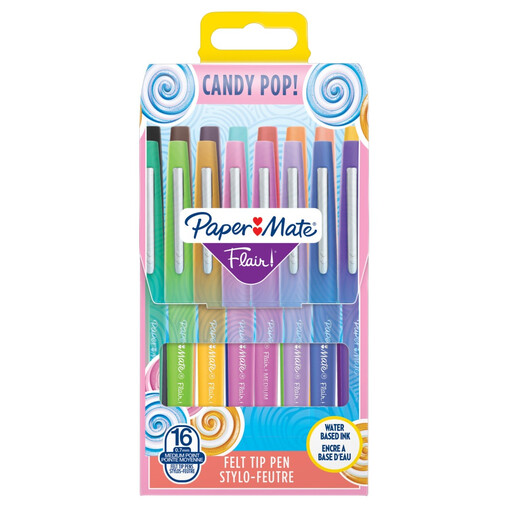
Why this suits this profile: Their medium tip and bright colours are ideal for note-taking, school projects, filing documents and first attempts at colouring on paper.
The water-based ink is advertised as smudge-resistant and designed to minimise bleed-through on standard paper. A test is still recommended depending on the paper weight.
Medium felt tip, colourful assortment and water-based ink for everyday use on paper and card.
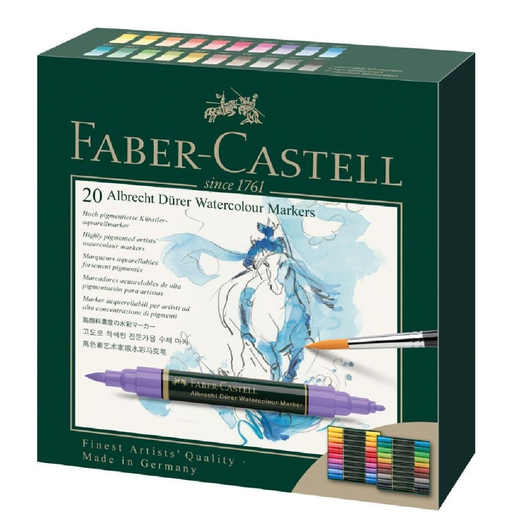
Why this suits this profile: Illustrators and mixed-media artists get two tips per pen, allowing them to switch from precise details to softer strokes.
The product page clearly states it uses water-soluble ink and should be used on suitable paper. This helps avoid confusing a watercolour marker with a permanent one.
20 colours, a flexible brush tip and a fine metal tip, with the ability to create watercolour effects.
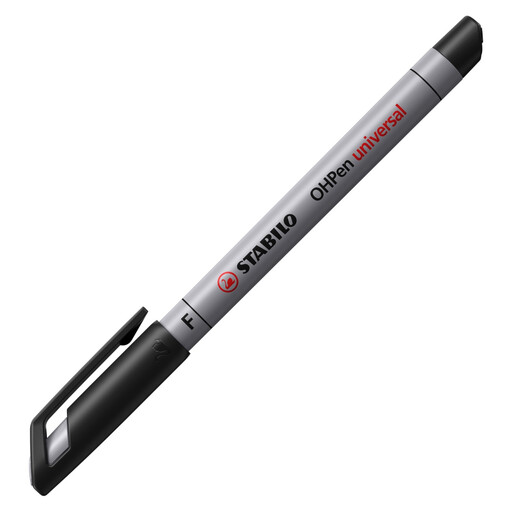
Why this suits this profile: Teachers, trainers and presentation professionals can annotate smooth surfaces with four easily distinguishable colours.
This is a water-soluble ink designed for smooth surfaces, not a permanent marker. Marks can be removed with a damp cloth.
Fine 0.7 mm tip, four colours, clip and claimed resistance to drying out for up to 72 hours without the cap.
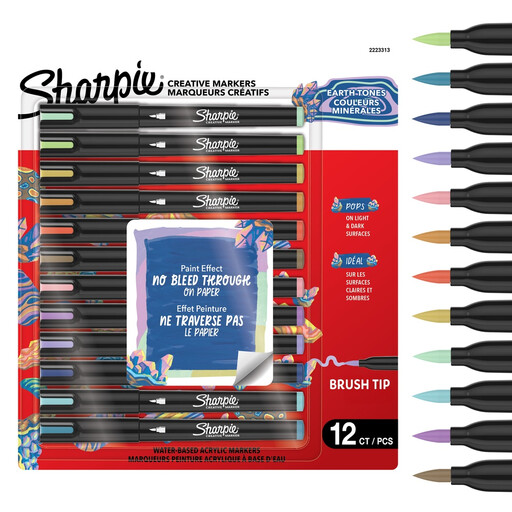
Why this suits this profile: Creatives who decorate objects or work on different surfaces will appreciate the brush tip and the palette of 12 warm tones.
The description details the compatible surfaces: metal, wood, ceramic, glass, stone and canvas. A test is still recommended before committing to a permanent customisation.
Water-based acrylic ink, opaque finish similar to paint, and a brush tip suitable for both details and broad areas.
We’ve put together a comprehensive, real-time updated list of products that meet these exacting criteria, while also complying with European safety regulations.
A 0.4 mm fineliner, such as the STABILO point 88, is ideal for outlines, small handwriting and tables. For headings, add a brush pen or a chisel-tip marker. Always test the ink on a page at the back of your notebook to check it doesn’t bleed through the paper.
Replace each cap after use, avoid heat and direct sunlight, and follow the recommended storage position. Acrylic markers generally need to be stored flat. If a tip becomes clogged, follow the manufacturer’s instructions rather than using an unsuitable solvent.
Not necessarily. Their ink may be water-based but forms an opaque film once dry. On glass or metal, it can sometimes be removed more easily than a permanent ink, but the result depends on the surface and drying time. Always test before any permanent use.