
Livraison le jour même ou le lendemain

Qualité garantie

Débloquez vos offres de bienvenue: Livraison GRATUITE | Jusqu'à -80 % | 30 jours d'essai gratuits à JoyPlus
Téléchargez l'application
Whether you’re sketching in a notebook, preparing a plan, customising an object or creating a detailed illustration, the choice of felt-tip pens and drawing markers directly affects precision, durability and the final result. Packaging often promises inks that are “permanent”, “multi-surface” or “professional” without spelling out the product’s real limitations.
Here are the criteria to examine so you can avoid ill-suited purchases and choose materials that match how you work.
A tip described as “fine” doesn’t always produce the same line. In technical drawing, architecture or for illustration details, the difference between 0.2 mm, 0.3 mm and 0.5 mm is immediately visible. A metal sleeve can also make a difference if you’re working with a ruler or stencil.
Fine black pens, fineliners and precision markers should therefore be compared by their actual diameter, not just because the packaging says “fine”.
A waterproof or water-resistant ink may perform well on paper, but its behaviour changes on glass, plastic, metal, wood or fabric. Adhesion, drying time and resistance to rubbing vary from one material to another.
With acrylic paint markers, always check the surfaces listed by the manufacturer and test on an inconspicuous area. The claim “water-resistant when dry” does not guarantee the design will withstand repeated washing, scratching or outdoor use.
A tip that dries out can render a marker unusable even when there’s still ink inside. Pigment-based or acrylic ink models generally require you to replace the cap immediately. Some paint markers also need to be shaken and primed before first use.
Horizontal storage is often recommended to help the ink flow evenly. If you use your materials frequently, these precautions matter more than an impressive number of colours.
Choose the tip according to the line you want:
A round tip produces a consistent line, while a brush tip lets you vary the thickness depending on pressure. For calligraphy, it’s better to look for calligraphy pens or flexible-nib pens rather than a standard fineliner.
Pigment ink pens generally lay down a clean line. Depending on the features stated by the manufacturer, they also offer good lightfastness or water resistance. They suit line drawing, illustration, sketching and certain mixed-media techniques.
Acrylic paint markers use a more opaque ink, particularly useful on coloured or non-porous surfaces. Opacity can vary between colours and may require several coats. Allow each layer to dry thoroughly to minimise smudging.
On smooth paper, a fine tip usually keeps its shape better. Conversely, very absorbent paper can widen the line and use up ink faster. If your illustration will later receive watercolour or a wash, check that the ink is stated as water-resistant and wait until it is completely dry.
For glass, metal, stone, plastic, wood or fabric, acrylic markers can be a good option, subject to the product description. They should not be used on skin or near food.
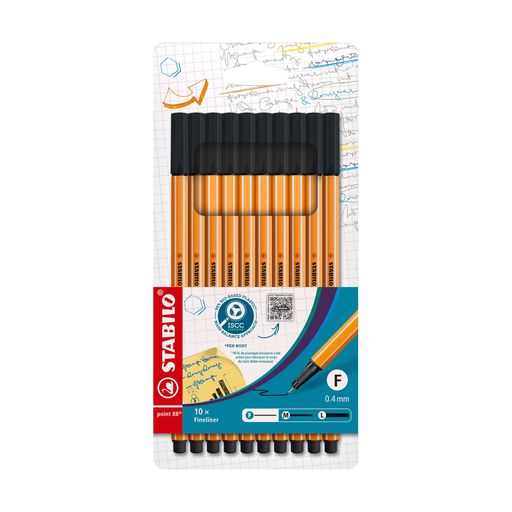
Why this suits this profile: This pack of 10 black pens is ideal for note-taking, bullet journals, revision cards and early sketches, without cluttering your collection with too many references.
The 0.4 mm tip is clearly stated and protected by a metal sleeve, handy for working with a ruler or stencil.
Ten black pens with a 0.4 mm tip and a barrel made from 96% bio-based plastic, according to the product description.
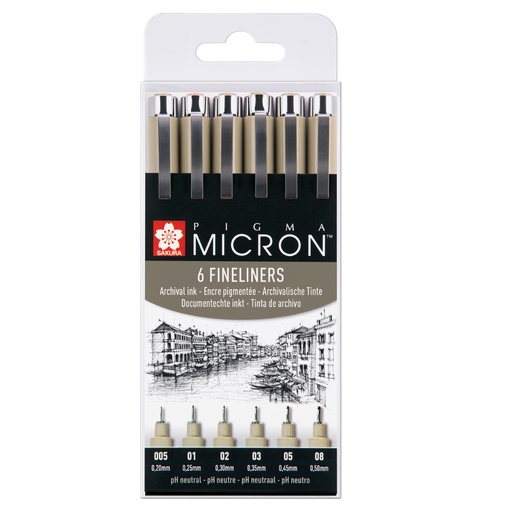
Why this suits this profile: Its range of widths lets you move from fine detail to framing within the same illustration, notebook or comic project.
The description mentions pigment ink that is water-resistant and designed to resist fading – far more useful than a vague promise of “permanence”.
Six matching tip widths and a pigment ink stated to be water-resistant and suitable for illustration work.
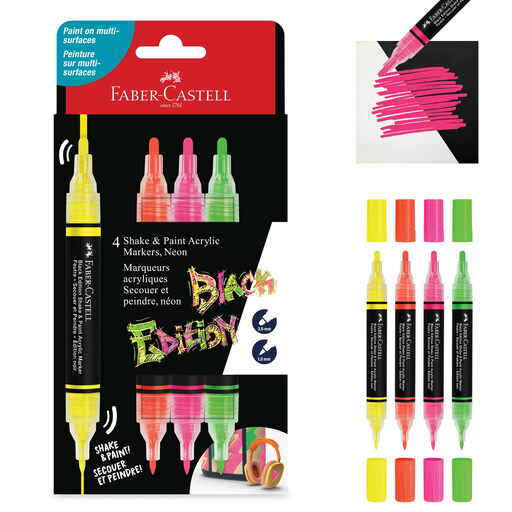
Why this suits this profile: Its twin tip is ideal for DIY enthusiasts who switch between customising objects, lettering, solid areas and details on different materials.
The dimensions of both tips are specified: 3 mm for broad strokes and 1 mm for details. The Shake & Paint system does require preparation before use.
A water-based opaque acrylic ink, two tips of 3 mm and 1 mm, and stated compatibility with paper, wood, glass, metal and several other surfaces.
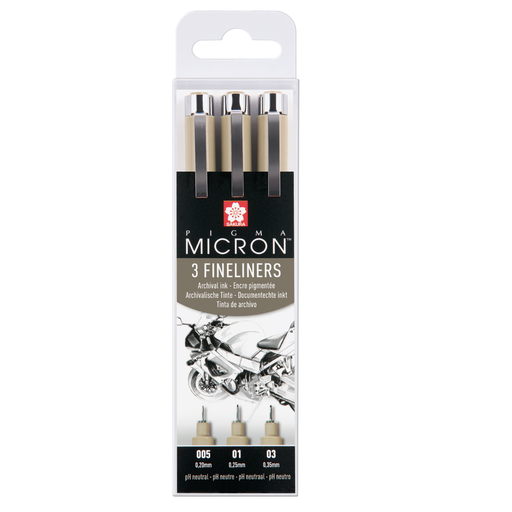
Why this suits this profile: The 0.20, 0.25 and 0.35 mm tips meet the needs of fine lines, plans and illustrations that demand precise control.
The thicknesses are detailed in the description, so you can choose by line width rather than relying on a vague commercial label.
Three ultra-fine tips and a pigment-based Pigma ink stated to be water-resistant and suitable for precision drawing.
We’ve put together a comprehensive, real-time list of products that meet these demanding selection criteria and European safety standards.
To make your art drawing materials last longer:
Art inks are not intended for consumption. Keep caps out of reach of children and follow the warnings on the packaging.
It depends on how often you use it, the paper you use and how well you replace the cap. A pen that is quickly recapped and stored properly will generally stay usable longer than one left open, even if not all the ink has been used.
Some models are designed for glass, metal, plastic, wood, stone or fabric. Check the product description, clean and dry the surface, then test on an inconspicuous area. The final durability depends on the surface, drying time and friction.
Fineliner pens are mainly used for precise lines on paper. Acrylic paint markers lay down a more opaque ink, suitable for customising many surfaces. They are better for solid areas and coloured surfaces, but require more careful preparation and cleaning.