
Livraison le jour même ou le lendemain

Qualité garantie

Débloquez vos offres de bienvenue: Livraison GRATUITE | Jusqu'à -80 % | 30 jours d'essai gratuits à JoyPlus
Téléchargez l'application
A set of creative felt-tip pens and markers may seem simple to choose… until the ink bleeds through the paper, the nib dries out after just a few uses or the advertised colours are unsuitable for the surface. Drawing, lettering, bullet journalling, decorative painting or highlighting : each technology is designed to meet a specific need.
Before buying, watch out for three common pitfalls :
For outlines, annotations and details, a fine nib offers greater precision. Drawing pens fitted with a small-diameter nib are particularly suitable for illustrations, patterns and compact lettering.
Brush pens offer a variable line width depending on the pressure applied. They are ideal for lettering, calligraphy and expressive strokes. However, a flexible nib requires a little practice to maintain a consistent thickness.
The chisel tip on highlighters generally provides two widths : a narrow line for underlining and a broader band for highlighting a passage. Retractable models are practical at the office or when travelling, as they eliminate the risk of losing a cap.
Watercolour felt-tip pens use water-based ink that can be spread with a wet brush on suitable paper. A higher paper weight limits warping and allows you to layer more washes.
Acrylic markers and paint markers are intended for surfaces such as wood, stone, glass, metal, ceramics and certain plastics. Their finish is often more opaque, including on dark surfaces. On a fragile object or one that will be handled regularly, test the marker first in an inconspicuous area.
For notebooks and textbooks, transparent highlighter inks are more suitable. Pastel highlighters are less distracting, while fluorescent highlighters make it easier to spot information quickly. In both cases, check the risk of bleed-through according to the paper being used.
A marker may lose its smooth flow if its cap is not closed properly or if it is stored in an unsuitable position. Follow the instructions for each range : some products should be stored horizontally, particularly when the ink contains pigments.
Sets intended for creative hobbies often contain small parts, such as caps. They are not suitable for children under 3 years of age, in accordance with the warnings shown on the packaging. For products sold in France, also check the information relating to the manufacturer, importer or responsible person in the European Union. Ink must not be swallowed or applied to the skin unless explicitly stated.
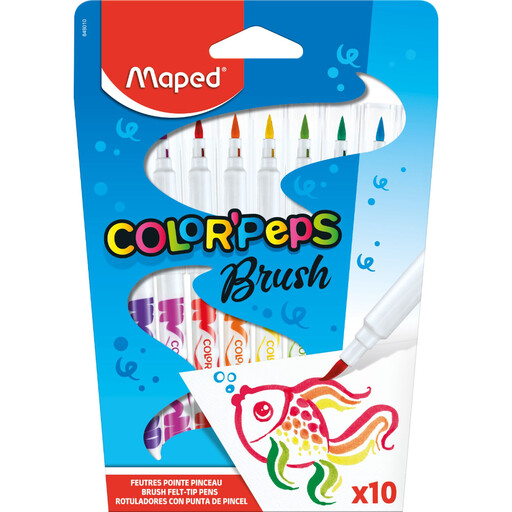
Why this choice suits this type of user : This set of 10 brush pens offers an accessible selection for discovering drawing, creative card-making or calligraphy without having to buy multiple products.
The 2.8 mm brush tip is clearly specified, and the water-based ink is washable from skin and most fabrics, helping to avoid unpleasant surprises during creative activities.
Flexible tip, ergonomic grip area and 10 assorted colours.
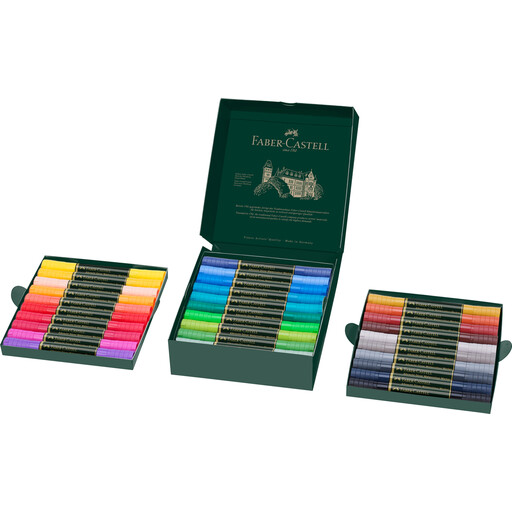
Why this choice suits this type of user : Artists who switch between sketching, illustration and mixed media have 30 shades in a storage wallet, with two types of nib on each marker.
The product details specify that the ink is water-soluble and that the brush tip is complemented by a fine tip, allowing you to check compatibility with your paper and working method.
Dual tip, water-based ink, watercolour effects and storage wallet.
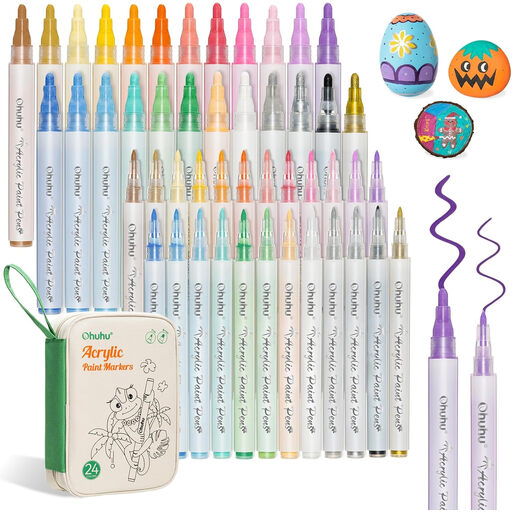
Why this choice suits this type of user : Personalisation, decorating and creative hobby projects often require several line widths and a broad colour palette.
The set distinguishes the 0.7 mm fine tips from the reversible round and chisel tips. This makes it easier to choose the right tool according to the level of detail or the surface to be filled.
48 markers, 24 colours available in both tip configurations and water-based acrylic ink.
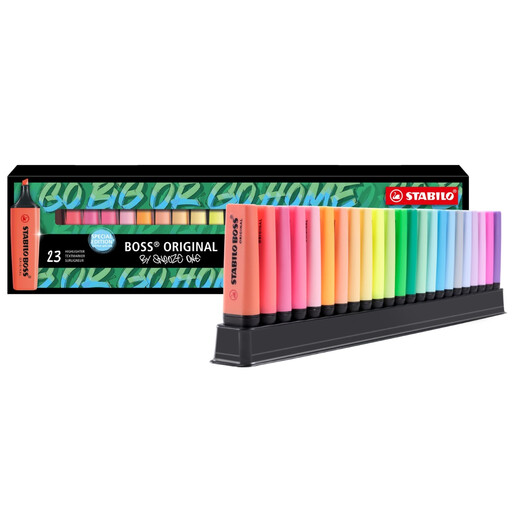
Why this choice suits this type of user : A desk, workspace or shared planner benefits from an assortment combining fluorescent and pastel shades to distinguish between different types of information.
The contents are clearly specified: 9 fluorescent shades and 14 pastel shades, with a 2 and 5 mm chisel tip. The choice is therefore based on clearly defined uses rather than appearance alone.
23 pieces, advertised anti-drying technology for up to 4 hours without a cap and refillable fluorescent models.
We have put together a complete, real-time updated list of products that meet these strict selection criteria and the requirements of European safety regulations.
An acrylic marker applies generally opaque ink, making it suitable for decorating surfaces such as wood, glass or stone. A watercolour felt-tip pen uses water-soluble ink designed for blending and gradients on paper. The right choice therefore depends on the surface and the finish you want to achieve.
Replace the cap immediately after each use, avoid high temperatures and follow the recommended storage position. For pigment markers, shake them only when the product details recommend it. Testing the pen on a sheet of paper also lets you check the ink flow before returning to a project.
Lettering brush pens allow you to vary the thickness of downstrokes and upstrokes. For headings and annotations, you can complement your kit with metallic pens or pastel highlighters. Always test the ink on a page similar to the one in your notebook to check drying time and transparency.