
Livraison le jour même ou le lendemain

Qualité garantie

Débloquez vos offres de bienvenue: Livraison GRATUITE | Jusqu'à -80 % | 30 jours d'essai gratuits à JoyPlus
Téléchargez l'application
A set of artist felt-tip pens and drawing pens might seem easy to choose: a few colours, a promising tip and a reasonable price. Yet some purchases quickly disappoint. A tip that flattens, ink that bleeds through the paper, or a palette that's hard to work with can turn an appealing set into impractical kit.
Before comparing brush pens, fine-liner pens, acrylic markers or calligraphy pens, there are three pitfalls worth watching out for.
A 100-colour set isn't necessarily more useful than a 10 or 20-shade assortment. Instead, check for shades that are genuinely useful for your project: skin tones, greys, dark colours, pastel or fluorescent hues. A colour chart also makes it easier to identify and organise the colours.
A fine tip is good for outlines and details, but it won't cover a large area quickly. Conversely, a chisel tip or a brush pen offers more possibilities, but takes a bit of practice to keep a consistent line width.
Terms like brush pens, artist tip or flexible tip should come with concrete information: line width, material and level of flexibility. A tip described as versatile may well not suit tiny handwriting or technical drawing.
Water-based ink is generally fine for everyday drawing, colouring and journaling. However, its behaviour can vary noticeably depending on the paper. Watercolour pens typically need a thick enough surface to allow water blending. Acrylic inks, on the other hand, can be used on more surfaces, but require more careful preparation and storage.
For children, check the recommended age, warnings about caps and the claimed washability. "Washable" doesn't necessarily mean that all stains will come out of all fabrics.
A metal ferrule around the fibre can make it easier to use with a ruler or stencil. However, it doesn't mean you can skip applying moderate pressure, especially on rough paper.
Water-based ink is common in colouring pens, bullet journal pens and washable felt-tips. It can blend easily on some papers, but the result depends on the weight and absorbency of the surface.
Permanent India ink, as claimed on some illustration pens, can work well for manga outlines or details that need to stay black. It can stain clothes and surfaces. Wait for it to dry completely before adding water or erasing a sketch.
Acrylic markers are designed to lay down opaque colour on paper, wood, glass, stone or some plastic surfaces. You need to shake them and prime the tip according to the manufacturer's instructions. Work in a ventilated space and replace the cap immediately.
A pen that isn't properly capped will dry out quickly, whatever the claimed quality. To keep your set in good condition:
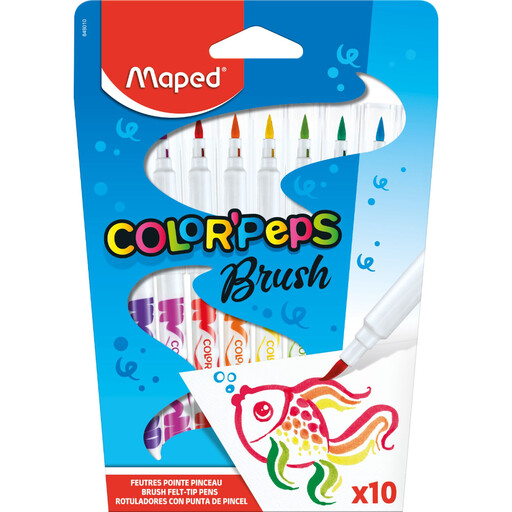
Why this choice suits this profile: This 10-colour set offers an ergonomic grip and a soft brush tip of 2.8 mm, suitable for colouring, manga and beginner calligraphy.
The number of shades is easy to manage and the water-based ink is claimed to be washable from skin and most fabrics.
Flexible tip, 10 coordinated colours and caps to replace after use. Not suitable for children under 3 years.
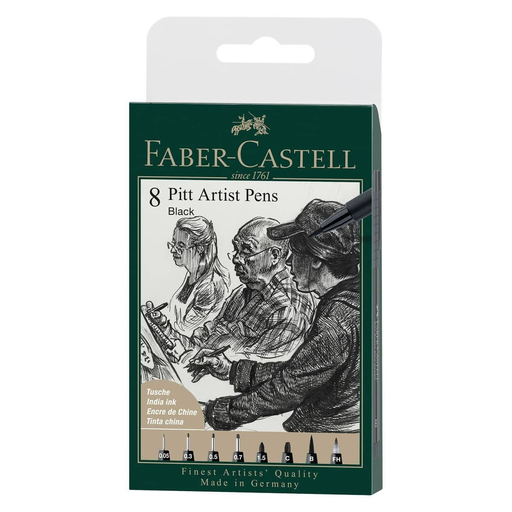
Why this choice suits this profile: The eight pens offer several sizes and types of tips for ink illustration, manga, precision drawing and some calligraphy work.
The listing states black India ink, permanent and water-resistant after drying: nevertheless, test the result on your surface before starting a final piece.
Varied tips, opaque black lines and can be used with watercolour or mixed media once the ink is dry.
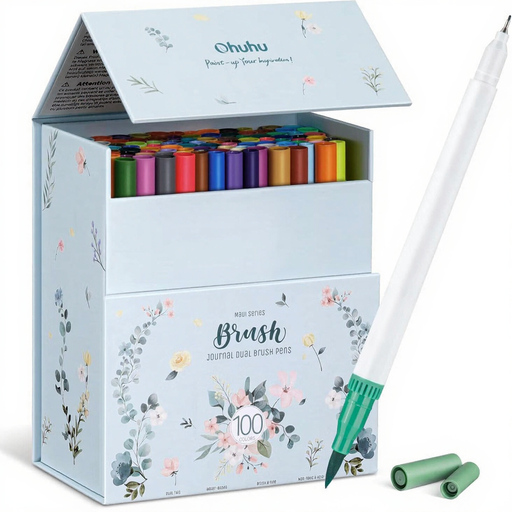
Why this choice suits this profile: The 100 numbered shades combine a 0.4 mm fineliner tip with a brush tip from 1 to 6 mm, so you can switch between details, blocks of colour, calligraphy and colouring.
The dual tips mean you don't need to buy brush pens and fine-liners separately. A colour chart helps organise the palette.
Water-based ink, 100 colours, five replacement tips and a storage case. Test on thick paper before attempting water blending.
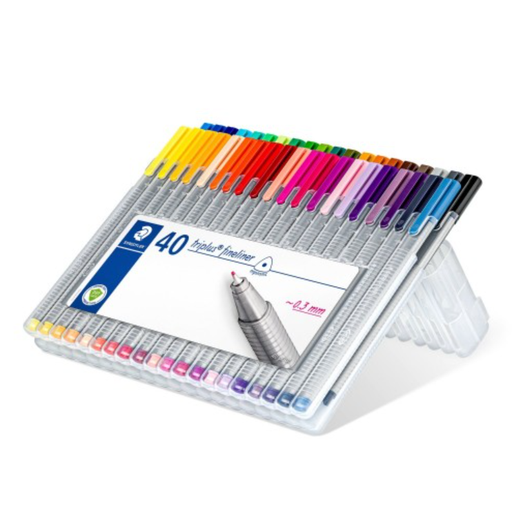
Why this choice suits this profile: Its 0.3 mm fibre tip and triangular barrel meet the needs of students, bullet journal fans and anyone who writes or draws for long periods.
The line width is clearly stated and the 40 colours are stored in a portable case, rather than in an assortment that's hard to organise.
0.3 mm tip, triangular barrel and water-based ink claimed to be smear-resistant on most papers.
We've put together a comprehensive, real-time updated list of products that fully meet these strict selection criteria and European safety regulations.
A brush pen has a flexible tip that allows you to vary the line width depending on the pressure you apply. It's suitable for lettering, calligraphy and illustrations. A fineliner uses a fine tip, typically between 0.3 and 0.4 mm, for outlines, details and precise writing.
Go for watercolour paper or a paper that's thick enough to limit warping and ink bleeding through. Always test in a corner of the sheet: transparency, colour blending and drying time can vary depending on the surface.
How long they last depends on how often you use them, the pressure you apply and how well you replace the caps. Storing them flat, away from heat, and capping them immediately helps preserve the ink flow. Sets with replacement tips or dual ends can also reduce the need for extra purchases when one tip wears out.