Whether for the back-to-school season, a creative craft project, or organising your office, choosing the right felt-tip pens and markers can quickly become a headache. The selection is overwhelming, and the marketing promises are endless. Unfortunately, a poor choice often results in tips that dry out in days, ink that bleeds through the paper, or colours that don't live up to their promise.
As a product expert at Joybuy, my mission is to help you see things more clearly. Let's cut through the marketing jargon and focus on the criteria that truly matter. Here are the common pitfalls to avoid and the essential features to check to find the perfect set of pens or the ideal marker for your needs.
The 3 Pitfalls to Avoid Before Buying Pens
- The "universal" tip that wears out in a flash: Many pens are marketed as all-purpose, but their tips aren't built to last. A low-quality fibre tip quickly flattens or frays, making any precise line work impossible. For heavy use, a reinforced or metal-cased tip is a true sign of durability.
- Ink that bleeds through the paper: This is the nightmare of every student and bullet journal enthusiast. Ink that is too watery or poorly formulated will bleed through standard-weight paper, making the other side of the page unusable. The "bleed-proof" or "no-bleed" claim should be checked with the utmost care.
- The sometimes-misleading "washable" promise: A washable pen is a non-negotiable feature for a pen for kids. However, this term doesn't always guarantee easy cleaning on all textiles. Look for terms like "super washable" or "ultra-washable," which indicate an ink formula specially designed to dissolve more easily with soap and water.
Key Criteria for Choosing Your Felt-Tip Pens and Markers
To make the right choice, focus on two fundamental aspects: the tip type and the ink's properties. This duo determines the primary use of your tool.
1. Tip Type: The Right Shape for Every Use
The tip determines the look of your lines. The main types are:
- Fine tip (or fineliner): Typically ranging from 0.3 to 0.8?mm, it's ideal for writing, precision drawing, and outlining. A fine-tip pen is a must-have for note-taking and bullet journaling.
- Conical tip (or bullet tip): This is the most common tip for a colouring pen. It allows you to vary the line thickness based on the angle, going from a fine line to a broader fill.
- Brush tip: Soft and flexible, the brush pen mimics the application of a real paintbrush. It's perfect for calligraphy, illustration, and colouring with gradient effects.
- Chisel tip: This is the typical tip found on a pastel highlighter or a fluorescent one. It allows you to draw wide lines for highlighting or finer lines using the corner of the tip.
- Wide, pressure-resistant tip: Designed for the youngest users, this tip is sturdy and secure, built to withstand pressure without being pushed in.
2. Ink Type: The Soul of Your Marker
The ink determines the colour, permanence, and the surfaces you can work on.
- Water-based ink: This is the most common type. It's generally odourless, often washable, and doesn't bleed through most papers. It's used for colouring, drawing, and writing. Some water-based pens are water-soluble, allowing you to create watercolour effects with a little water.
- Alcohol-based ink: Prized by illustrators for the drawing marker, it dries very quickly and allows for layering colours without damaging the paper. Be aware that it bleeds through thin paper and has a stronger odour.
- Pigment-based ink (acrylic or oil-based): Opaque and providing excellent coverage, this ink is permanent once dry. An acrylic marker is perfect for DIY projects on various surfaces like wood, metal, glass, or stone. It's also the type of ink used for a whiteboard marker, formulated to be dry-erasable.
Felt-Tip Pen and Marker Picks
Here are a few options that meet specific needs, taking into account quality and durability criteria.
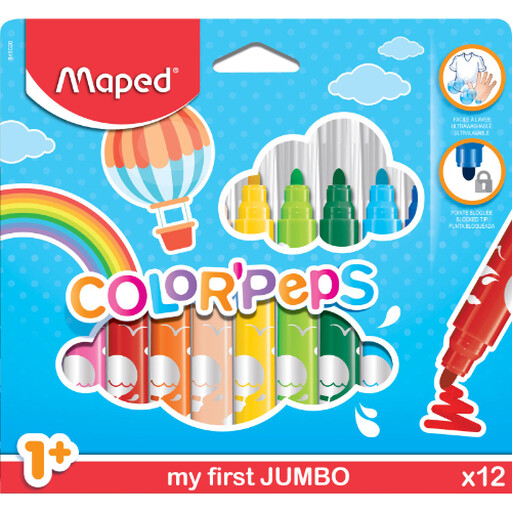
IDEAL FOR: YOUNG ARTISTS (AND PARENTS' PEACE OF MIND)
Why it's the perfect choice: With their jumbo size, these pens are perfectly suited for small hands. A reassuring choice for parents, thanks to a washable ink that is forgiving of early creative bursts.
How it avoids the pitfalls
The wide tip is pressure-resistant and cannot be pushed in. The ink is formulated to be ultra-washable on skin and most fabrics, preventing stubborn stains.
Key advantages and highlights
Ergonomic grip for toddlers (from 1 year+). Secure and highly durable tip. Easily washable ink.
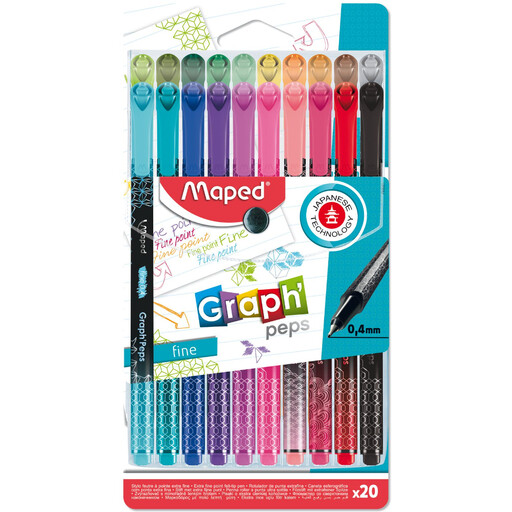
IDEAL FOR: STUDENTS AND BULLET JOURNAL ENTHUSIASTS
Why it's the perfect choice: Perfect for note-taking, colour-coding, or creating revision cards. Its fine tip ensures precise writing, while its triangular barrel provides excellent comfort, even after hours of use.
How it avoids the pitfalls
The 0.4 mm fine tip is metal-cased, which protects it from wear and tear. The water-based ink is specially designed to not bleed through standard paper, solving a major problem for notebook users.
Key advantages and highlights
Precise lines. Quick-drying ink. Ergonomic triangular barrel for a better grip.
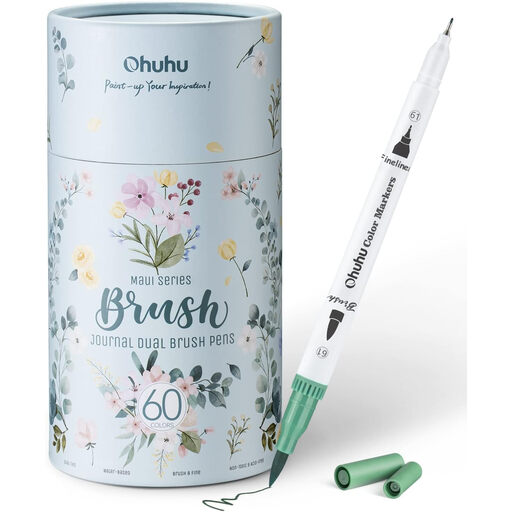
IDEAL FOR: ARTISTS AND CRAFTING ENTHUSIASTS
Why it's the perfect choice: This set is the perfect companion for creatives seeking versatility. Its dual tip (a flexible brush and a fine liner) lets you switch between filling in broad areas and adding fine details. Ideal for illustration, calligraphy, or art colouring.
How it avoids the pitfalls
By combining two complementary tip types in a single pen, it eliminates the need to buy multiple sets. The water-based ink allows for watercolour effects without bleeding through suitable paper (heavy stock).
Key advantages and highlights
Highly versatile thanks to the dual tip. Wide palette of 60 colours. Water-soluble ink for artistic effects.
Ready to Discover More Gems?
Explore our full selection of products, all vetted by our experts for quality and performance.
Frequently Asked Questions
How can I revive a dried-out felt-tip pen?
For a water-based pen, a simple trick can sometimes save it. Dip the tip in a little lukewarm water for a few seconds, then replace the cap and let the pen rest horizontally for several hours. This can help rehydrate the tip and allow the ink to flow down again. Note that this technique only works for water-based inks, not for alcohol-based or permanent markers.
How can I prevent pen ink from bleeding through paper?
The first step: opt for a paper with a heavier weight (above 100 gsm). For alcohol-based markers, a special coated paper, known as "layout paper," is recommended. In any case, always do a test on a small area or a scrap sheet to check the ink's behaviour before you start.
What's the difference between Stabilo, Faber-Castell, and Sharpie pens?
Although all are highly reputable, these brands target different uses and aren't quite in the same league.
- Stabilo is extremely popular in schools and for fine writing (with its Point 88 range) as well as for highlighting (with the iconic Swing Cool and Boss).
- Faber-Castell offers a very wide range, from children's products (Connector) to tools for professional artists, such as acrylic markers or Pitt artist brush pens.
- Sharpie is the king of alcohol-based permanent markers, perfect for marking on all sorts of surfaces. The brand has also diversified into creative lines, notably with acrylic markers.