
Livraison le jour même ou le lendemain

Qualité garantie

Débloquez vos offres de bienvenue: Livraison GRATUITE | Jusqu'à -80 % | 30 jours d'essai gratuits à JoyPlus
Téléchargez l'application
A feather and down duvet can offer a feeling of lightness, good air circulation and comfortable warmth all year round. But marketing promises aren't always enough to compare different models. A duvet labelled as "warm" can turn out to be too insulating in a well-heated bedroom, while a very lightweight model may lack comfort as soon as the nights turn cooler.
Before you place your order, there are three pitfalls that deserve your particular attention.
For a lightweight summer duvet, a low grammage can be sufficient in a temperate bedroom or during hot nights. The DOWNFOCUS model featured below has a grammage of 200 g/m² – a concrete figure that helps you understand its suitability for summer use.
A warm winter duvet generally requires more filling or a more insulating construction. Terms like "all-season" and "extra warm" should be taken with a pinch of salt: instead, look at the grammage, composition and dimensions rather than relying on the product name alone.
Down is generally finer and lighter, while feathers provide a different structure and affect the perceived loft. A duck down duvet insert should therefore be compared based on the proportion of each material.
The DOWNFOCUS product page states a filling of 90% feathers and 10% down. This information helps you understand its positioning: it's a natural feather duvet designed to offer lightweight coverage, not a down-rich model.
A tightly woven cotton cover can help limit the passage of particles and contribute to a cleaner, more pleasant feel. That doesn't automatically mean the duvet is anti-dust mite or suitable for all allergy sufferers. Those with sensitivities should check the product page, review the care recommendations and, if necessary, seek advice from a healthcare professional.
A hypoallergenic duvet should be assessed based on the manufacturer's specific claims. To identify certain unwanted substances in textiles, the OEKO-TEX certification is a useful indicator when it's clearly linked to the product in question. However, it doesn't replace the need to check the composition or washing instructions.
Animal welfare labels are not all based on the same criteria. The DOWNFOCUS product page notably mentions RDS and Downpass certifications. Take the time to verify the exact scope of each one on the product page.
The duvet size should be matched to your mattress, your height and the desired overhang on each side.
Also remember to measure the duvet cover you already own. Even a modest difference in length or width can create wrinkles, shift the filling and affect your comfort during the night.
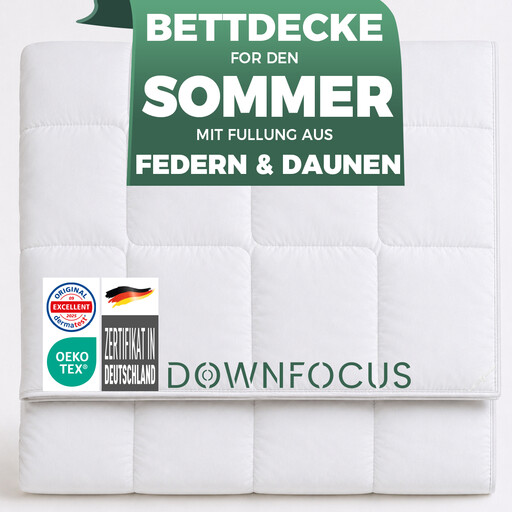
Why this choice suits this profile: Its 200 x 200 cm size and stated grammage of 200 g/m² provide simple benchmarks for choosing a first summer duvet.
The product page clearly distinguishes the grammage, filling ratio and stated certifications, rather than relying on a vague promise of comfort.
Stated filling of 90% feathers and 10% down, OEKO-TEX certification indicated, and 200 x 200 cm size.
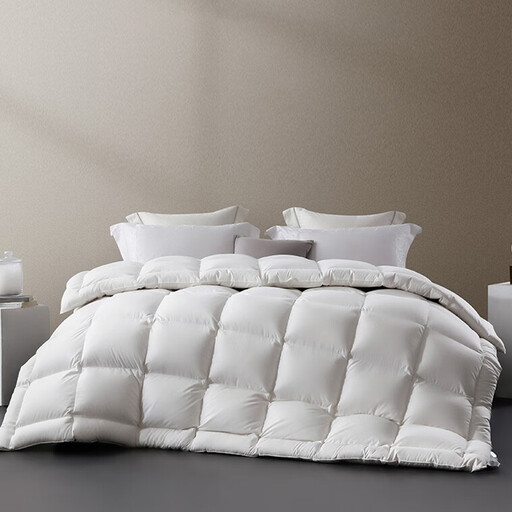
Why this choice suits this profile: Its 155 x 220 cm size suits those looking for a longer duvet and an insert filled with duck feathers and down.
The size is clearly stated on the product page, reducing the risk of choosing a duvet that's too short for the sleeper or incompatible with the cover.
155 x 220 cm size and duck feather and down filling stated in the product name.
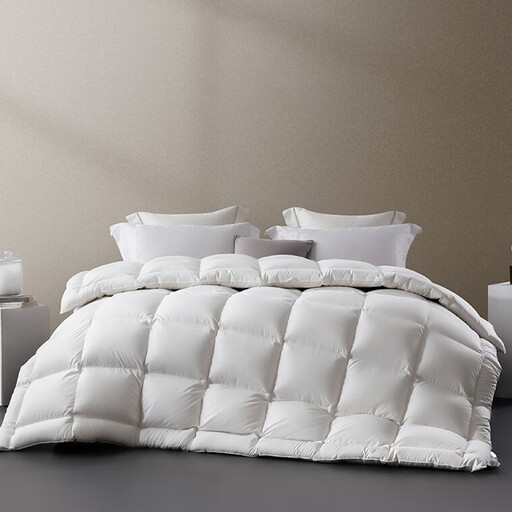
Why this choice suits this profile: Its compact size can suit a single bed, a guest room or a use that requires an easy-to-handle duvet.
The 135 x 200 cm size is clearly stated, making it easier to choose a compatible cover and avoid unpleasant surprises with dimensions.
135 x 200 cm size and stated feather and down construction, suitable for a single bed.
A feather and down duvet will retain its loft for longer if you air it regularly in a dry place, away from prolonged high humidity. Gently shake it to redistribute the filling and use a washable cover to limit soiling.
Before any wash, check the care label: some duvets require a large-capacity drum or even professional cleaning. Incomplete drying can cause odours and ruin the comfort. The lifespan depends on the quality of the cover, how often it's washed, how well it's aired and how intensively it's used. Regularly inspect the seams to quickly spot any feather leakage or distortion.
It depends on each person's sensitivity and the specific characteristics of the model. A tightly woven cover, a hypoallergenic claim or a textile certification can be reassuring, but they don't guarantee the absence of a reaction. Check the manufacturer's information and follow the care instructions.
Go for a moderate grammage, a breathable cover and a filling suited to your bedroom temperature. A lightweight summer duvet of 200 g/m², like the one indicated on the DOWNFOCUS product page, can meet this need. However, the comfort you feel will also depend on your bedding, the room temperature and your own sensitivity to heat.
Choose a duvet with compartments or regular stitching when the product page provides this information. Shake it out each time you change the cover and avoid compressing it for long periods in an airtight bag. The cover should also be large enough not to squash the filling.