
Same-day & Next-day Delivery

Quality Guaranteed

Unlock Your Welcome Offers: FREE Delivery | Up to 80% OFF | Free 30-day JoyPlus trial
Download the APP
Whether you're securing a tarp, organising your workshop, or making an emergency hose repair, choosing a simple fastening clip can quickly become a headache. The market is flooded with solutions that seem practical at first glance but often prove disappointing in use. A clip that breaks on the first tighten, a fastener that rusts in a few weeks, or a clamp that doesn't provide the right grip—these everyday frustrations are entirely avoidable.
As a product expert at Joybuy, my mission is to guide you through the jungle of options to find a reliable product that's perfectly suited to your needs. Let's cut through the marketing noise and focus on what really matters. Here are the pitfalls to avoid and our expert advice to help you steer clear.
The "durable" plastic illusion: Many entry-level clips are made from low-grade plastics. When exposed to UV rays, frost, or repeated stress, they become brittle and useless within a single season. A product marketed as "robust" without any specifics about the material (like UV-resistant treatment) should be an immediate red flag.
Clamping force: an underestimated feature: A fastening clip that's too strong can damage what it's holding (greenhouse film, delicate cables, etc.). Conversely, a clamp that's too loose will let a tarp flap in the wind or a hose come undone. Clamping pressure is a critical factor, yet it's rarely highlighted by manufacturers.
The "one-size-fits-all" fallacy: "Universal" solutions are often a case of "master of none." A storage hook with too wide a diameter range won't provide a secure grip for your tools, and a poorly calibrated fence clip will fail under the slightest tension.
To make the right choice, rely on objective technical specifications. These are the only true indicators of a product's quality and suitability for your project.
The material is the cornerstone of your fastening hardware's durability.
The clamping mechanism must be perfectly suited to the application.
Always check the dimensions. For a clip intended for a tube or handle, the manufacturer must specify a compatible diameter range (e.g., 9-18?mm). For a clamp, the maximum jaw opening is a key piece of data. Take the time to measure the object you need to secure before buying to ensure a perfect fit.
Here are a few options that meet specific needs, in line with the selection criteria we've just discussed.
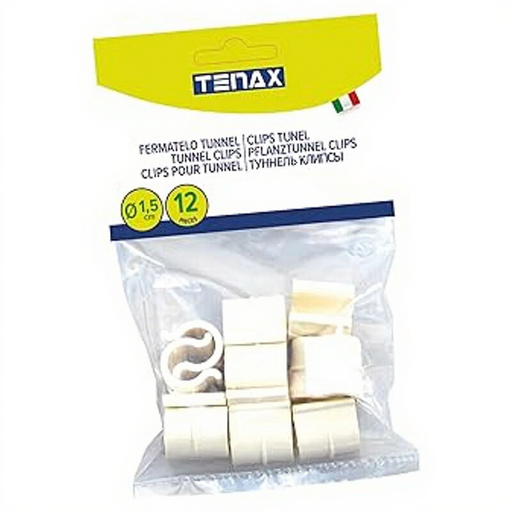
Why we recommend it: The perfect solution for gardeners who need to securely fasten greenhouse film or protective netting to hoops.
Made from high-quality, UV-treated polypropylene, it won't become brittle after a season in the sun. Its precise diameter range (9-18 mm) eliminates the problem of imprecise "universal" fits.
Designed to withstand wind and weather, it guarantees a firm grip without the risk of tearing the film. Bonus: no tools are required for installation.
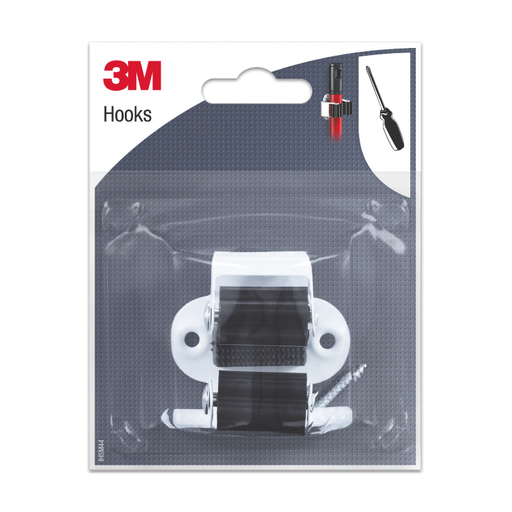
Why we recommend it: Perfect for optimising space by hanging brooms, rakes, and other handled tools securely and accessibly.
Its metal construction and screw-in mounting offer reliability that is light-years ahead of adhesive solutions that eventually fail. Compatibility is clearly stated for handles with a diameter of 18 to 32 mm.
The gripper mechanism ensures a stable and reliable hold, even for heavy or frequently used tools. Its metal construction is a clear guarantee of longevity.
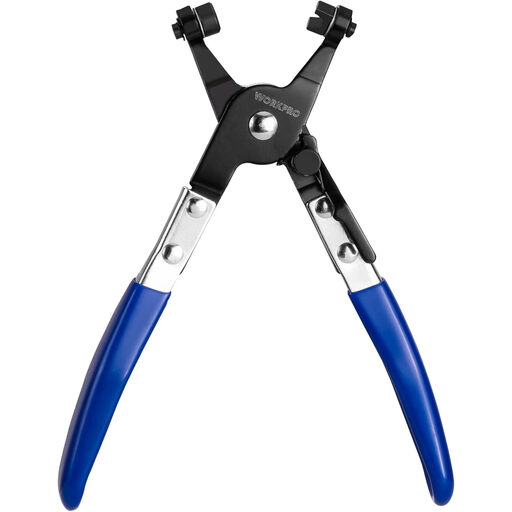
Why we recommend it: A professional-grade tool for mechanics or skilled hobbyists working with flat-band or ring-style hose clamps, often in hard-to-reach areas.
Its pivoting head allows access to clamps at impossible angles where standard pliers would fail. Made from forged and treated carbon steel, its durability is rock-solid, a far cry from multi-function gadgets that break under the first sign of strain.
The spring-loaded system and locking lever reduce effort and dramatically increase efficiency, while minimising the risk of damaging the clamp or hose.
Discover our full selection of products that meet our demanding selection criteria and current safety standards.
It all depends on the quality of the plastic and its exposure. A standard polypropylene clip can last for years indoors. The same clip, if not UV-treated and exposed to the elements, can become brittle in less than one season. For outdoor use, the "UV-treated" label isn't an option—it's a requirement.
The only reliable method: measure the object you need to fasten (pipe diameter, board thickness, etc.). Then, compare this measurement with the product's technical specifications, which must state a compatibility range (e.g., for handles from 18 to 32?mm) or a maximum opening. Be wary of vague descriptions like "large" or "small."
It depends on the model. Food bag clips, spring clamps, and tarp fasteners are designed to be reused. Keep in mind that each use can slightly wear down the mechanism. In contrast, plastic clamps like cable ties (or zip ties) are almost always single-use to guarantee a flawless hold. Metal screw clamps, however, are reusable as long as the screw thread remains intact.