
Livraison le jour même ou le lendemain

Qualité garantie

Débloquez vos offres de bienvenue: Livraison GRATUITE | Jusqu'à -80 % | 30 jours d'essai gratuits à JoyPlus
Téléchargez l'application
Is your iPhone taking forever to charge? Is your cable getting hot, or are several devices fighting over the same mains socket? Choosing a fast USB-C charger for your iPhone isn’t just about picking the highest wattage number on the box. You also need to make sure the charger, cable and device are all compatible with each other.
Here are the most common pitfalls and the criteria to check before buying a charger for your iPhone, iPad, AirPods or Apple Watch.
A charger advertised at 65 W won’t necessarily deliver 65 W to every device. That figure usually refers to the maximum power delivered by a single port, under specific conditions. As soon as you plug in several devices, the available power is shared between them.
A 65 W multi-port USB-C charger might, for example, deliver 45 W on one port and 20 W on another. So before you place your order, check the detailed output table rather than relying solely on the headline figure in the product title.
An Apple 20 W mains adapter isn’t always supplied with a cable. With an iPhone that has a USB-C port, you’ll need a USB-C to USB-C cable. On older models with a Lightning port, a USB-C to Lightning cable is still essential.
The cable also needs to be able to handle the power required. A USB-C cable rated for 100 W might be useful with a laptop or tablet, but the actual power available will always depend on the charger and the connected device.
Wireless charging is more convenient day to day, but it depends more on the device being positioned correctly, the case you’re using and the ambient temperature. A MagSafe charger or one compatible with magnetic charging should be chosen based on the exact model of iPhone and the devices you want to charge.
Also check the power rating for each device. The power stated for the iPhone may be different from that intended for the AirPods or Apple Watch.
For everyday use with an iPhone, a 20W USB-C charger remains a simple, compact and generally sufficient solution. It can also power many USB-C accessories, AirPods and some smaller compatible devices.
If you want to charge an iPhone and an iPad at the same time, or even power a lightweight laptop, a 65W GaN charger will give you more headroom. Gallium nitride technology, usually referred to as GaN, makes it possible to design compact chargers despite high power output. However, it doesn’t remove the need to check the supported charging profiles, particularly USB Power Delivery.
A single port is fine if you mainly charge your phone. Two USB-C ports, or an additional USB-A port, will prove more practical at the office, on a bedside table or when travelling.
Pay close attention to how the power is distributed when multiple ports are used at the same time. A charger might deliver 65 W on one port, but only 45 W + 20 W when two devices are plugged in. This information is particularly useful if you’re looking for a charger that can power an iPad and an iPhone simultaneously.
Before buying, make sure the product clearly states the manufacturer, importer or responsible person within the European Union, as well as usage precautions. The CE mark must be affixed in accordance with current regulations, but it doesn’t replace checking the technical specifications.
Choose a product that indicates a mains input range suitable for the UK, typically around 220-240 V, and check the full details. Never use a cracked adapter, one with bent prongs, or one paired with a frayed cable. Also avoid covering the charger while it’s in use, so as not to hinder its heat dissipation.
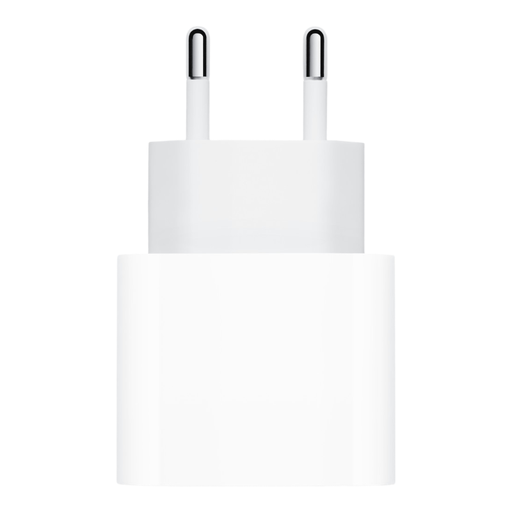
Why this choice suits this profile: Its compact size and single USB-C port make it a great starting point for home, the office or a travel bag.
The 20 W power is clearly stated, and the product details specify that the cable is sold separately, avoiding any nasty surprises when you open the box.
20 W power, 100-240 V input and stated compatibility with iPhone, iPad, AirPods and Apple Watch, with the right cable.
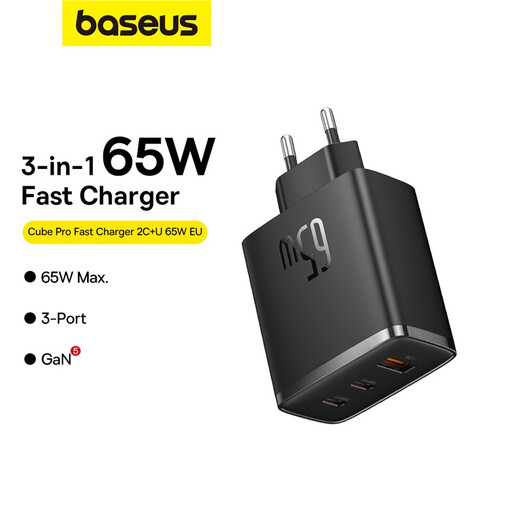
Why this choice suits this profile: Its two USB-C ports and one USB-A port make it easy to charge multiple devices without cluttering your desk.
The product details break down the output distribution: up to 45 W + 20 W between the two USB-C ports, rather than just showing the total power.
Maximum stated power of 65 W, GaN5 technology, two USB-C ports and one USB-A port.
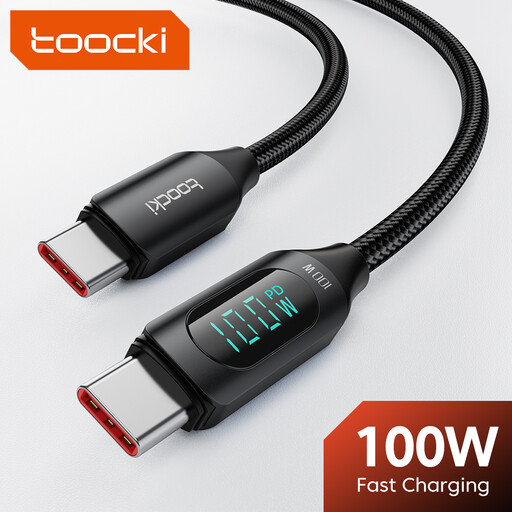
Why this choice suits this profile: This cable is aimed at those who use several USB-C devices, such as an iPhone, iPad, console or compatible laptop.
The stated 100 W power is paired with a USB-C cable designed for charging, which sets it apart from a simple sync cable.
Stated length of approximately 1 m, LED display and stated compatibility with several USB-C devices.
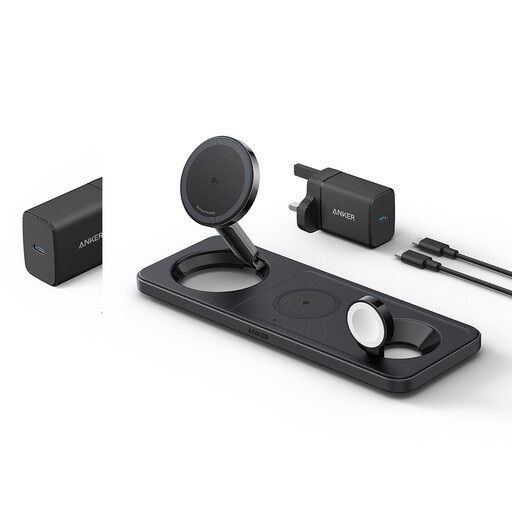
Why this choice suits this profile: Designed for indoor use, it fits easily on a desk or bedside table where several devices are within easy reach.
The power levels are specified per device: up to 15 W for AirPods and 5 W for Apple Watch, without confusing them with the power intended for the iPhone.
Wireless charging, stated compatibility with several generations of iPhone, AirPods and Apple Watch, in a compact black design.
We’ve put together a comprehensive, real-time updated selection of products that meet these demanding criteria, while also taking European safety regulations into account.
For everyday use, a 20 W USB-C charger is suitable for many iPhones that support fast charging. However, you need to use the correct cable for your phone’s port and check compatibility with your specific model. The actual speed also varies depending on the battery level, temperature and whether you’re using the iPhone while it’s charging.
Yes. An iPhone only draws the power it’s designed to accept, provided the charger and cable are compatible. So a 65 W GaN charger can be used to charge an iPhone, an iPad and, in some cases, a laptop. If you plug in several devices at the same time, just remember to check how the power is distributed between the ports.
It depends on the build quality, how often you plug and unplug it, heat and the strain placed on the cable. Avoid bending it sharply near the connector, and replace any accessory that gets unusually hot, has frayed insulation or shows signs of deformation.