
Livraison le jour même ou le lendemain

Qualité garantie

Débloquez vos offres de bienvenue: Livraison GRATUITE | Jusqu'à -80 % | 30 jours d'essai gratuits à JoyPlus
Téléchargez l'application
A fast USB-C charger can replace several adapters at home, in the office or while travelling. But higher wattage doesn’t guarantee faster charging, perfect compatibility or practical use. Between the “fast” claims, ports that sometimes share power across multiple devices and cables sold separately, there are plenty of pitfalls to watch out for.
Here are the criteria to consider before choosing a USB-C mains charger, a multi-port adapter or a car converter.
A 30 W fast charger can deliver 30 W on a single port, but significantly less when several devices are plugged in. On a multi-port charger, the power is generally split between the different outputs. So check the details of the port combinations rather than relying solely on the maximum wattage displayed on the packaging.
For a smartphone, 20 to 30 W is often enough, provided the device supports the corresponding charging protocol. A USB-C laptop or a high-end tablet, on the other hand, may require 45, 65 or 100 W depending on the model.
Having a USB-C port isn’t enough to guarantee fast charging. The phone and the charger must both support a common protocol, such as USB Power Delivery (PD). An iPhone, Samsung Galaxy, Google Pixel or iPad may also have different requirements depending on its generation.
Also check the cable you’re using:
GaN (gallium nitride) technology generally makes it possible to design compact chargers that can deliver high power. However, it doesn’t remove the need to check the advertised protections, usage instructions and heat management. A charger should never be covered, placed in a damp environment or used with a damaged cable.
For an iPhone charger, a 20 W adapter is suitable for most everyday needs, provided you have the right cable. A Samsung or Android charger of 25 to 30 W may be more appealing if your smartphone supports the corresponding protocol.
To power several devices, these benchmarks can help:
The charger’s maximum wattage can exceed what the device requires without any particular danger: the device will normally negotiate the voltage and current it needs. However, it remains essential to choose a USB-C mains adapter from a reliable distribution channel that displays the necessary regulatory information, including CE marking where required.
A charger with a single USB-C port is sufficient if you mainly charge one device at a time. Two USB-C ports allow you, for example, to power a laptop and a phone separately. A 2C + USB-A model can be handy if you still use older cables.
In particular, compare:
For use in the UK, the charger must be compatible with the mains supply. An input of 100–240 V, 50/60 Hz makes it easier to use abroad, but doesn’t necessarily replace a local plug adapter.
Also look for information on protection against overcharging, overheating, overvoltage and short circuits. This data should appear in the technical specifications or manual, not just in a marketing claim.
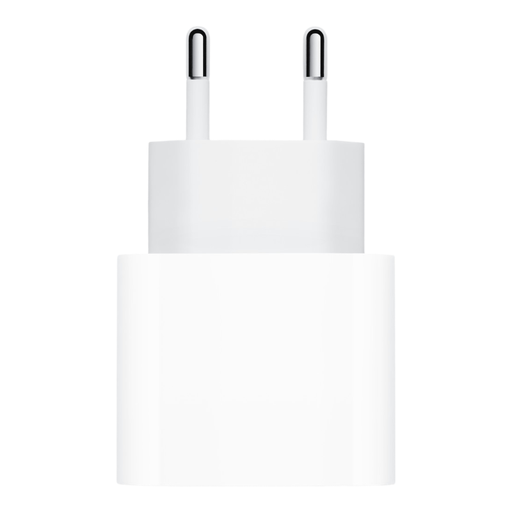
Why this choice suits this profile: Its compact size and single USB-C port are perfect for someone who mainly charges a phone, earphones or a tablet. The cable must be purchased separately.
The listing clearly states a power of 20 W, a single port and that no cable is included. This lets you calculate the total cost before placing your order.
20 W power, 100–240 V mains input and advertised compatibility with compatible USB-C devices.
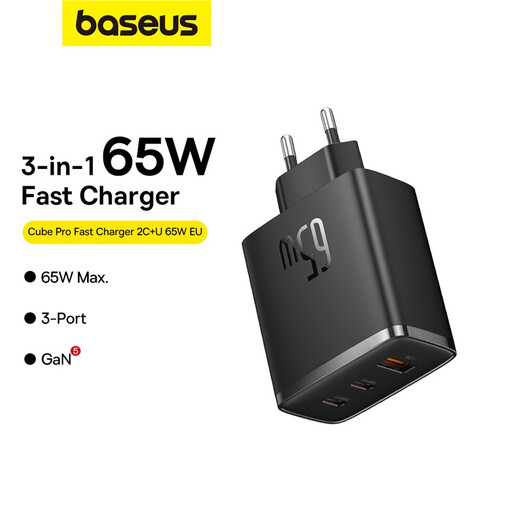
Why this choice suits this profile: This 65 W GaN charger is aimed at those who want to power a USB-C laptop, a phone and an accessory from a single block, without multiplying adapters.
The listing details the power distribution: up to 45 W + 20 W between the two USB-C ports, depending on the configuration used.
GaN5 technology, two USB-C ports, one USB-A port and a maximum advertised power of 65 W on a USB-C port.
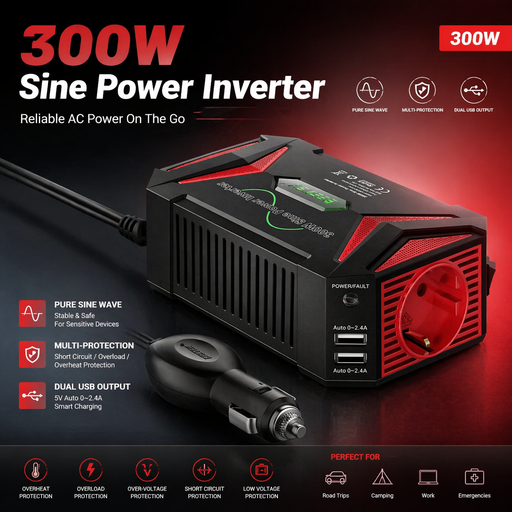
Why this choice suits this profile: This 12 V to 230 V inverter is designed for car journeys, camping and situations without a mains socket. It offers a 230 V socket as well as two USB ports.
The listing specifies its compatibility with a 12 V battery and reminds you that the cigarette lighter socket may be limited to 150 W. Very power-hungry devices should therefore be avoided.
Pure sine wave 230 V output, two USB ports and an advertised power of 300 W, with a cooling fan.
We’ve put together a comprehensive, real-time updated selection of products that meet these demanding criteria as well as European safety standards.
No. The charging speed depends on the phone, the protocol it supports and the cable used. A device limited to a lower wattage won’t automatically make use of the 30 W available.
Not necessarily. A 65 W model is mainly useful for powering several devices or a USB-C laptop. For a single smartphone, a 20 or 30 W fast charger will often be simpler and less bulky.
It’s better to unplug it when not in use, particularly to limit standby power consumption and reduce the risks associated with an ageing device. Regularly inspect the casing and the cable. If you notice cracks, an unusual smell or overheating, stop using it immediately.