
Livraison le jour même ou le lendemain

Qualité garantie

Débloquez vos offres de bienvenue: Livraison GRATUITE | Jusqu'à -80 % | 30 jours d'essai gratuits à JoyPlus
Téléchargez l'application
A dead battery right before an important meeting, a laptop that takes hours to charge… Who hasn’t felt that frustration? The solution exists: the fast USB-C charger. Yet, between the power promises, technical jargon, and a jungle of models, it's easy to make a mistake and throw your money down the drain.
As a product expert for Joybuy, my mission is to help you see things more clearly. Let's cut through the marketing hype and get down to specifics. Here are the pitfalls to avoid and the real criteria for finding THE charger you need, without breaking the bank.
Before we even get into the technical details, let's review the classic mistakes that can cost you dearly, both in disappointment and in cash.
To make the right choice, focus on these three essential points.
Power, expressed in watts (W), determines the charging speed. But on its own, it guarantees nothing. The charging protocol is just as crucial.
It all depends on how many devices you charge daily.
A USB-C power adapter is an electrical device that handles significant power. Don't play with fire: ensure it carries the CE mark, which guarantees its compliance with European safety standards. Built-in protections against overheating, overvoltage, and short circuits are essential to protect your valuable devices.
Rather than an endless list, we've selected models that meet specific needs, strictly applying the criteria we've just discussed.
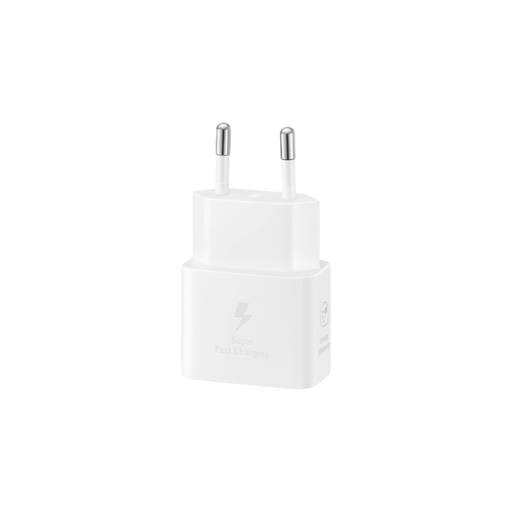
Why this choice? Simple, reliable, and effective. For those who just want a charger that works perfectly for their smartphone. Its 25W is perfect for fast-charging a recent Samsung Galaxy or iPhone, with no frills.
No false promises: it focuses on a single function and guarantees a stable and safe 25W output. By choosing a reputable brand like Samsung, you're betting on reliability.
Compact, lightweight, and very energy-efficient when not in use. It gets straight to the point: performance and efficiency. (Cable sold separately)
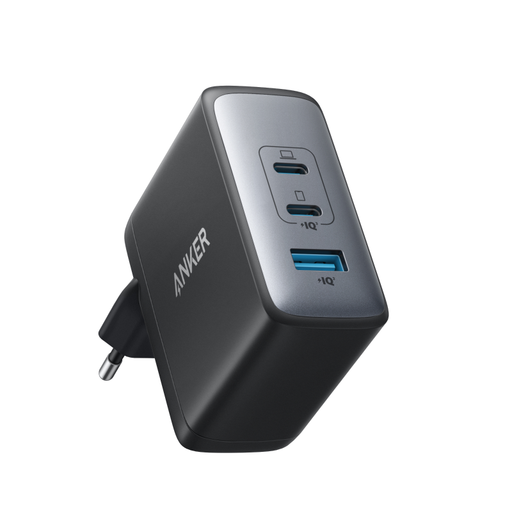
Why this choice? This is the ultimate solution for those who juggle a laptop, a smartphone, and other accessories. It replaces three bulky chargers with a single, compact, and powerful unit.
It doesn't fall into the "total power" trap: it can genuinely deliver 100W from a single USB-C port, enough to power a MacBook Pro at full speed. Its intelligent power management is a model of transparency.
Its versatility is unbeatable with 2 USB-C ports and 1 USB-A port. The GaN II technology packs all this power into a format that's ideal for travel.
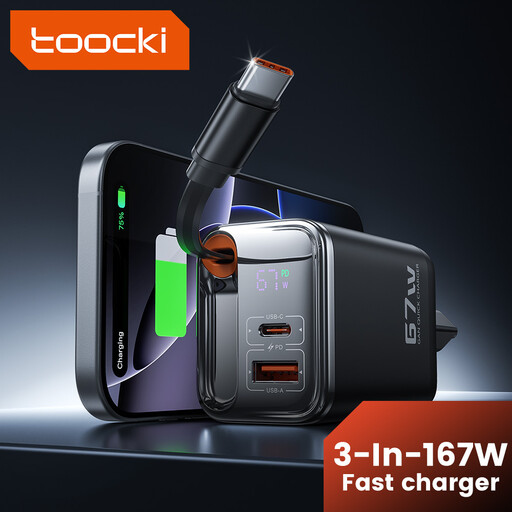
Why this choice? For anyone tired of tangled cables. This is the quintessential all-in-one solution for both travel and the office. Its 67W output is highly versatile, capable of powering an ultrabook, a tablet, or a smartphone.
It eliminates pitfall #3: the cable issue. With its integrated retractable USB-C cable, you'll never forget it, and it will always be ready to use.
Its 3-in-1 design is unique: an integrated cable, a free USB-C port, and two USB-A ports. A true mini charging station that tidies up your desk.
Our full selection includes dozens of products that meet our demanding selection criteria and European safety standards.
Can I use a charger that is more powerful than what my device requires? Yes, absolutely. A modern charger (compatible with Power Delivery) communicates with your device to deliver only the power it can safely accept, without any risk. Using a 65W charger for a smartphone that only needs 25W will never damage it.
Is the Power Delivery (PD) standard important? It's more than important—it's essential. This is the universal standard that enables truly fast and powerful charging over USB-C, far beyond what older USB standards allowed. If you have a recent device (smartphone, tablet, laptop), a PD-compatible charger is mandatory to benefit from fast charging.
Does a GaN charger run cooler? Generally, yes. GaN technology offers better energy efficiency than traditional silicon. In practical terms, this means less energy is wasted as heat. However, be aware that any fast charger will generate some heat; that's normal. The key is that it must be equipped with effective protections against overheating.