
Livraison le jour même ou le lendemain

Qualité garantie

Débloquez vos offres de bienvenue: Livraison GRATUITE | Jusqu'à -80 % | 30 jours d'essai gratuits à JoyPlus
Téléchargez l'application
A fast USB-C charger can simplify charging at home, in the office, on the go or in the car. But a high wattage displayed on the packaging doesn't necessarily mean your devices will charge faster. The result also depends on compatibility between the charger, the cable and the device.
Before placing an order, three common mistakes keep cropping up:
For a smartphone, a 20 or 30 W charger is enough for many models that support fast charging. It can also power earphones, a smartwatch and various small accessories.
A 65 W charger gives you more flexibility for a tablet, a handheld console or an ultraportable laptop. 100 W models are aimed at more power-hungry laptops, while also being able to charge several devices — provided you take the power distribution into account.
However, the advertised wattage doesn't correspond to a constant charging speed. The device automatically adjusts the power it receives based on its battery level, temperature and the charging protocol being used.
A Power Delivery charger negotiates with the device to adjust the voltage and current. This technology is particularly common on iPhone, Samsung Galaxy, Google Pixel, iPad and many computers equipped with a USB-C port.
To choose a fast charger for iPhone, start by checking the phone's connector and the type of cable supplied. Models with a USB-C port generally use a USB-C to USB-C cable. Devices with a Lightning connector require a compatible USB-C to Lightning cable.
For a fast Samsung charger, Power Delivery can be useful, but the speed you get always depends on the smartphone model and the protocols it supports.
A multi-port charger saves you from having multiple adapters, but remember to check the power available when several ports are used at the same time. A model with two or three USB-C ports can be particularly handy in the office or when travelling.
GaN (gallium nitride) technology generally allows manufacturers to design compact chargers capable of delivering high power. However, it doesn't replace the need to check the technical specifications and verify the presence of protections against overcharging, overheating, overvoltage and short circuits.
Finally, a charger supplied with a USB-C cable can be more economical and practical than an adapter sold on its own. Nevertheless, check the cable length, the connector at each end and the power it can handle.
The products below are presented based on the features stated in their product specifications. Actual performance varies depending on the device used, the cable and the charging conditions.
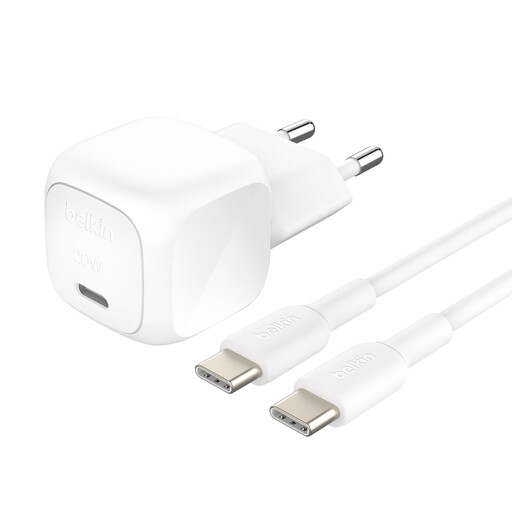
Why this choice suits this profile: this compact adapter, supplied with a 1 m USB-C to USB-C cable, makes a good first solution for a smartphone, tablet or compatible earphones.
The power and supplied cable are clearly stated in the specification, which avoids having to buy a compatible cable separately.
A lightweight design at 0.1 kg, 100–240 V input and protections against overcharging and overheating, according to the product specification.
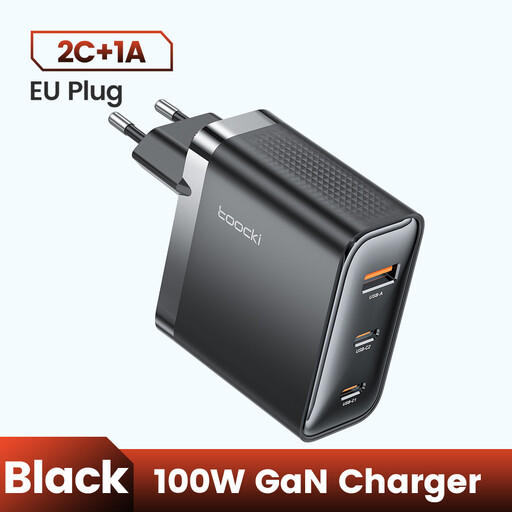
Why this choice suits this profile: its three ports and advertised 100 W power are aimed at those who want to charge a laptop, a tablet and a smartphone with a single adapter.
The specification states the total power. However, you'll need to check the distribution between ports before plugging in several power-hungry devices.
GaN technology, three ports and advertised compatibility with several smartphones, tablets and laptops.
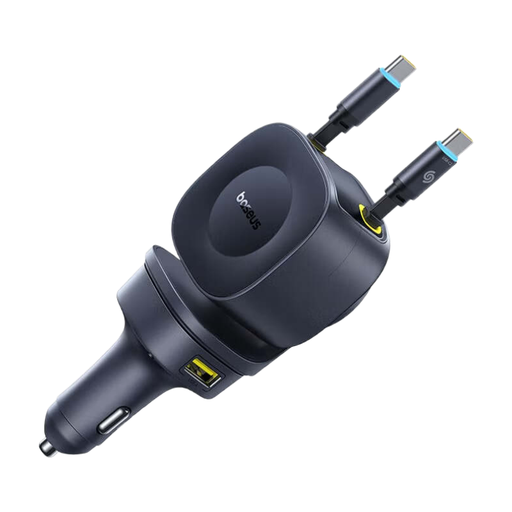
Why this choice suits this profile: this USB-C car charger is ideal for frequent journeys and vehicles where several passengers need to charge their devices.
The retractable cables reduce clutter in the cabin, while the 12–24 V input suits many vehicles.
Three USB-C ports, one USB-A port and advertised support for PD and QC, with protections against overcurrent, overvoltage, overheating and short circuits.
We've put together a comprehensive, real-time updated selection of products that meet these strict criteria as well as European safety requirements.
No. It's the phone or computer that determines how much power it can accept. A 65 W charger can therefore power a smartphone limited to 20 W without sending it 65 W. Above all, check PD compatibility, the cable and the available output profiles.
It's better to unplug it during prolonged absences or when it's not in use. Keep it away from moisture and heat sources, and don't cover its vents. If you notice an unusual smell, smoke or excessive heat, stop using it immediately.
A compact travel charger that accepts a 100–240 V input voltage is generally suitable for international trips. You'll just need to get the right plug adapter for the country you're visiting when necessary. To travel lighter, go for a model with several ports or an integrated cable, checking the power available for each device.