
Livraison le jour même ou le lendemain

Qualité garantie

Débloquez vos offres de bienvenue: Livraison GRATUITE | Jusqu'à -80 % | 30 jours d'essai gratuits à JoyPlus
Téléchargez l'application
Smartphones, tablets, laptops, earbuds... As our devices multiply, so does the chaos of cables and chargers. Finding the right plug, waiting forever for a battery to fill up, and juggling three different adapters is a real daily headache. Fortunately, there's a solution to end this mess. This guide is here to demystify the world of fast USB-C chargers and help you find the single, high-performance model that will finally simplify your life.
Before diving into our selection, let's review the key points to consider to make the right choice—one that perfectly matches your needs.
Power, measured in watts (W), is the most critical factor. But be careful, more watts doesn't necessarily mean a better charge. The key is to choose a charger with a power output that matches what your devices can accept. The technology you absolutely must look for is Power Delivery (PD). This intelligent standard allows the charger and the device to "talk" to each other to set the ideal power level, all in complete safety.
You will inevitably come across the term GaN charger. This acronym stands for gallium nitride, a revolutionary semiconductor that is replacing the silicon in our old chargers. In practical terms, the advantages are enormous:
Simply put, choosing a GaN charger means getting power in a pocket-sized package without compromising on efficiency.
To finally ditch the overloaded power strip, a multi-port USB charger is your best ally. Ask yourself the right question: how many devices do you need to charge at the same time? The most versatile models combine USB-C ports (the new standard) and USB-A ports (for your older devices). One crucial point to remember: the total power of the charger is divided among the ports in use. For example, a 100W charger connected to two devices might deliver 65W to one port and 35W to the other.
Here are three options that cater to different needs, from the ultra-connected digital nomad to the iPhone user seeking simplicity.
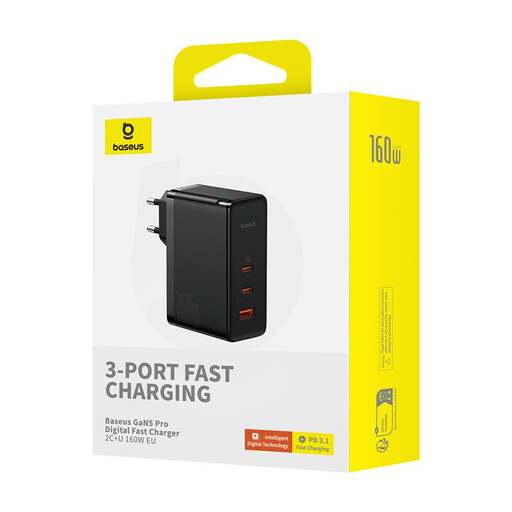
Why it stands out?: With its 160W of total power, this powerhouse is a true charging station in itself. It's aimed at the most demanding users who want to charge everything at once—laptop, tablet, smartphone—without ever slowing down. The bonus for tech enthusiasts? Its digital screen displays the power being delivered in real time.
Advantages?:
Who is it for?? The mobile professional, content creator, or family who wants a single charger for all household devices, including the most powerful ones.
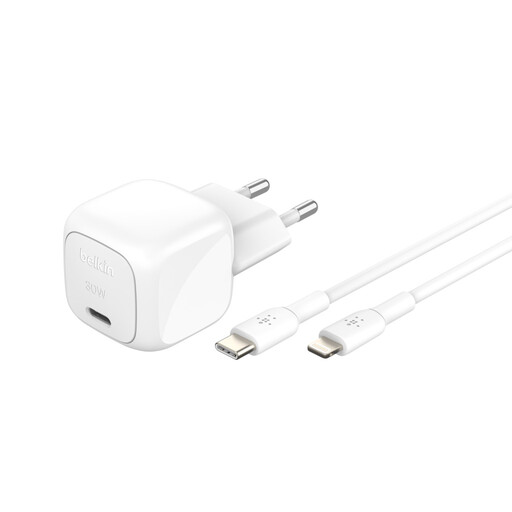
Why it stands out?: This Belkin charger focuses on simplicity, compactness, and reliability. Designed for the Apple ecosystem, it comes with a USB-C to Lightning cable, offering a turnkey solution for iPhone and iPad owners. Its USB-C PD 3.1 certification is a guarantee of fast and safe charging. Belkin's promise? An iPhone 15 Pro charged from 0 to 50% in just 25 minutes.
Advantages?:
Who is it for?? The iPhone or iPad user looking for a fast, reliable, compact, and ready-to-use charging solution for travel or home.
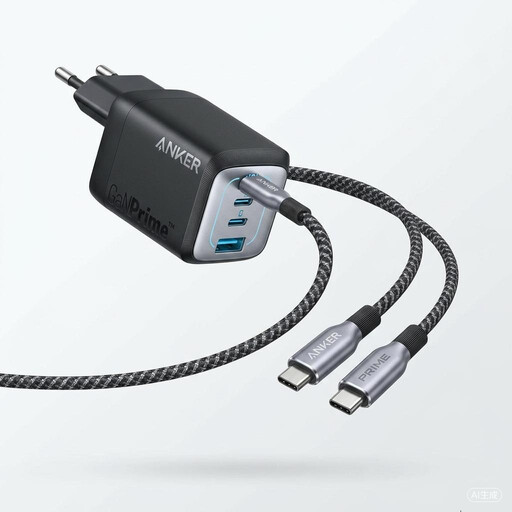
Why it stands out?: This Anker charger is the perfect all-rounder: powerful, versatile, and ultra-portable. Its 67W is more than enough for a MacBook Air, a tablet, and a smartphone, all in a mini format thanks to GaN technology. It's the perfect travel companion for those who want to carry only one charger.
Advantages?:
Who is it for?? The versatile user who owns a USB-C laptop (like an ultrabook), a smartphone, and other accessories, and is looking for a single, compact, and reliable solution for the office, home, and travel.
Can't find what you're looking for in this selection? Don't worry. The USB-C charger market is full of gems for every need. Power, number of ports, form factor... Explore our full catalog to find the perfect model.
Discover our complete collection of USB C to USB C adapters
Yes, absolutely. That's the whole point of the Power Delivery (PD) standard. The charger and your device "communicate" to determine the ideal and safe charging power. Plugging a 100W charger into a smartphone that only accepts 25W will not damage it; it will simply charge at its maximum speed, which is 25W.
GaN (gallium nitride) technology allows for the creation of chargers that are much smaller, lighter, and run cooler than older silicon models with the same power output. It's not essential (a non-GaN charger will still do the job), but it's a real bonus if you're looking for a compact and efficient model. Today, almost all good fast chargers incorporate it.
That's an excellent question. Rest assured, with certified chargers and devices, the risk is almost zero. Modern smartphones are equipped with intelligent management systems that adjust the charging speed: very fast at the beginning, then slower as it approaches 100% to protect the battery and extend its lifespan. The golden rule? Always use a quality charger and cable that comply with the Power Delivery standard. It's your best insurance.