
Livraison le jour même ou le lendemain

Qualité garantie

Débloquez vos offres de bienvenue: Livraison GRATUITE | Jusqu'à -80 % | 30 jours d'essai gratuits à JoyPlus
Téléchargez l'application
A fast USB-C charger can power up your phone on the go, keep a tablet running at the office, or replace several adapters in your bag. But marketing promises alone aren’t always enough to make the right choice. High wattage doesn’t guarantee fast charging on its own, and a model billed as universal might prove too limited for a laptop or a dashcam.
Here are the criteria to check before you buy, along with a selection of models suited to different uses in the UK.
An adapter might claim 100 W, 160 W or more, yet a smartphone will only accept 20 to 45 W. The power actually delivered depends on the charger, the cable and the protocol supported by the device.
A USB-C Power Delivery charger can automatically negotiate a compatible voltage, but only if your phone, tablet or computer supports this standard. The advertised wattage usually refers to the charger’s maximum capacity, not a value delivered continuously.
Not all USB-C cables are created equal. Some are limited to modest power, while others handle 60 W, 100 W or 240 W. To make the most of a powerful charger, check the stated wattage, the maximum current and the cable length.
A cable that’s too long or of questionable quality can cause power loss and make charging less stable. A cable supplied with the charger is therefore a real bonus, as long as you verify its specifications.
With a multi-port charger, the total power is usually shared between the outputs. A model advertised at 160 W won’t necessarily deliver 160 W on every port. Check the technical specifications to see how much power is available when two or three devices are plugged in at the same time.
In the car, also remember to check the voltage your vehicle accepts. A USB cigarette lighter adapter designed for a 12 V socket won’t necessarily suit a 24 V vehicle, unless this compatibility is clearly stated.
For a smartphone or earphones, a 20 to 30 W output is usually sufficient. A tablet or handheld console will benefit more from power between 30 and 65 W. For a laptop with a USB-C port, check the manufacturer’s recommendations: a 65 W or higher USB-C Power Delivery charger will often be necessary.
The term Power Delivery, or PD, refers to a negotiation protocol between the charger and the device. It doesn’t remove the need to check the maximum power your device actually accepts.
Look for protection against overheating, overvoltage, overcurrent and short circuits. For a permanent installation in a vehicle, undervoltage protection can help prevent excessive battery drain.
In the UK, also check for regulatory information, the identification of the manufacturer or importer responsible within the European Union, and any instructions provided in English. A complex automotive electrical installation deserves careful attention and may warrant the involvement of a professional.
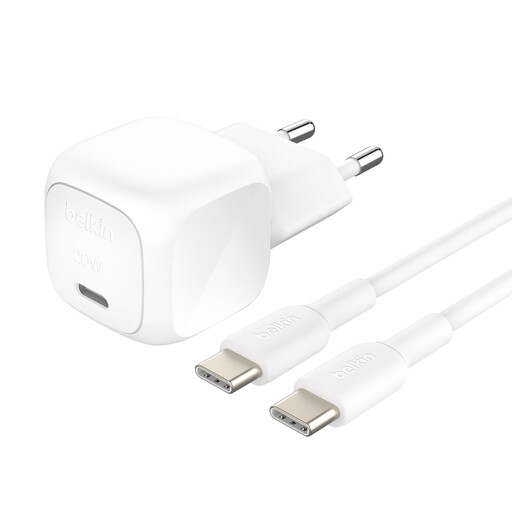
Why this choice suits this profile: This compact USB-C mains charger is ideal for those who simply want to charge a smartphone, a lightweight tablet or earphones. A one-metre cable is included.
Power Delivery compatibility and the included cable save you from buying extra accessories. However, check the wattage stated on the listing before ordering, as the title and specifications may vary by version.
Weight of 0.1 kg, 100-240 V input and a one-metre USB-C to USB-C cable included.
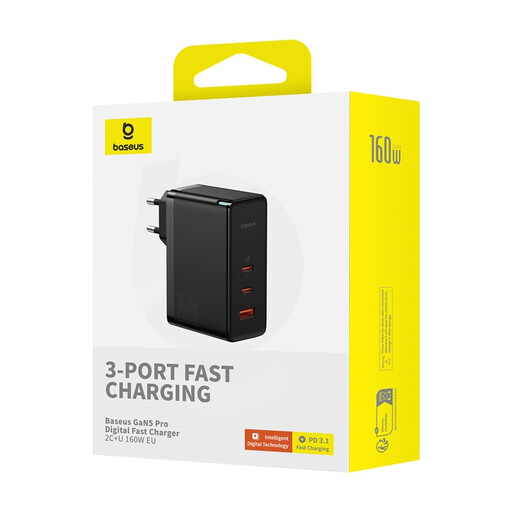
Why this choice suits this profile: This 160 W GaN charger is aimed at those who carry a laptop, a tablet and several mobile devices, whether at home or in the office.
Its two USB-C ports and one USB-A port mean you’re not relying on a single connector. Bear in mind, though, that the available power is shared between connected devices.
Total advertised power of 160 W, a 240 W USB-C to USB-C cable supplied and a multi-port format.
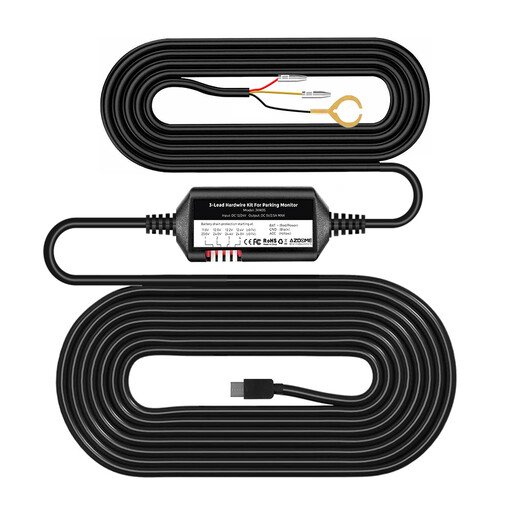
Why this choice suits this profile: This dashcam hardwire kit is designed for drivers who want a permanent installation without tying up the vehicle’s 12 V socket.
The 12-24 V to 5 V conversion and the cut-off at 11.8 V or 23.6 V, depending on the circuit used, help limit the risk of excessive discharge. Be sure to check the fuse type before installation.
USB-C output up to 5 V/2.5 A, cable approximately 3.65 m and support for a parking mode depending on the dashcam.
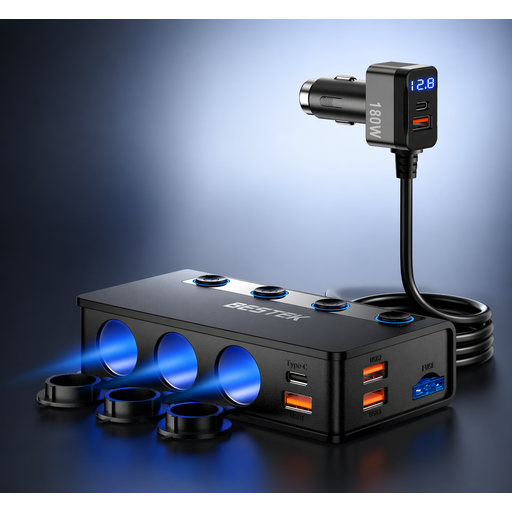
Why this choice suits this profile: This solution is ideal for long journeys, families and vehicles carrying several passengers with phones, a sat-nav, a tablet or a dashcam.
The listing states 12-24 V compatibility and distinguishes the USB-C PD outputs from the USB-A QC3.0 ports. The total power still needs to be shared between devices, within the limits of what the vehicle can supply.
Up to nine connections advertised, two USB-C PD ports, four USB-A ports and a voltage display.
We’ve put together a comprehensive, real-time updated selection of products that meet these strict criteria and European safety requirements.
No. The speed depends on the power your device accepts, the protocol used and the cable. A 160 W charger won’t force a phone to draw more power than its manufacturer intended.
A 20 to 30 W output is suitable for many smartphones that support fast charging. For a specific model, check the manufacturer’s recommendations and verify compatibility with Power Delivery or another supported protocol.
It’s better to unplug it when not in use, especially from a cigarette lighter socket. For a dashcam used in parking mode, choose a kit designed for that purpose and regularly check the wiring, fuses and the condition of the vehicle’s battery.