
Livraison le jour même ou le lendemain

Qualité garantie

Débloquez vos offres de bienvenue: Livraison GRATUITE | Jusqu'à -80 % | 30 jours d'essai gratuits à JoyPlus
Téléchargez l'application
The promise of USB-C was simple?: one cable, one charger to rule them all. Yet, in the jungle of available options, choosing a fast USB-C charger can quickly become a headache. Between different power outputs (watts), standards like Power Delivery, and the number of ports, it's easy to get lost.
This guide is here to clear things up and help you find the right charger for your needs, whether it's for your smartphone, tablet, or even your laptop. We'll cover the essential criteria to consider and our selection of the best models for 2026.
Before you jump on the first model you see, three fundamental criteria should guide your choice.
Power, measured in watts (W), is the number one criterion?: it determines your device's charging speed. An underpowered charger will leave your battery flat for hours, but there's no need to go overboard?: a model that's too powerful for a simple device won't charge it any faster. Here are a few guidelines?:
The Power Delivery (PD) standard is the universal fast-charging protocol that makes all the difference for USB-C. In practice, it allows the charger and the device to "talk" to each other to adjust the power output to the optimal level, all while ensuring complete safety. To enjoy maximum charging speeds, make sure both your device (smartphone, laptop, etc.) and your USB-C wall charger are PD-compatible.
A multi-port charger is the ultimate weapon against clutter, whether at home, in the office, or on the go. Say goodbye to overloaded power strips?: a single block is all you need to charge multiple devices at once. Some models combine USB-C ports (for newer devices) and USB-A ports (for older ones), offering maximum compatibility. This is an essential feature for a good travel charger.
Let's get practical with a selection of models that check all the boxes, depending on your needs for power, versatility, and compactness.
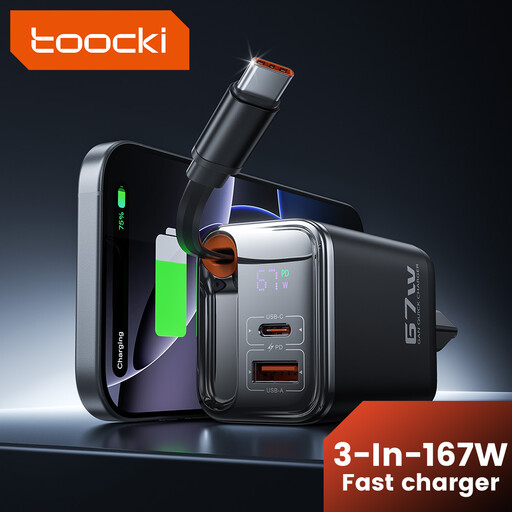
Why we love it?: Its all-in-one concept is simply brilliant. It features a built-in retractable USB-C cable?: no more tangled or forgotten cables?! With its 67W of power and multiple ports, it can do it all.
Key Features?:
Who is it for?? For digital nomads, frequent travellers, and anyone who wants a single charger to rule all their devices, from the oldest (USB-A) to the newest (USB-C).
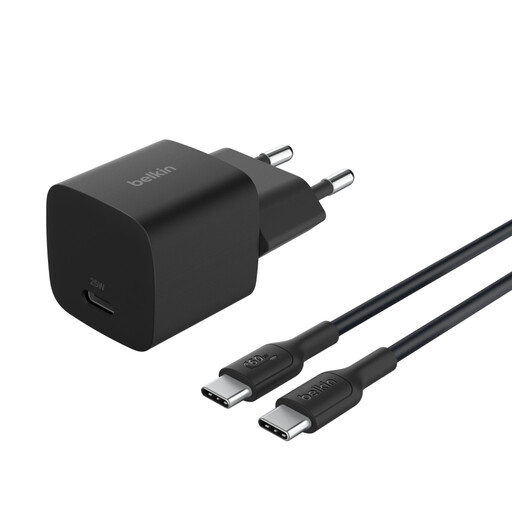
Why we love it?: This 45W charger from Belkin strikes the perfect balance. Powerful enough for tablets and ultraportables, it remains incredibly compact and lightweight. The ideal travel companion—discreet and high-performing.
Key Features?:
Who is it for?? For owners of smartphones, tablets, and ultraportables (like the MacBook Air or Chromebook) who want a fast, reliable charging solution with a small footprint.
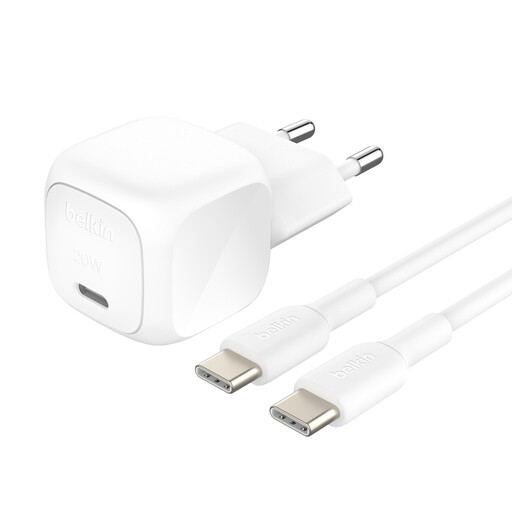
Why we love it?: This model gets straight to the point?: high-performance, simple, and ultra-compact charging for your mobile devices. Its 30W output is perfectly calibrated for fast-charging the latest smartphones.
Key Features?:
Who is it for?? For smartphone users, first and foremost, who are looking for a dedicated, fast, and reliable USB-C wall charger without the bulk of a laptop charger.
The transition to USB-C isn't over yet, and many of us still own devices or cables with the good old USB-A format. No worries—if your charger has the right port, you just need the right cable.
To complete your setup, take a look at our selection of cables.
Discover our range of USB Type-A charging cables
It all depends on the device you need to charge. For a smartphone, 20-30W is sufficient for fast charging. For a tablet or an ultraportable laptop, aim for 45W or more. Finally, for a more power-hungry laptop, a 65-100W model will be necessary. In any case, always check the maximum power your device can handle.
Yes, absolutely, and it's completely safe. Thanks to the Power Delivery standard, the device and charger communicate?: the device will only "draw" the power it needs. Using a 67W charger on a smartphone that only accepts 25W will not damage it. It will simply charge at its maximum supported speed, which is 25W.
In theory, yes. A PD charger can power any device with a USB-C port. However, to benefit from fast charging, it is essential that both the charger AND the device are compatible with the Power Delivery standard. Without this dual compatibility, charging will occur at a much slower, standard speed.
By the Joybuy Editorial Team