
Livraison le jour même ou le lendemain

Qualité garantie

Débloquez vos offres de bienvenue: Livraison GRATUITE | Jusqu'à -80 % | 30 jours d'essai gratuits à JoyPlus
Téléchargez l'application
The days when every device had its own charger are over! That drawer full of incompatible cables is (almost) a thing of the past. With the ubiquity of the USB-C port on our smartphones, tablets, and even laptops, finding a single, high-performance, and reliable charger has become essential. But with an overwhelming number of options, how do you navigate the market? Between wattage, charging standards, and the number of ports, the choice can quickly become a headache.
As the head of product selection at Joybuy, my mission is to do the legwork for you. In this guide, I'll provide everything you need to know to choose the fast USB-C charger that's perfectly suited to your needs, and I'll present our top picks for 2026, whether you have an iPhone 15, a Samsung Galaxy S24, or a MacBook.
Before diving into our selection, let's review the key criteria to ensure you make the right choice.
Power, measured in watts (W), is the name of the game. It determines the speed at which your devices will recharge.
The Power Delivery (PD) technology has established itself as the universal standard for fast charging over USB-C. It allows the charger and the device to "communicate" to adjust the delivered power, ensuring a charge that is both fast and safe. Make sure the charger you're considering is PD compatible.
Compare an old laptop charger with a recent model: the size difference is striking. We owe this slim-down to GaN (Gallium Nitride) technology. GaN components generate less heat and offer better energy efficiency than traditional silicon. The result? Choosing a GaN charger guarantees you a smaller, lighter, and more efficient model. The perfect travel companion.
Juggling multiple devices? A multi-port charger is the ideal solution to free up your outlets and lighten your bag. The most versatile models combine several types of ports:
Note: the charger's total power is distributed among the ports when used simultaneously. Be sure to check how this power is allocated according to the usage scenarios described by the manufacturer.
We have selected three models that meet a variety of needs, all chosen for their excellent performance-to-price ratio and relevance.
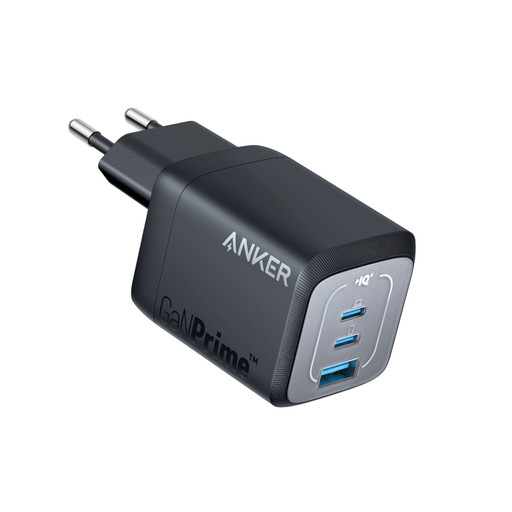
Why it stands out: This is a true powerhouse of power and versatility. With its three ports and 67W output, it can simultaneously charge a laptop, a smartphone, and a tablet. All in an ultra-compact form factor, thanks to GaN technology.
Key features:
Who is it for? For mobile professionals, students, and anyone who juggles multiple devices (computer, smartphone, tablet) and wants a single USB-C power adapter to charge everything.
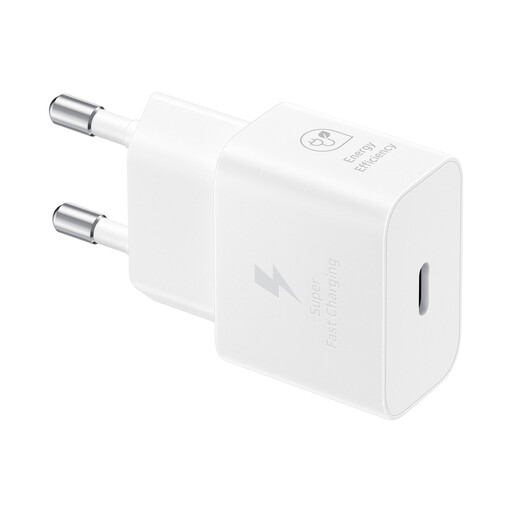
Why it stands out: It's the official charger. This guarantees perfect compatibility and optimised performance for Samsung devices, taking full advantage of the brand's Super Fast Charging (SFC) technology.
Key features:
Who is it for? For Samsung Galaxy smartphone owners who want to get straight to the point: the simplest and best-optimised charging solution for their device, with no frills or extra ports.
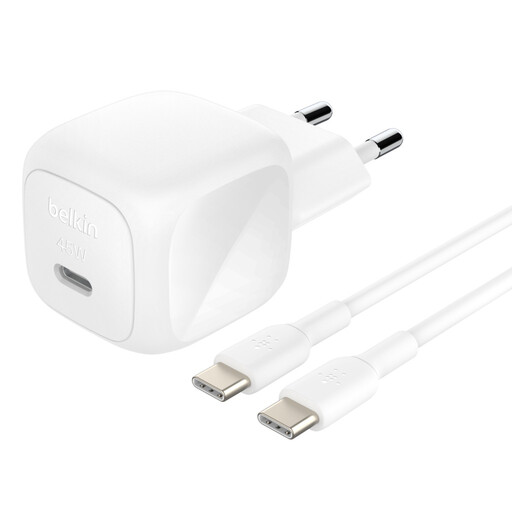
Why it stands out: This Belkin charger strikes the perfect balance with its 45W output. It's the ideal compromise for quickly charging a smartphone, a tablet, or an ultraportable like a MacBook Air. Its feather-light weight and recycled material construction are real assets.
Key features:
Who is it for? For nomads who count every gram in their bag but don't want to sacrifice charging speed. It's an excellent option for those who travel with a smartphone and an ultraportable and are mindful of the environmental impact of their purchases.
Our selection covers the most common use cases, but the charger market is vast. If you're looking for higher wattage, more ports, or specific features, other solutions are available.
Discover our full range of chargers and power adapters
1. Can I use a charger that is more powerful than my device requires? Yes, absolutely. Thanks to the Power Delivery standard, the charger and the device communicate: your smartphone will never "pull" more power than it can handle. Plugging a 67W charger into a phone that only requires 25W is therefore completely safe. However, the reverse (a charger that's too weak for the device) will simply result in a slower charge.
2. What is GaN technology, and is it essential? GaN (Gallium Nitride) is a next-generation semiconductor that is replacing silicon in modern chargers. It allows for the design of much smaller, lighter charging bricks that generate less heat. It's not mandatory, but if compactness and light weight are your priorities, a GaN charger is undoubtedly the best choice.