
Livraison le jour même ou le lendemain

Qualité garantie

Débloquez vos offres de bienvenue: Livraison GRATUITE | Jusqu'à -80 % | 30 jours d'essai gratuits à JoyPlus
Téléchargez l'application
With our bags and desks overflowing with cables, the search for a single, universal, and reliable fast USB-C charger to replace all the others has become a genuine quest. However, the market is a jungle of misleading marketing promises. From advertised wattages that fall short to models that dangerously overheat, making the wrong choice is all too common.
As the Head of Product Selections for Joybuy, my mission is to do the legwork for you. We'll skip the dense technical jargon and get straight to the point: here are the criteria that truly matter and the pitfalls to avoid, ensuring you make a smart purchase.
Advertised wattage isn't always delivered wattage: Many chargers promise an appealing total output (65W, for example), but this power is often split between the various ports. The result? When you plug in multiple devices, the power to each one can plummet, and your laptop may stop charging entirely. A good multi-port charger must be able to distribute power intelligently, guaranteeing a minimum required output for each device, even when all ports are in use.
Overheating and a lack of safety certifications: A cheap charger without essential certifications (like CE and RoHS) can prematurely degrade your device batteries and poses a genuine risk of overheating or even fire. In contrast, a quality USB-C power adapter includes comprehensive safety features (overvoltage, overcurrent, and short-circuit protection). This ensures a safe charge and extends the lifespan of your devices.
To make the right choice, we need to look closely at three key elements. These are crucial for the performance, safety, and versatility of your next charger.
Power, measured in watts (W), determines charging speed. But raw wattage is useless—or even poorly utilised—without the Power Delivery (PD) protocol. PD is an intelligent charging standard that allows the charger and your device to "communicate" to negotiate the optimal power level, ensuring a safe and efficient charge.
The GaN charger is a real game-changer. Gallium nitride replaces traditional silicon, making it possible to design chargers that are much more compact, lighter, and run cooler. For a travel charger or to declutter your power strip, the advantage is undeniable. Bonus: they are also more energy-efficient.
A good wall charger should fit your device ecosystem.
Rather than an endless list, we've selected three champions, each tailored for a specific use case and vetted against our performance and safety criteria.
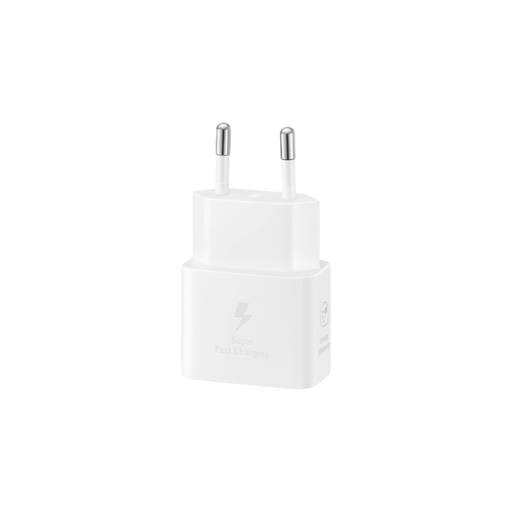
Why we love it: Perfect for anyone looking for a "set-it-and-forget-it" solution for their smartphone. Its 25W output is optimised for fast-charging Samsung Galaxy devices, iPhones, and other Power Delivery-compatible models.
This official Samsung charger guarantees a stable 25W output and includes all necessary safety protections, avoiding the risks of overheating or disappointing performance.
Its compact design and official Samsung certification are marks of reliability. Universal compatibility with USB-C PD devices.
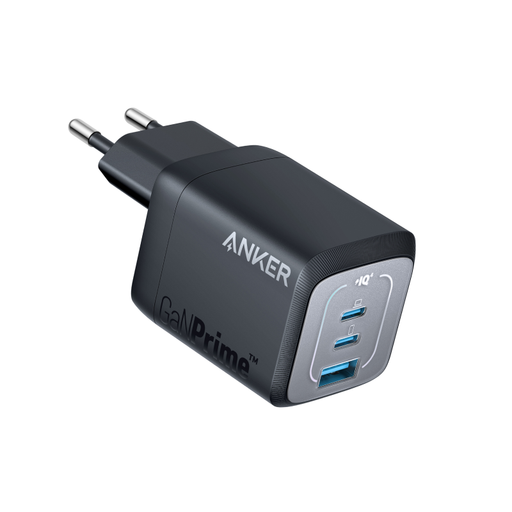
Why we love it: Ideal for mobile professionals and travellers. It can charge a laptop (up to 67W from a single port) or simultaneously power a computer, phone, and tablet thanks to its 3 ports and intelligent power management.
The power output is clearly stated: up to 67W on a single port, or 65W intelligently distributed when multiple ports are used. GaN technology and the ActiveShield 2.0 system prevent overheating.
Extremely compact for its power (51% smaller than the original 67W MacBook charger, according to Anker). Three ports (2x USB-C, 1x USB-A) for maximum versatility.
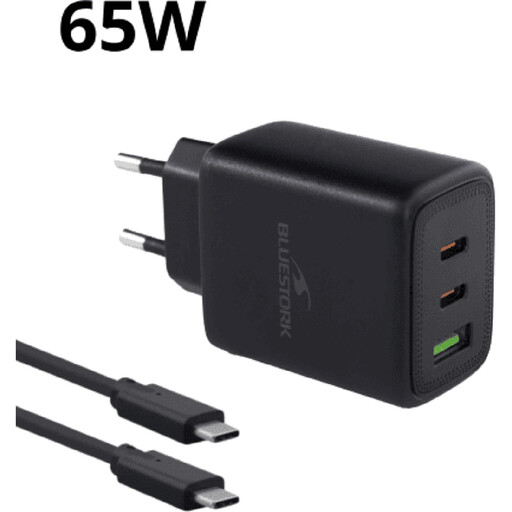
Why we love it: A complete solution for a desk setup or to replace multiple chargers. With 65W, it powers a laptop via its USB-C port without breaking a sweat, while the USB-A port remains available for another device.
It delivers a dedicated 65W to the USB-C port, enough for most laptops, and distributes power efficiently when both ports are in use.
Delivered with a fast-charging cable, it's a smart, cost-effective, ready-to-use kit. Compatibility with PD 3.0 and QC 3.0 protocols ensures maximum compatibility.
Explore our full selection of chargers that meet our performance criteria and European safety standards.
Check the requirements of your most power-hungry device (usually your laptop). A 65W charger is a versatile choice that will cover most needs, from a smartphone to a laptop. For use limited to phones and tablets, 30W is more than enough.
In terms of charging speed, wattage (W) and the protocol (PD) are still the main factors. The advantage of GaN lies in its ability to deliver that power in a much smaller package and with better thermal efficiency. In practical terms: you get a more portable charger that runs cooler, making it more durable and safer.
Absolutely, and that's the whole point of the USB-C Power Delivery standard. A powerful charger (e.g., 65W) can charge your MacBook at full speed. When you plug in your iPhone, the charger will intelligently "throttle" the power down to a lower, safe level (around 20W) for the phone. This makes a multi-port charger a convenient and safe solution for all your devices.